Photo Credits: Reproduction
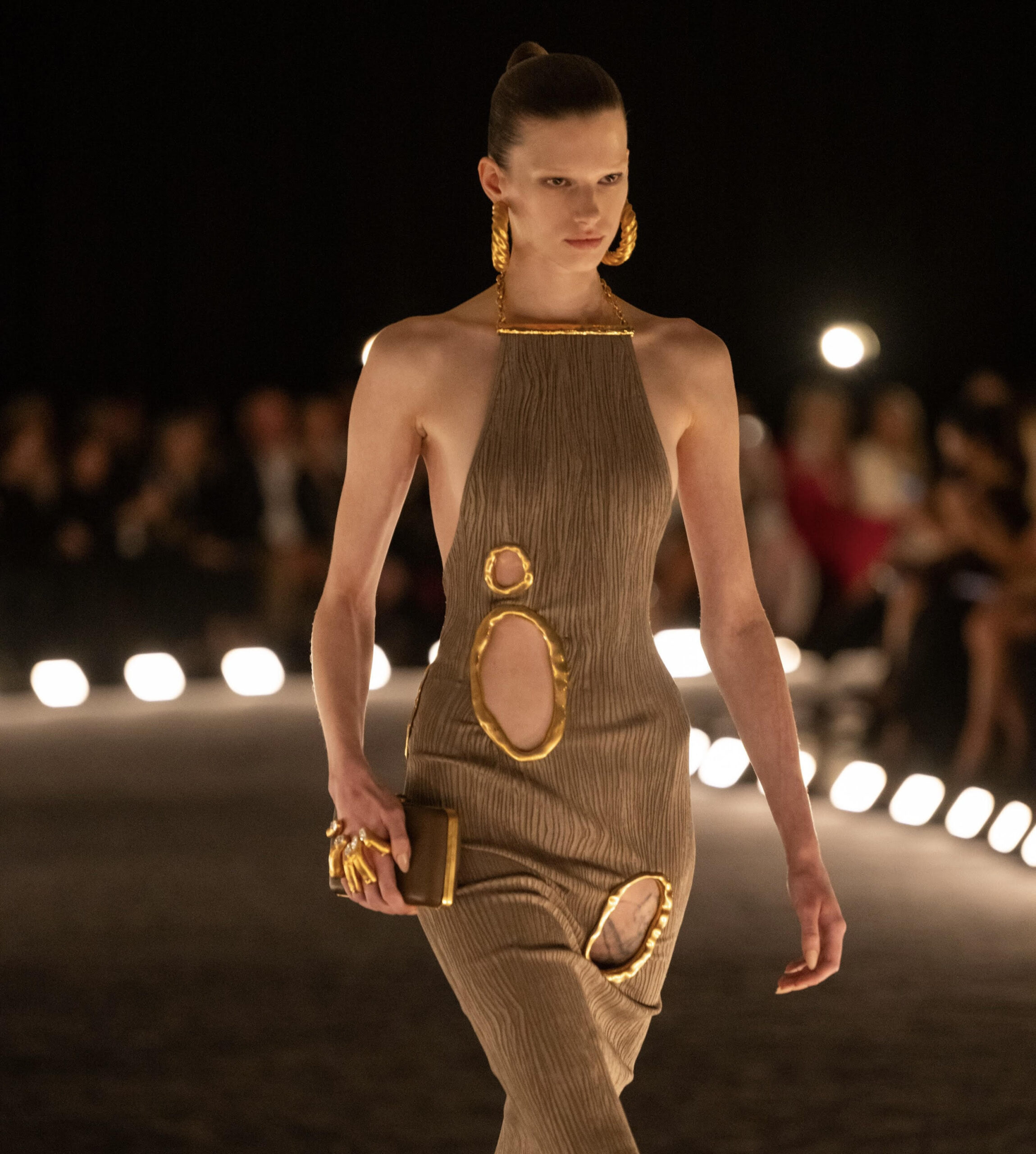
In the restless heart of Paris, under the concrete arcs and glass panes of the Centre Pompidou, Daniel Roseberry unveiled an ode to the unseen. Dancer in the Dark was more than the title of a collection; it was a gesture, a silent choreography where fashion became both veil and revelation, a stage upon which light and shadow wrestled for dominion over body and soul.
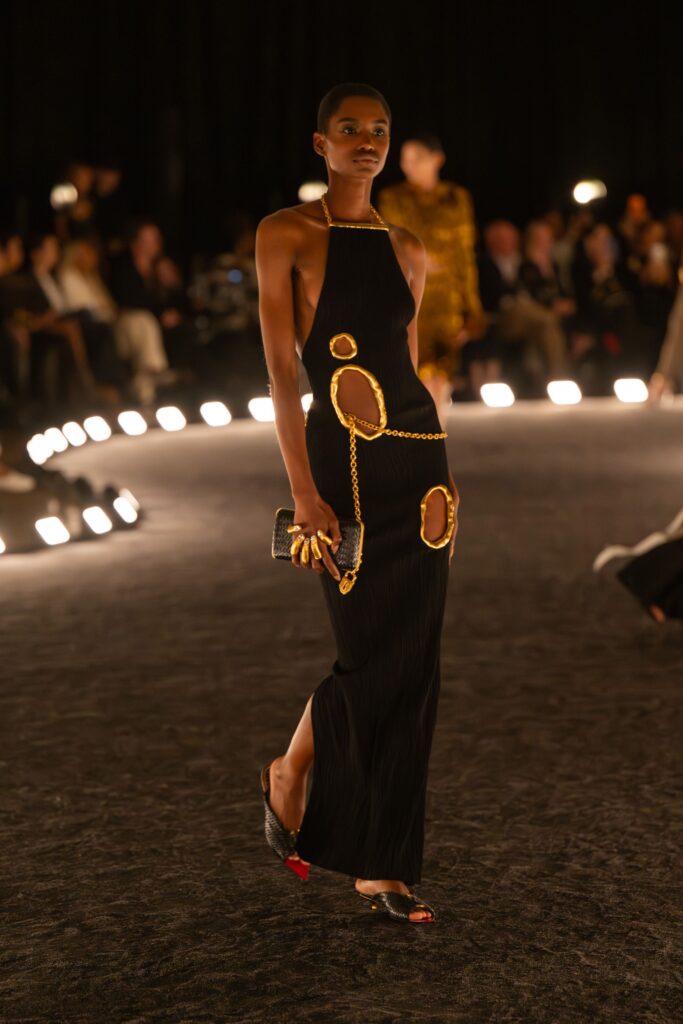
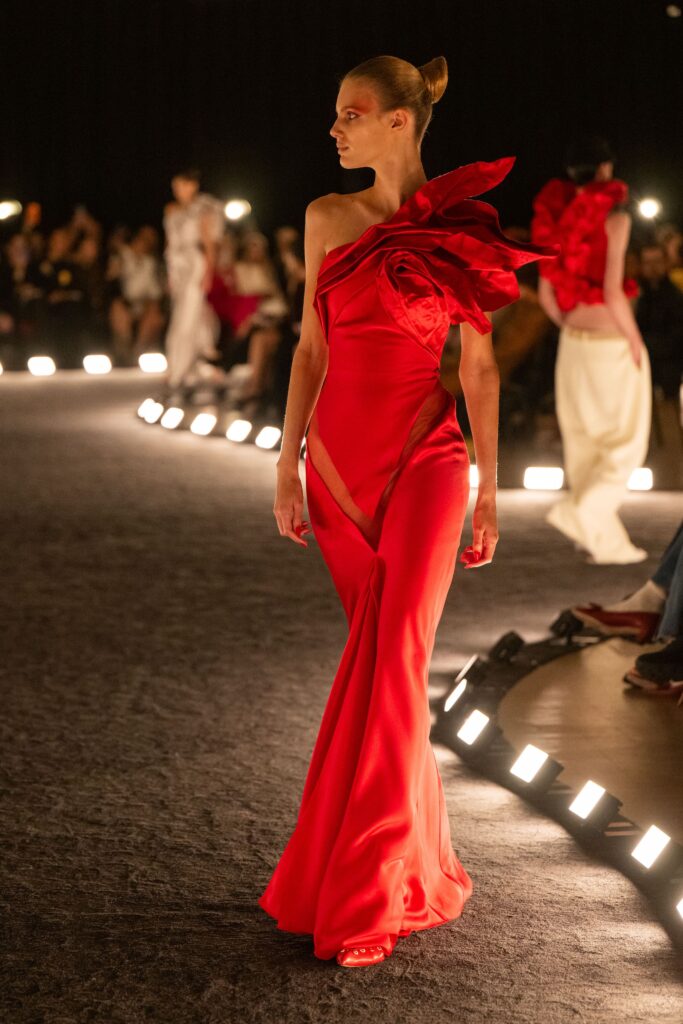
Photo Credits: Schiaparelli Reproduction
The garments moved between the poles of severity and surrender. Jackets cut with architectural precision, shoulders sharp as sculpture, evoked rigor and discipline, while transparent layers — a “vedo-non-vedo” of sheer skin etchings and delicate cut-outs — whispered of intimacy and desire. Rigidity met fluidity; control softened into abandon.
Credits: Schiaparelli
The palette was stripped to its essence: black, bone, and crimson. Each shade functioned as more than pigment — they were emotional states. Black absorbed, white became the anti-light, and red pulsed like blood beneath the skin. The colors were not chosen to please the eye but to unsettle, to hold us in tension, to mark silence as power.
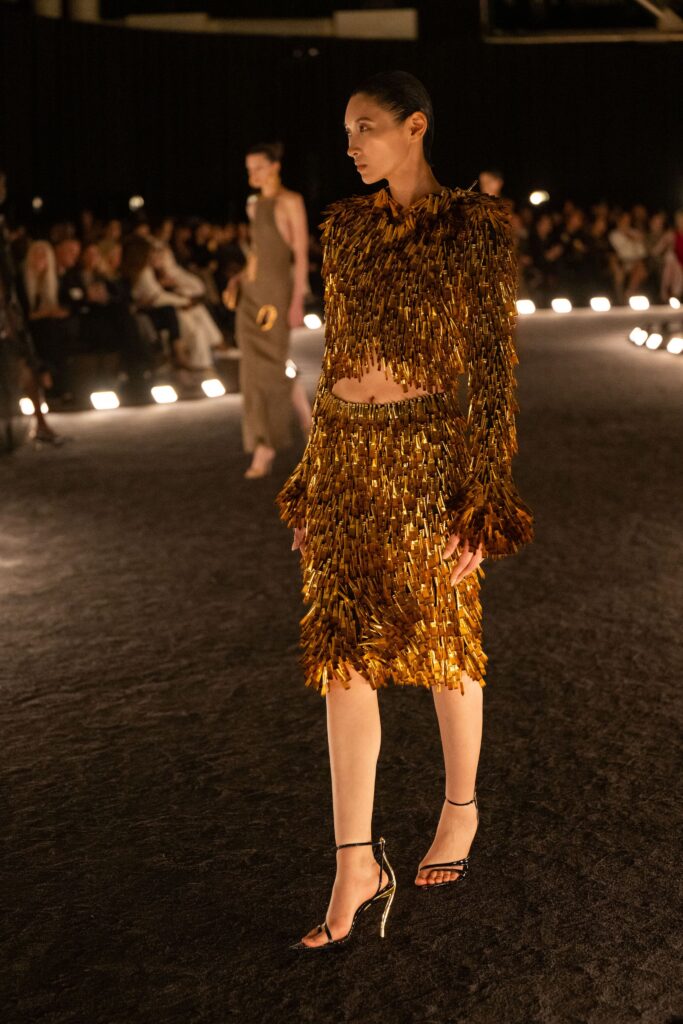
Craftsmanship was treated as ritual. Trompe-l’œil knitwear that resembled the scribbles of a designer’s notebook clung to the body as if sketch and flesh had merged. Sculptural accessories — the Secret handbag reimagined, surreal volumes re-composed — reached into the subconscious of the house of Schiaparelli, where Elsa’s surrealist legacy remains forever alive, breathing in new forms.
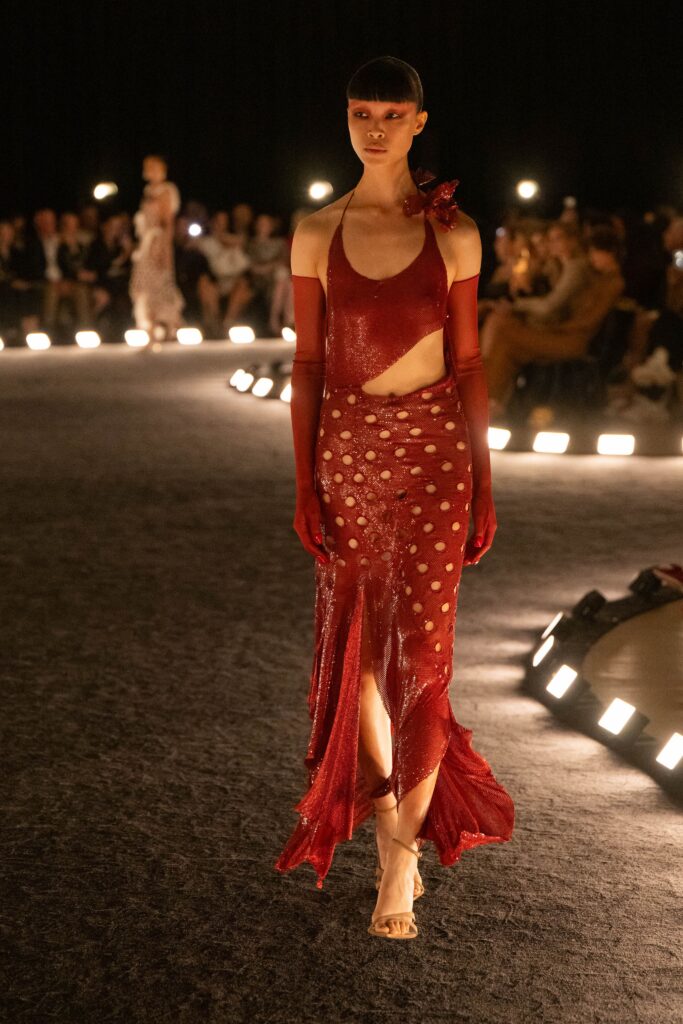
The show itself was liturgy, not spectacle. To watch these garments pass was to enter a sacred museum of the living. Roseberry seemed to suggest that fashion is not a fleeting diversion but a vessel of presence: to wear these pieces is to exist more deeply in one’s own shadow, to dance alone even in a crowded room.
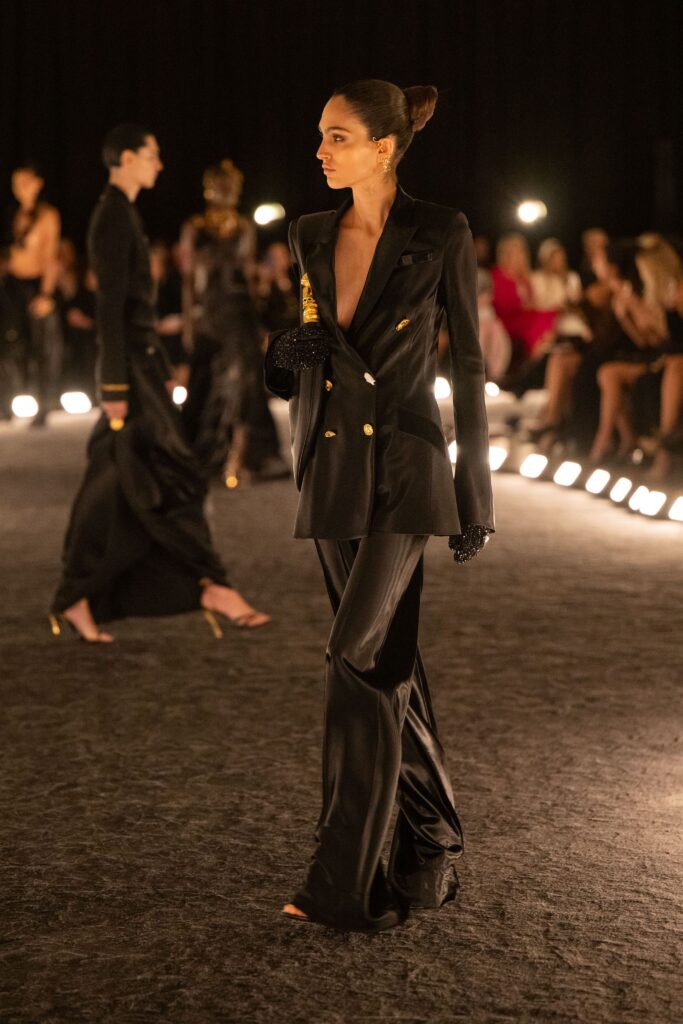
Dancer in the Dark was less a collection than a manifesto. It rejected ephemerality and insisted on weight, memory, and purpose. Each look was at once severe and mischievous, reverent and irreverent, an embodiment of Schiaparelli’s paradoxical DNA.
In the delicate choreography between what is seen and what is withheld, Roseberry revealed that true power is not to demand attention but to let presence insinuate itself slowly, profoundly. It is there, in the shadow’s edge, that the most extravagant light is found.
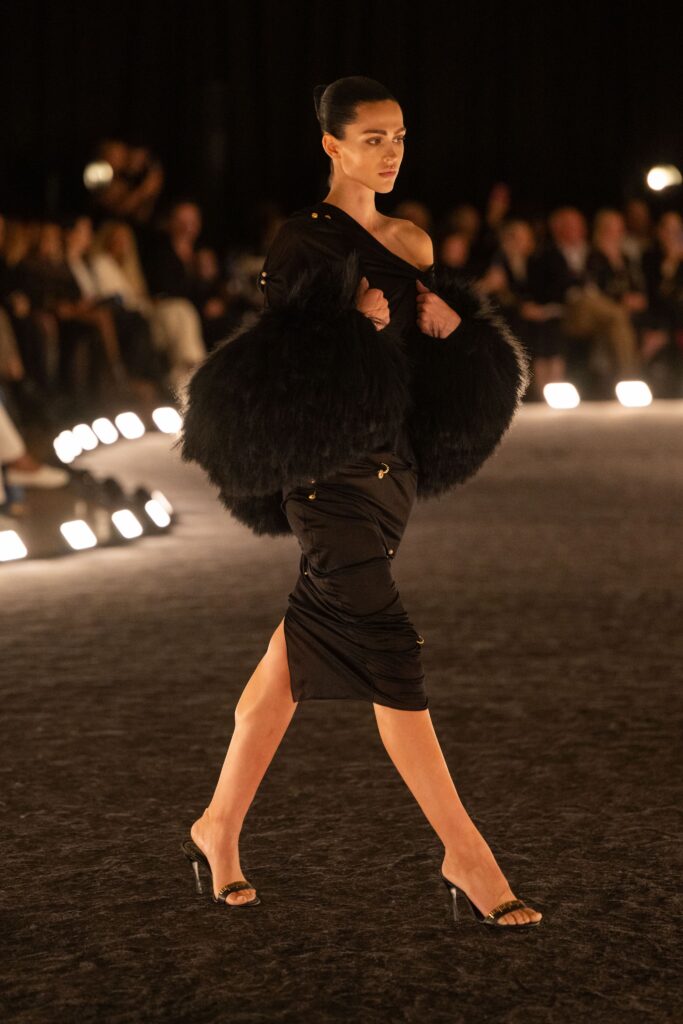

Photo Credits: Schiaparelli