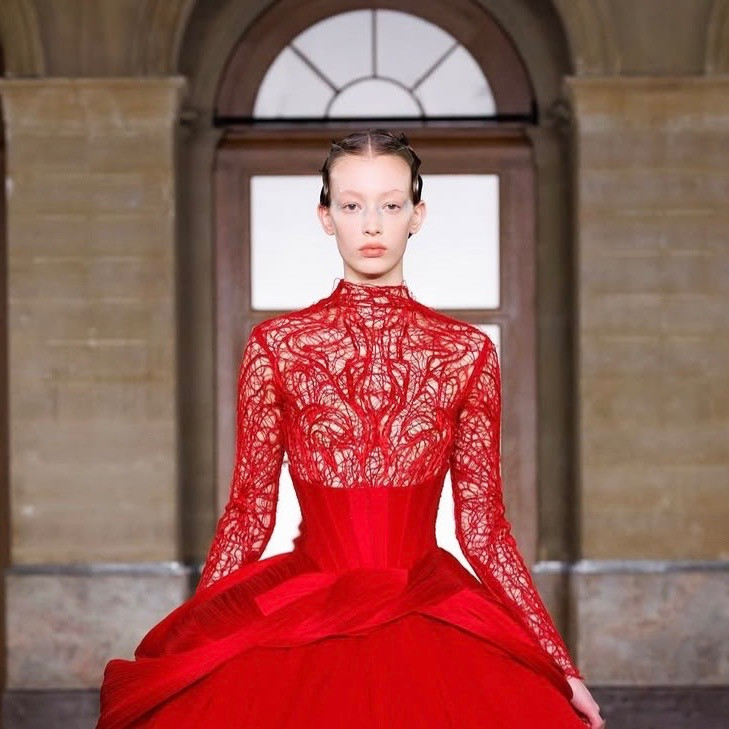
Gaurav Gupta Haute Couture Spring/Summer 2026: The Divine Androgyne: Beyond the Architecture of the Human Body
There are designers who dress the body, and there are designers who attempt to dissolve it entirely. With The Divine Androgyne, Gaurav Gupta presented a couture collection that existed beyond traditional notions of masculinity, femininity or even physicality itself. What unfolded on the runway was not simply fashion, but transformation in its purest metaphysical form.
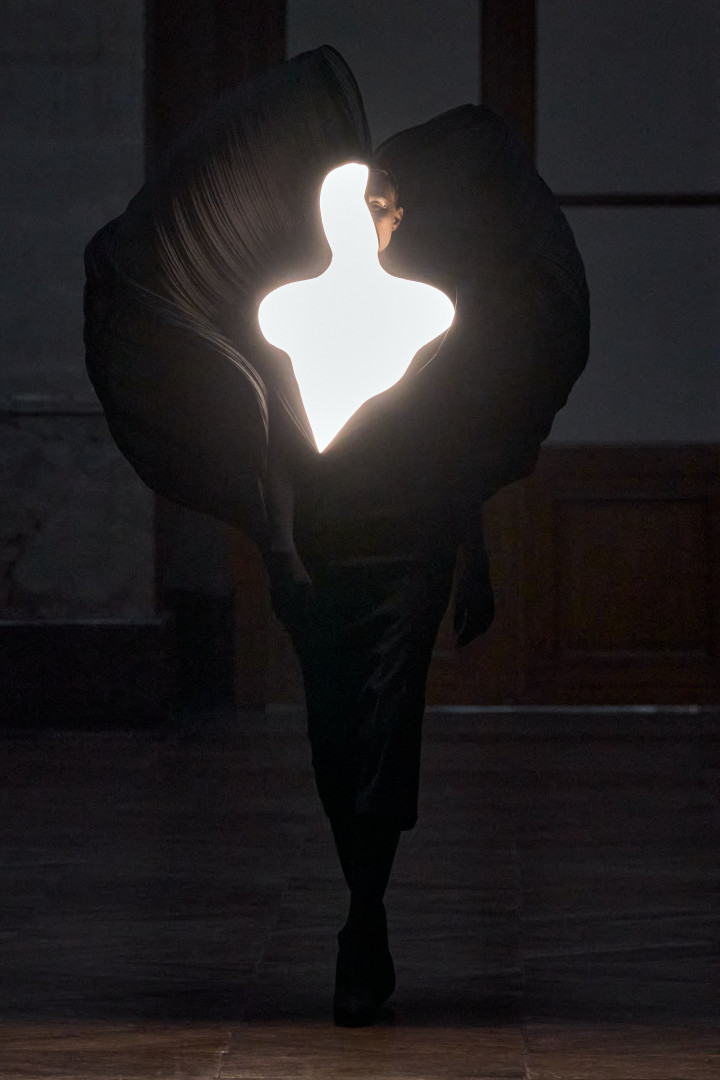
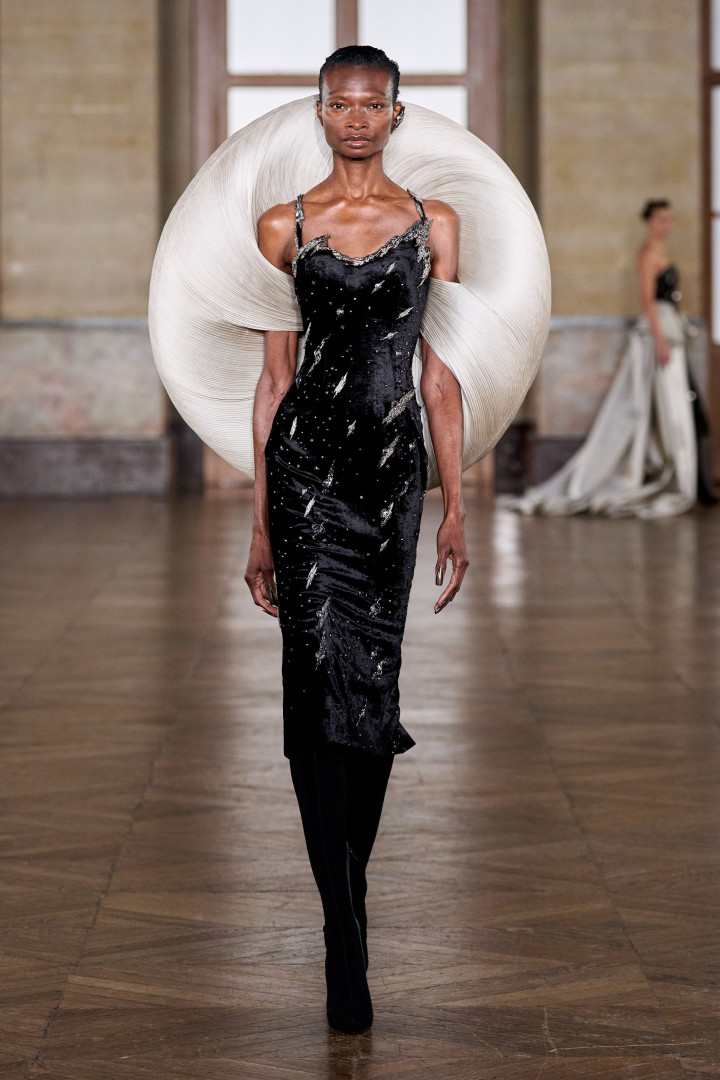
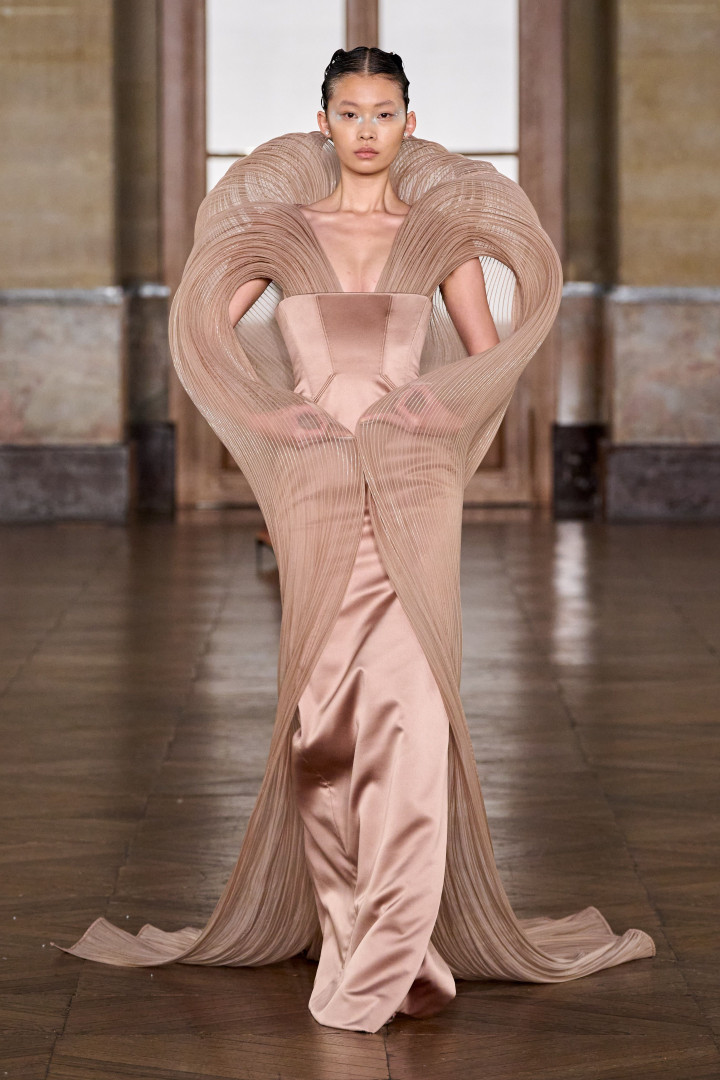
The collection moved through the space like a sequence of celestial apparitions suspended between mythology and futurism. Bodies no longer appeared stable or finite. They expanded outward through sculptural constructions that spiralled around the silhouette like fragments of energy escaping containment. Couture became movement, vibration, atmosphere.
Credits: Editorial reproduction — publicly available press imagery
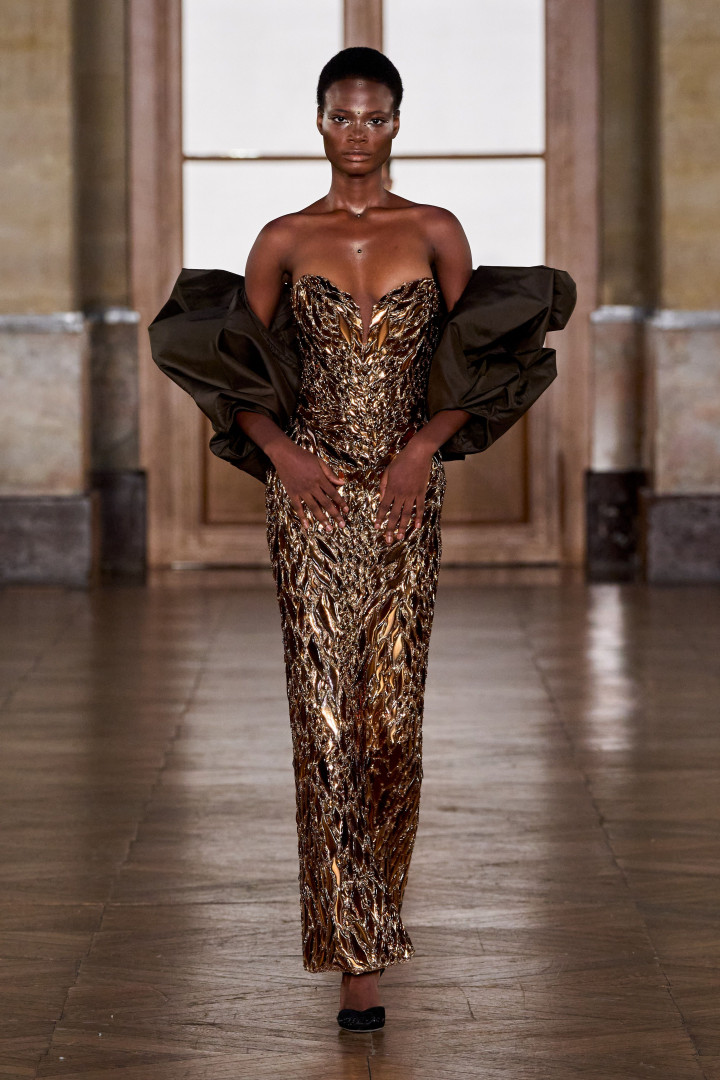
At the centre of the collection existed the idea of duality not as contrast, but as fusion. Masculine and feminine energies continuously merged into one another until distinction itself became irrelevant. The garments resisted categorisation. Sharp architectural structures dissolved into fluid drapery. Metallic surfaces coexisted with softness. Fragility and power occupied the same silhouette simultaneously.
Credits: Editorial reproduction — publicly available press imagery
There is something deeply philosophical about the way Gaurav Gupta approaches couture. His work does not seek realism or wearability in the conventional sense. Instead, it explores the possibility of transcendence through form. The body becomes a temporary vessel through which emotion, spirituality and cosmic symbolism can materialise visually.
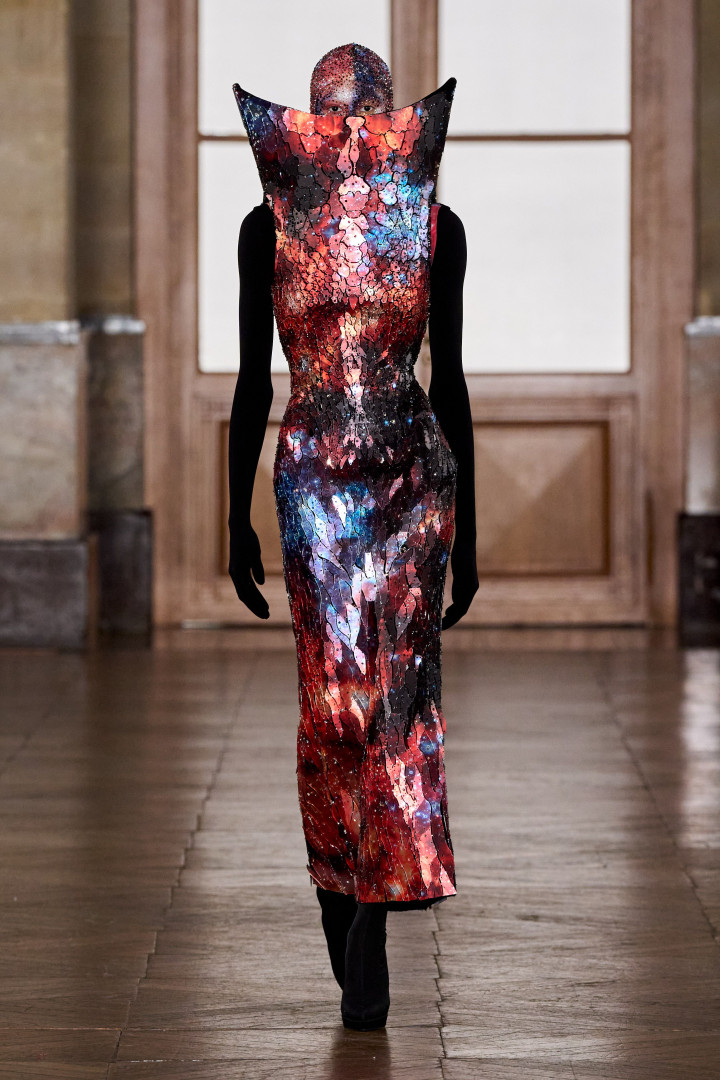
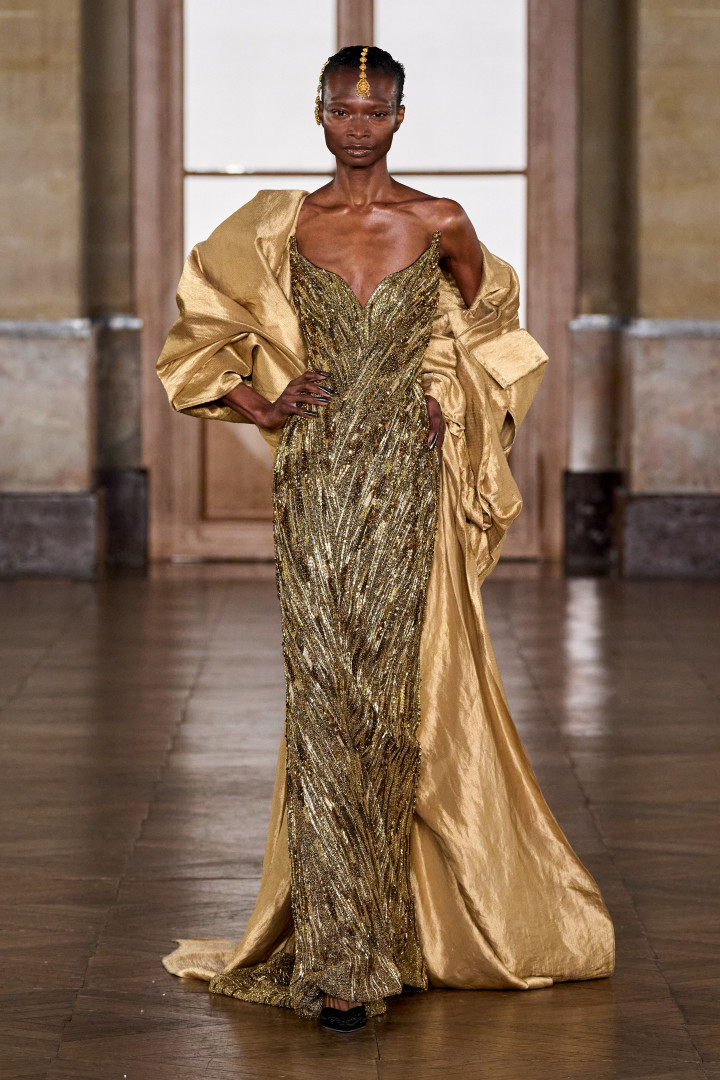
Editorial reproduction — publicly available press imagery
Throughout the collection, the human figure appeared almost post-human. Embroideries resembled constellations scattered across the skin, while sculptural extensions orbited the body like planetary systems in motion. Some silhouettes felt almost extraterrestrial, as though they belonged to a future civilisation where identity had evolved beyond fixed binaries and physical limitation.
Yet despite the monumental scale of the collection, there remained something intensely intimate beneath the spectacle. Vulnerability lingered within every construction. The exposed contours of the body, the tension between protection and exposure, the sensation of emotional fragmentation hidden beneath metallic precision — all of it contributed to a collection that felt simultaneously infinite and deeply human.
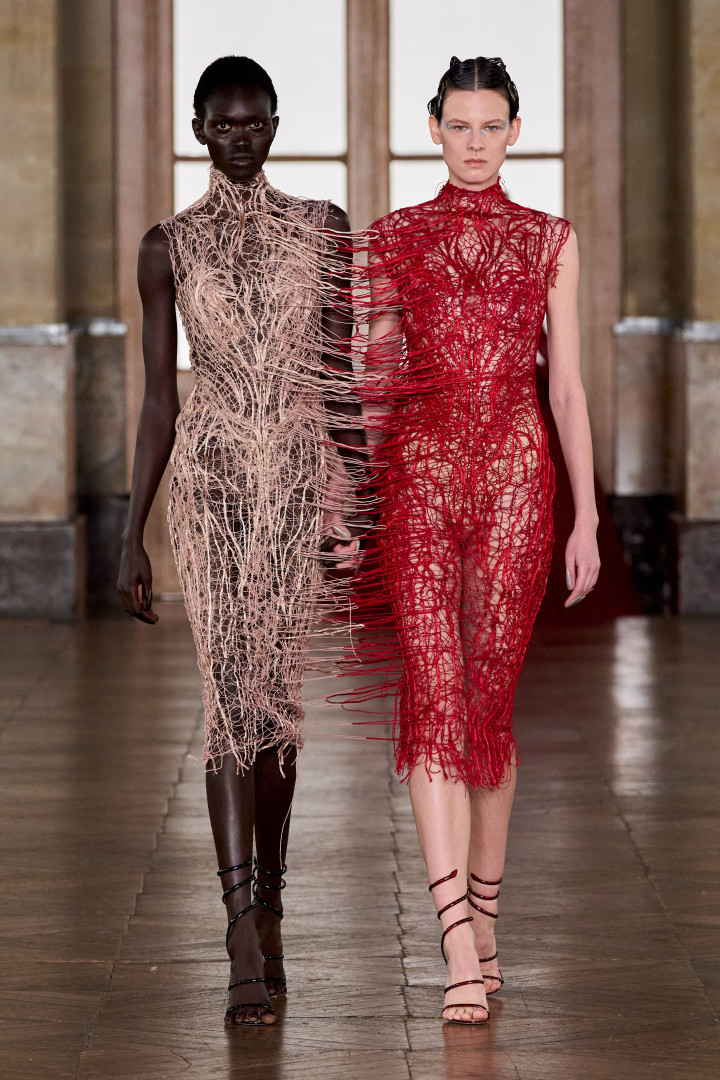
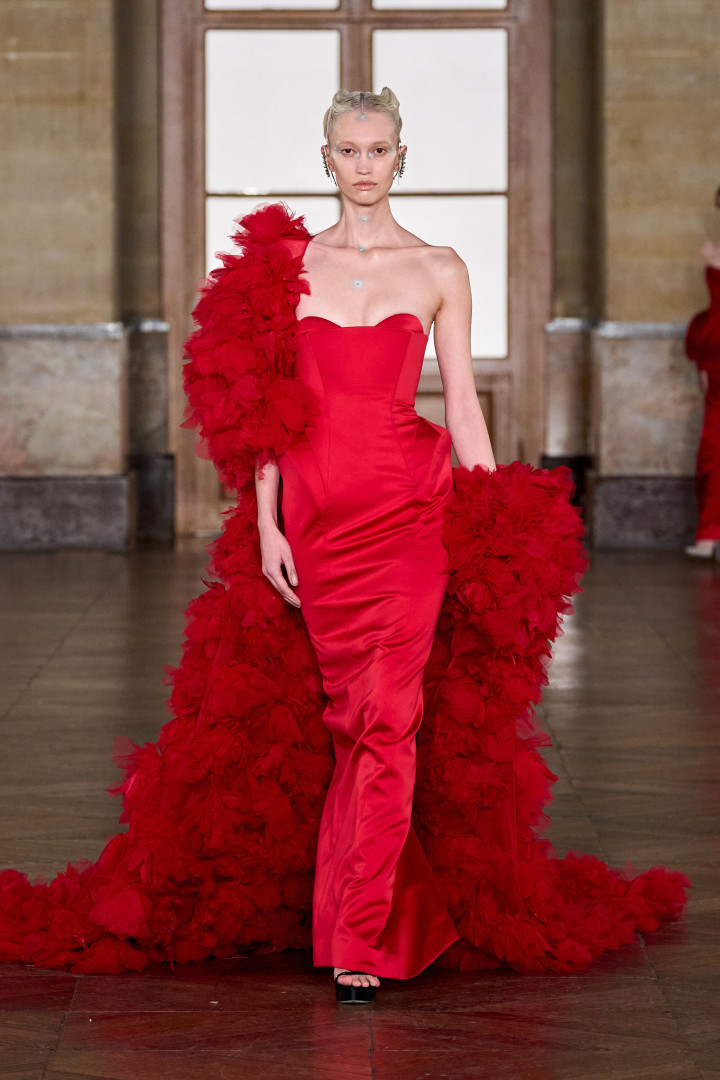
Nature appeared throughout the runway not as decoration, but as mutation. Organic forms merged with crystalline structures. Textures resembled living organisms caught in transformation. Flowers no longer symbolised softness, but evolution. Nothing remained static. Everything existed in a constant state of becoming.
What makes Gaurav Gupta particularly singular within contemporary couture is his refusal to separate spirituality from spectacle. In his universe, couture is not merely visual luxury. It becomes ritualistic, almost sacred — an attempt to materialise the invisible forces that exist between body, memory, emotion and energy.
With The Divine Androgyne, couture ceased to function as clothing alone. It became cosmic architecture for a body no longer bound by gender, gravity or permanence. A meditation on transformation where identity dissolves into something fluid, celestial and ultimately unknowable.
Editorial reproduction — publicly available press imagery