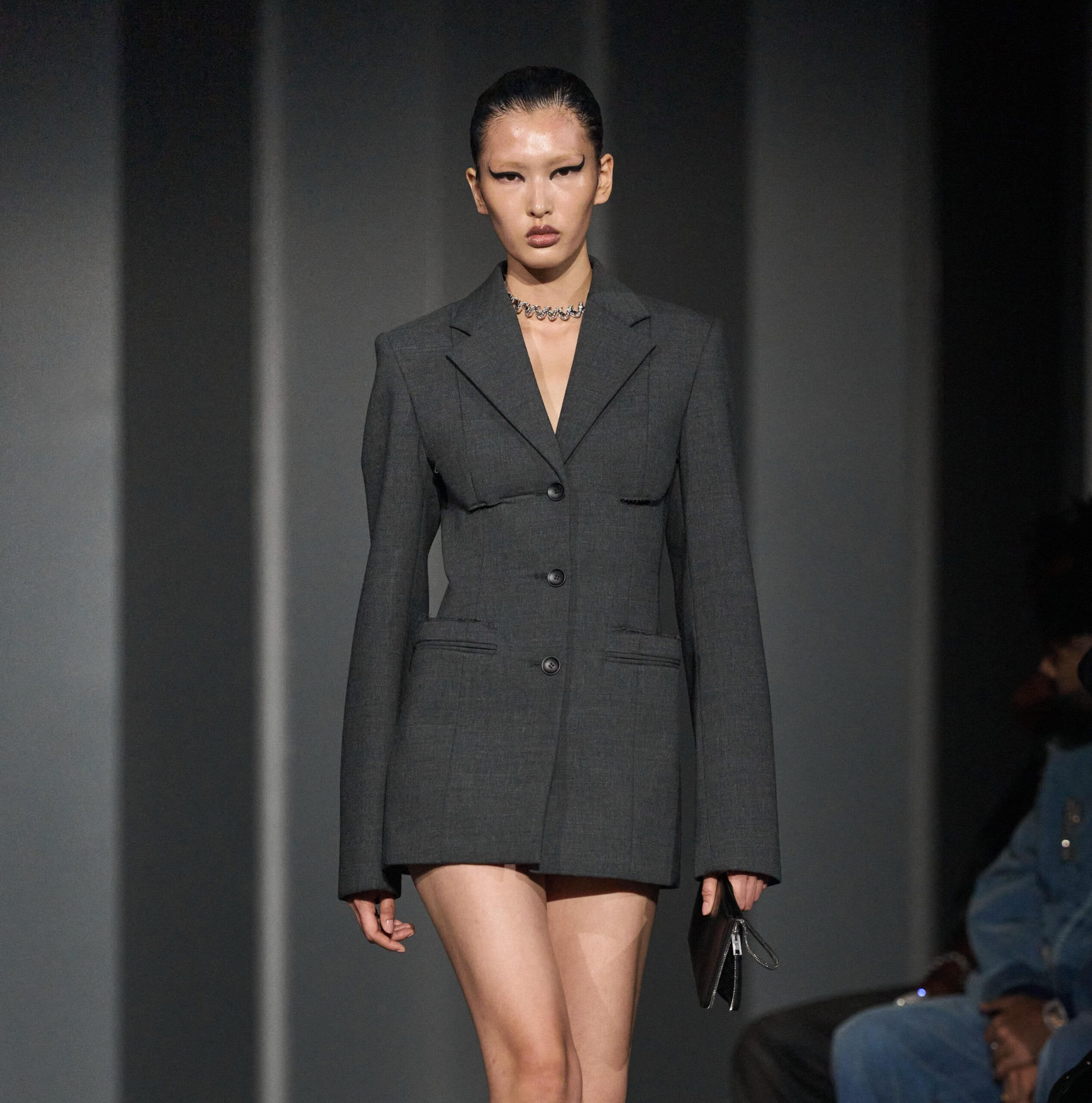
Photo Credits: Alexander Wang/ Reproduction
In the vaulted shadows of 58 Bowery, Alexander Wang staged not merely a show but a reclamation of space—of identity, of legacy, of the right to speak again in fashion’s highest register. The Matriarch, the title given to his Spring/Summer 2026 collection, was at once personal and universal: an homage to his mother, yes, but also to the architecture of female power itself—elegant yet unyielding, pragmatic yet poetic.
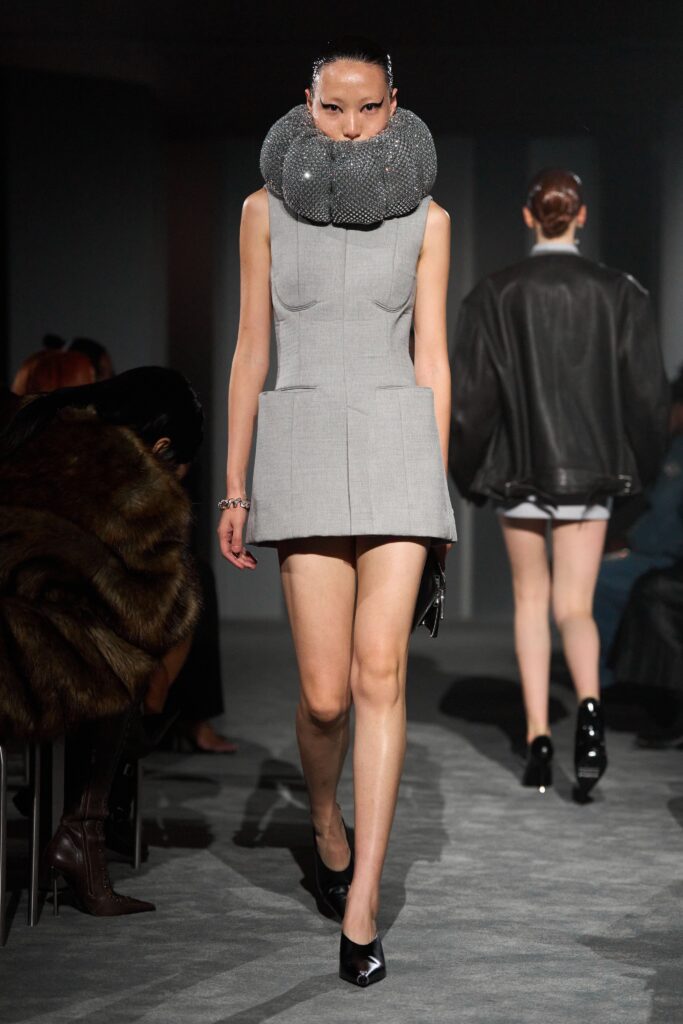
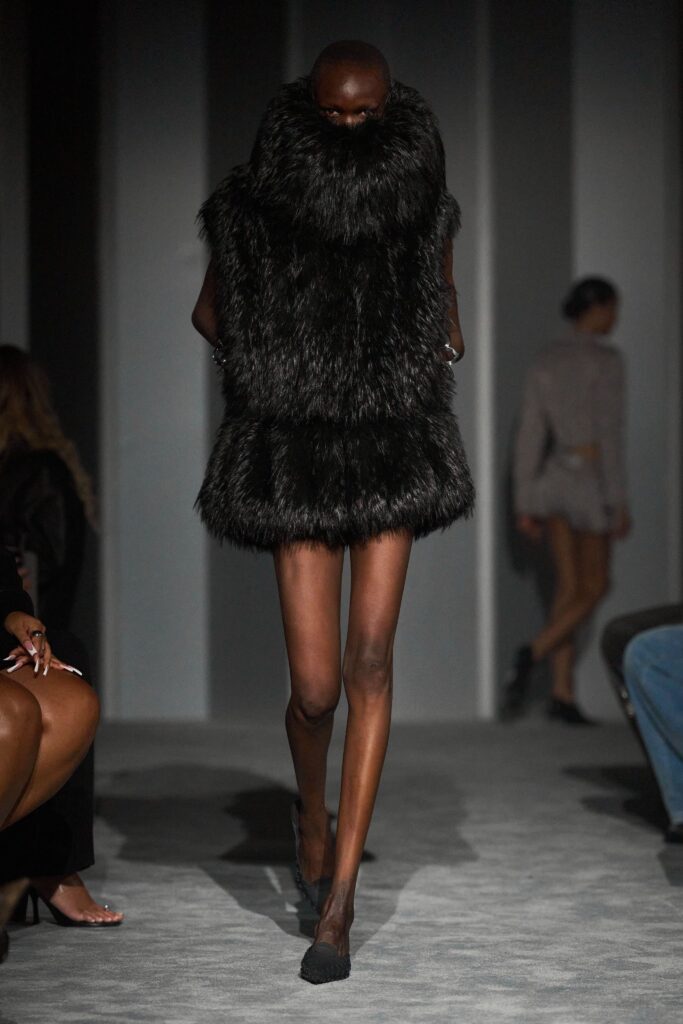
Photo Credits: Alexander Wang Reproduction
The clothes carried this duality like a pulse. Short silhouettes sliced the air with precision—micro-skirts and sculpted jackets daringly cropped, the body alternately shielded and revealed. Black, white, and the softest gray formed a palette stripped of excess, a discipline that allowed texture to assume meaning: leather shaped with urban severity, knit lace falling with improbable softness, chainmail-knit suits catching the light like modern armor. It was a language of proportion and restraint, of authority made visible in cut and seam.
Credits: Alexander Wang/Reproduction
Yet there was no nostalgia here, no retreat into safe tropes of femininity. Wang’s matriarch is not a symbol of domesticity; she is a sovereign presence, a silhouette carved out of modern life. The architectural tailoring, the deliberate brevity of skirts, the tactical placement of zippers and slits—all of it refused passivity. These were clothes for women who command space without announcing it, who move through cities as through kingdoms.
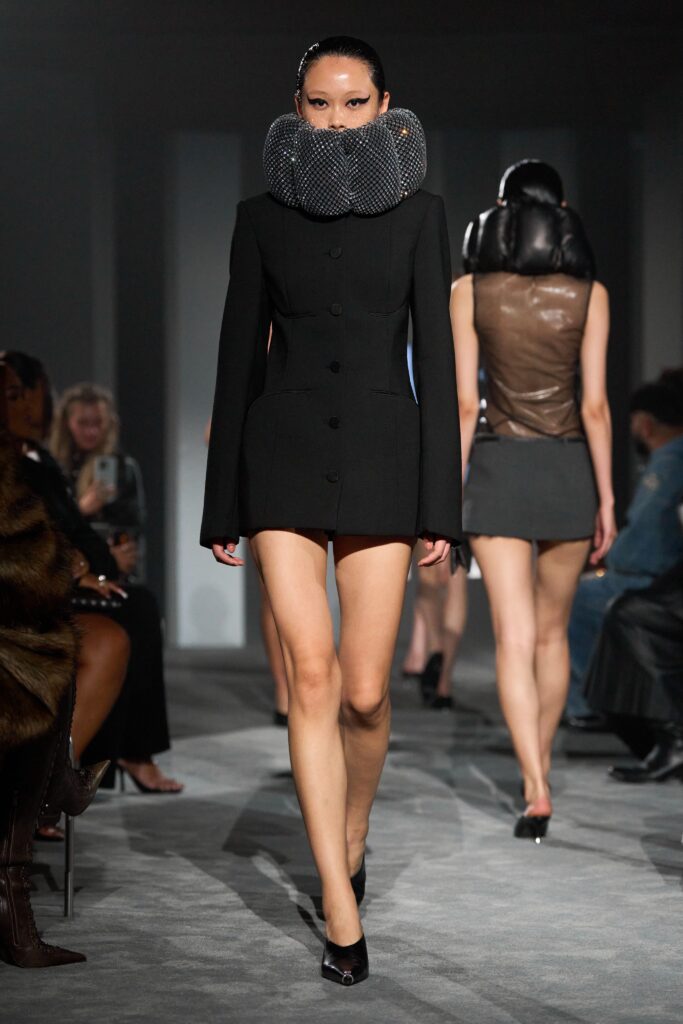
And beneath the surface, a subtle tenderness persisted. The dedication to his mother anchored the collection in something more intimate than spectacle. Perhaps this is why The Matriarch felt less like a comeback and more like a thesis: that power and vulnerability are not opposites but accomplices, that clothing can carry the weight of both.
Alexander Wang has always thrived in the tension between downtown cool and high craft. But here, the edge sharpened into clarity. The Matriarch is not loud. It does not plead for relevance. It stands, unsentimental, at the intersection of heritage and reinvention, asking fashion to reconsider what authority looks like—and, perhaps, who gets to wear it.
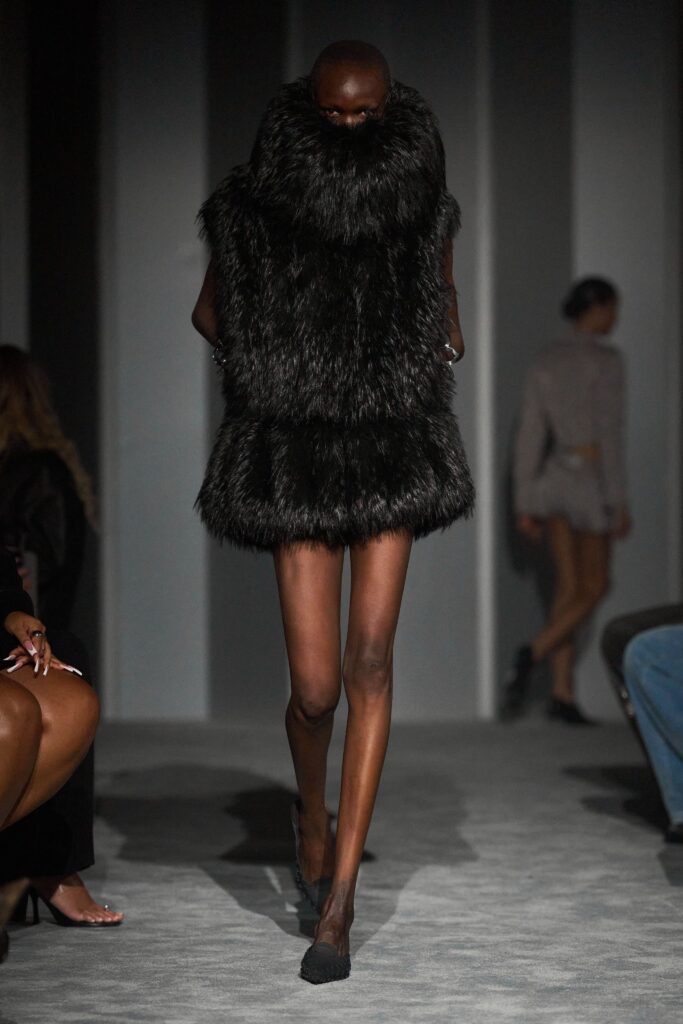
Photo Credits: Alexander Wang/ Reproduction