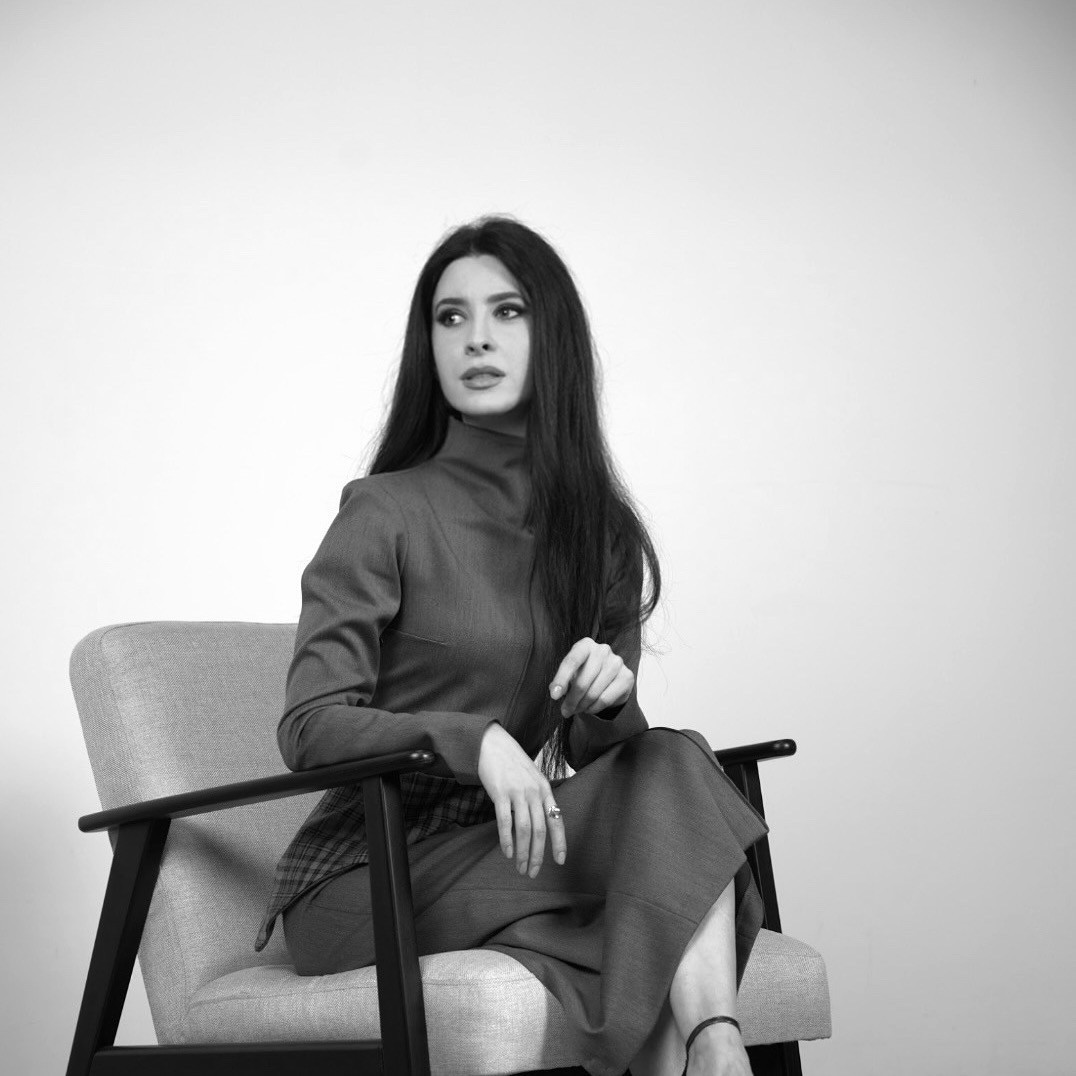
Khrystyna Kurliak – “I wanted to express not only resilience, but also the quiet dignity, hope, and inner strength I saw in Ukrainians during the war“
In a fashion landscape increasingly consumed by spectacle and acceleration, Khrystyna Kurliak approaches creation through silence, emotional depth and quiet resistance. Through her brand, Khris K, femininity is never reduced to performance alone, but explored as something fluid, introspective and deeply human. Her garments do not seek to dominate the body. They move beside it softly, like memory, like protection, like the invisible weight of emotion carried beneath fabric and skin.
Within collections such as Vidvazhna and Daniela, softness becomes a form of strength, while linen, silk and handcrafted textures transform into emotional landscapes shaped by resilience, longing and inner transformation. There is a spiritual quietness present in her work, an understanding that elegance does not always emerge through excess, but through restraint, intimacy and emotional truth.
In conversation with The Runway Source, Khrystyna Kurliak reflects on vulnerability, memory, craftsmanship and the invisible architecture of feminine courage.
Courage in your collections feels soft, almost imperceptible, yet undeniably present. Do you believe bravery can only emerge through experiences of emotional intensity and transformation?
KK: For me, bravery is not something loud or performative. I think true courage is often very quiet, it lives in the decision to continue, even after difficult experiences. Pain can shape a person deeply, but bravery is also cultivated in the silent balance between vulnerability and self-preservation.
There is strength in allowing yourself to feel emotions fully while still protecting your inner world. I think many women carry this kind of courage naturally, even if it is invisible to others. That quiet resilience is something I try to express through my work.
Silk and linen drape and flow as if in conversation with wind and light. Do materials themselves remember the histories of longing and hope?
KK: I think materials hold a certain emotional memory through the way we work with them and through the histories they already carry culturally. Linen, silk, handmade textiles, they feel alive to me because they are connected to nature, craftsmanship.
When I create, I pay attention not only to silhouette, but also to the emotional atmosphere a fabric creates around the body. Some textiles bring softness and calm, others strength and structure. In that sense, fabric can absolutely carry emotion, through feeling, movement, and presence.
In Vidvazhna, strength whispers rather than declares. How do you understand the alchemy of softness transforming into fortitude?
KK: I think some of the strongest people carry their strength very quietly. Softness is often misunderstood as weakness, but in reality it can require enormous courage to remain gentle after experiencing pain or loss.
The “Vidvazhna” collection, which means “Brave”, was dedicated to Ukraine. Through its soft yellow and blue palette, flowing silhouettes, and the emotional character of each exclusive piece, I wanted to express not only resilience, but also the quiet dignity, hope, and inner strength I saw in Ukrainians during the war.
The feminine form in Daniela breathes, dreams, asserts itself with quiet authority. When translating internal into external form, how do you distinguish between revelation and protection?
KK: For me, fashion should never expose a woman in a way that takes away her sense of self. I believe there is a very delicate line between revelation and protection, and I try to keep balance between the two. A garment can reveal strong emotion, character, vulnerability, without losing dignity. That is very important to me. I don’t create to impress through provocation, I try to express something deeper and more intimate.
In the “Daniela” collection, softness and structure exist together because I wanted the feminine form to feel free, protected, and strong at the same time. Quiet authority, for me, is when a woman does not need to prove her presence loudly, it is simply felt.
Colors carry emotional weight. Deep blues, greens, blacks, creams — do palettes function as memory, intention, or an invocation of what the soul seeks to reconcile?
KK: For me, color is always emotional. I never choose a palette randomly, because every shade carries atmosphere, memory, and psychological weight. Colors come from personal emotions, from nature, architecture, music, or from a specific moment in life that stays with me.
In the “Vidvazhna” collection, the soft blue and yellow palette carried an emotional connection to Ukraine, hope, fragility, resilience, and light during dark times. Colors often express what words cannot. They become another language inside the collection.
When designing, do you perceive the garment as a mediator between self and world, or as a vessel where the wearer and the maker share a space of transformation?
KK: I think it becomes both. A garment can express, and connect a person with the outside world, but at the same time it also carries a part of the creator’s inner world. And that’s the beauty of it.
When someone wears a piece, it no longer belongs only to the designer. The woman brings her own energy, memories, emotions, and character into it. That is where transformation happens naturally, between the creation itself and the person who gives it life.
For me, fashion becomes meaningful exactly in that dialogue.
Finally, when the collections are inhabited, do you feel the garments complete themselves, or do they remain as invitations for the wearer to inhabit their own narrative of transformation?
KK: I believe a garment is never truly complete until it is lived in. Creation does not end in the atelier, it continues through the woman who wears it, through her movement, personality, and story.
I never want to impose a single meaning onto my work. My collections remain open invitations for interpretation, spaces where someone can recognize a part of herself. That personal connection is what gives the piece its final life.