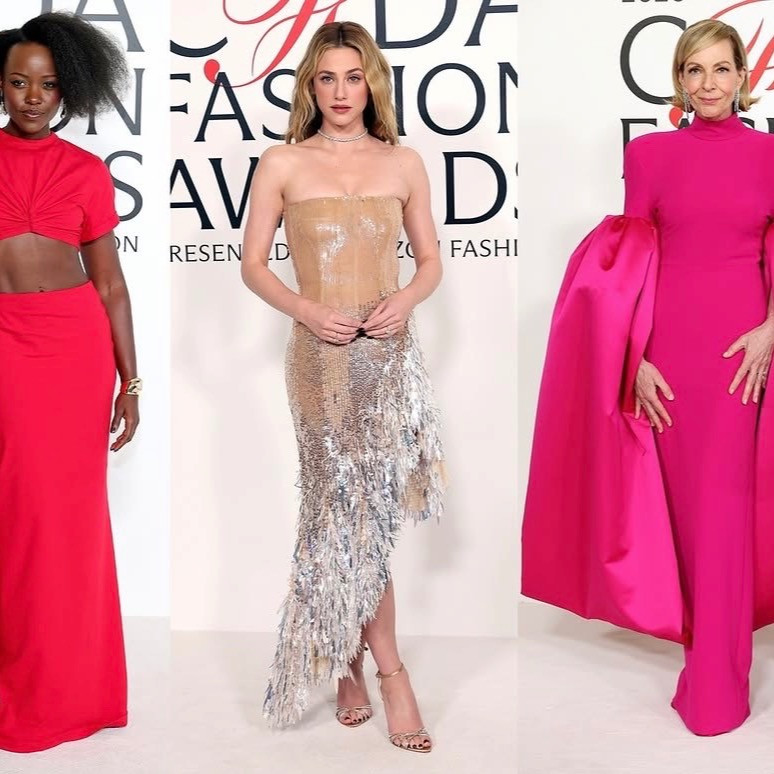
The CFDA Fashion Awards 2026: Who Gets to Define American Fashion?
A reflection on the identity of American fashion, the meaning of creative recognition and the delicate balance between preserving heritage and embracing reinvention. What defines an industry: the legacy it protects or the future it dares to create?
Fashion has always had a complicated relationship with recognition. It creates its own languages, challenges its own conventions and constantly reinvents the meaning of relevance. And yet, every year, an industry that thrives on questioning established ideas gathers to decide which voices deserve to be celebrated. The CFDA Fashion Awards are, in many ways, a reflection of this contradiction.
Held on November 2 at New York’s American Museum of Natural History, the 2026 ceremony brought American fashion into focus once again. Beyond the individual distinctions, however, this year's awards invite a broader reflection on the identity of American fashion and the forces shaping its future.
What does it mean to be an American fashion designer today? Is it a question of geography, cultural inheritance, commercial influence or creative perspective? Perhaps it is no longer possible to define an industry through a single aesthetic. American fashion has never been one coherent visual language. It is a meeting point of different histories, ambitions, identities and interpretations of modern life. Its strength may lie precisely in its refusal to belong to just one idea of itself.
The recognition of new creative perspectives is particularly significant in this context. The future of American fashion does not necessarily depend on preserving a familiar image of the past, but on allowing new voices to reshape what that image can become. Fashion, after all, has never been a static expression of identity. It is a continuous negotiation between where we come from and where we wish to go.
At the same time, the enduring presence of established creative visions reminds us of another important truth: trends change, aesthetics are revised and generations move on, but a strong identity can outlive the moment in which it was first established. Perhaps the most difficult achievement in fashion is not to remain relevant, but to remain recognisable without becoming repetitive.
There is also something worth considering about the awards themselves. Fashion is an industry built on individual vision, yet its success depends on an extensive network of people, institutions, ateliers, manufacturers, retailers and creative collaborators. Recognition tends to place a name at the centre of the conversation, while the ecosystem that makes creative work possible remains less visible. An award can honour a designer, but it cannot fully measure the culture, labour and conditions behind that achievement.
Perhaps this is where the importance of an institution such as the CFDA becomes most apparent. Its role is not simply to distribute distinctions, but to contribute to the preservation and development of a creative landscape. The celebration of emerging talent alongside established names matters because fashion cannot survive on its archive alone. It needs continuity, but it also needs disruption. It needs those who know how to build a language and those willing to question whether that language still says anything meaningful.
The awards also exist within an increasingly complex relationship between creativity and commerce. Fashion's cultural institutions do not operate outside the commercial structures that sustain the industry. This does not diminish the creative achievements being recognised, but it reminds us that the future of fashion is shaped not only by vision, but also by the systems through which that vision is financed, distributed and made visible.
Perhaps we ask too much of awards when we expect them to determine the future of an industry. They can recognise excellence, preserve legacies and draw attention to new directions, but they cannot decide what fashion will become. That responsibility belongs to the designers who continue to create, the institutions that choose what to support and an audience willing to look beyond the familiar.
The 2026 CFDA Fashion Awards were a celebration of American fashion, but also a reminder that identity is never entirely fixed. It is inherited, challenged, negotiated and, eventually, rewritten.
A country's fashion identity is not defined by the names it remembers, but by the creative voices it allows to emerge. And perhaps the most important question is not who represents American fashion today, but whether the industry is prepared to recognise what American fashion might become tomorrow.