The Attico Spring/Summer 2027 — When No One Looks
The Attico Spring/Summer 2027 explores the intimate self through glamour, sensuality and transformation, turning the bedroom into a stage for identity, freedom and the many versions of who we become when no one is looking.
There is a particular kind of freedom that exists only when nobody is watching. Away from the choreography of public life, from the expectations attached to appearance, identity and performance, there is another version of the self — more instinctive, more intimate, perhaps more truthful. For Spring/Summer 2027, The Attico enters precisely that space.
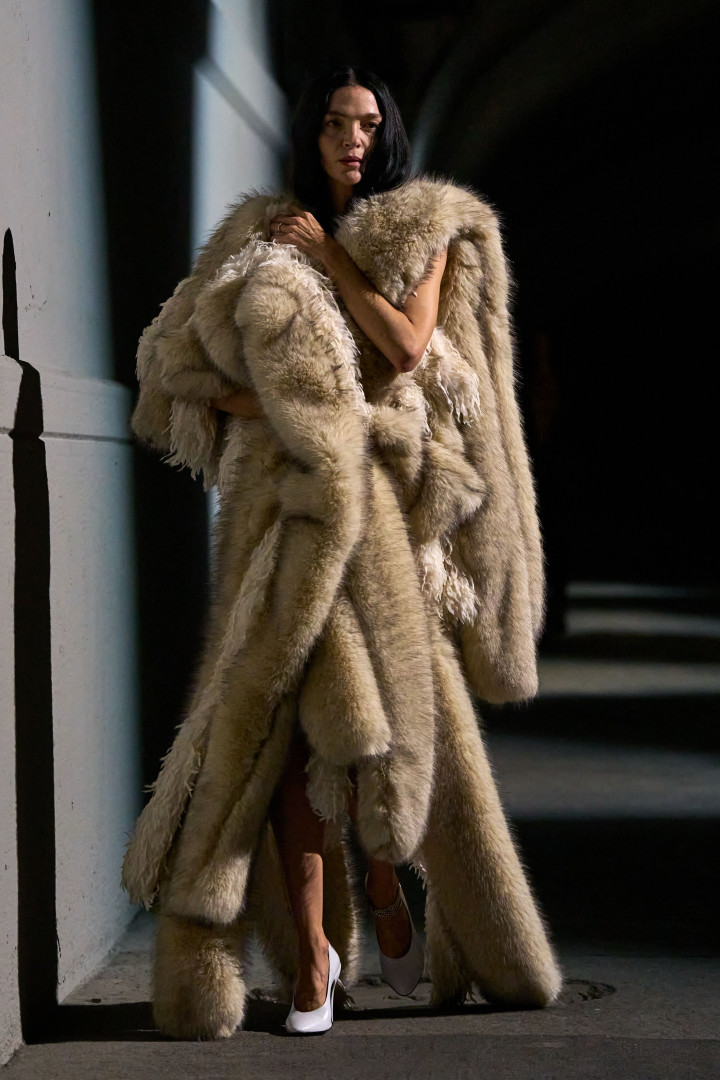
The Attico/ editorial reproduction
Celebrating its tenth anniversary, the Milanese label founded by Gilda Ambrosio and Giorgia Tordini turns inward, transforming the bedroom into a stage for the many identities that can coexist within a single woman. Presented during Milan Fashion Week under the evocative title “Quando Nessuno Guarda” — “When No One Looks” — the collection does not ask who we are in public. Instead, it asks who we become when the world disappears.
The answer is not singular. It is a wardrobe of contradictions, alter egos and impulses.
The runway itself became an extension of this idea. Guests were placed around a succession of beds, surrounded by pillows, tangled sheets and an atmosphere of deliberate darkness. It was intimate without becoming sentimental, theatrical without losing its sense of privacy. The bedroom became less a literal setting than a psychological landscape: the place where one dresses, undresses, experiments, transforms and allows different versions of oneself to exist without explanation.
At the heart of the collection lies an idea attributed to Gabriel García Márquez: that each person possesses three lives, a public life, a private life and a secret one. The Attico chooses the third. Here, fashion becomes the language through which that hidden self speaks.
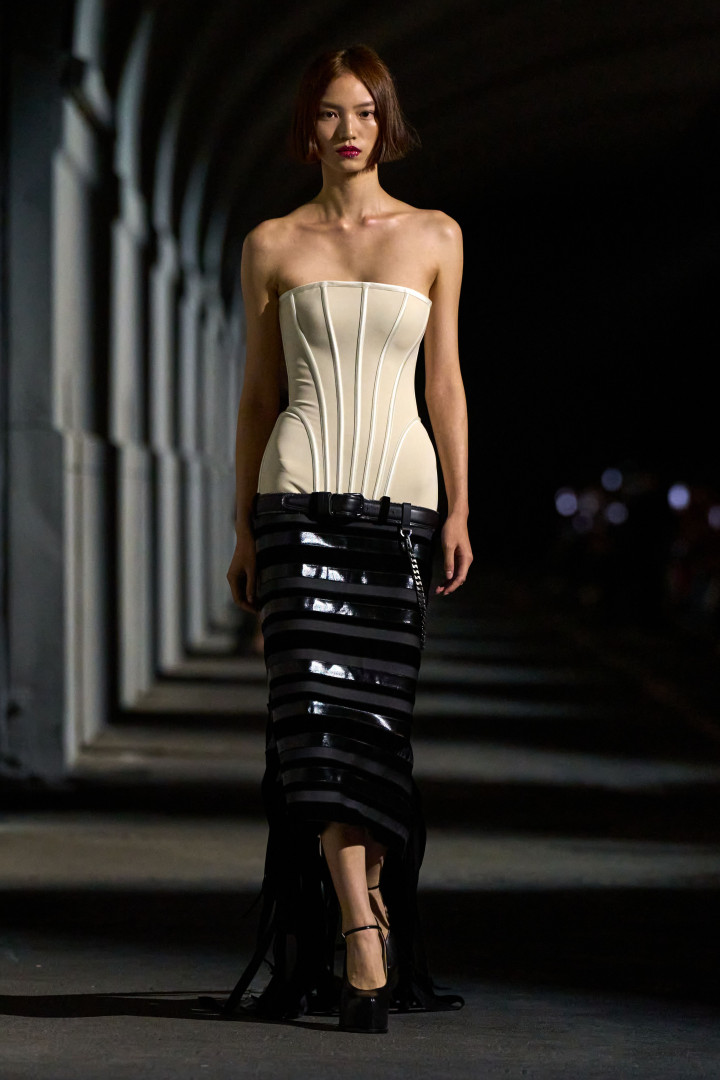
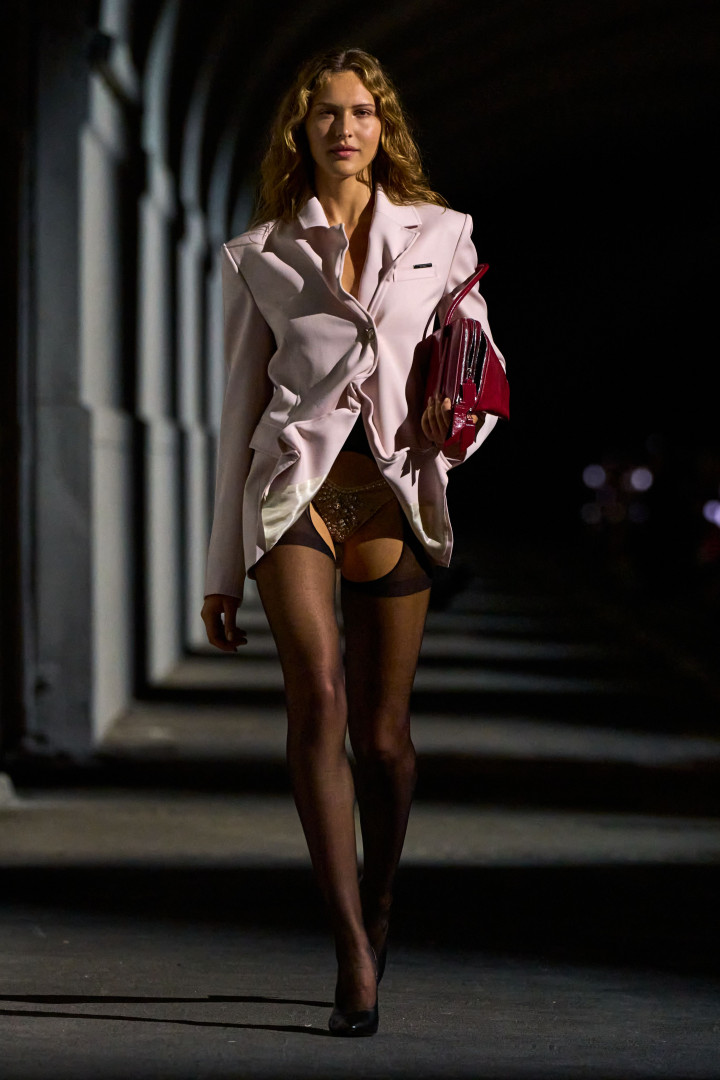
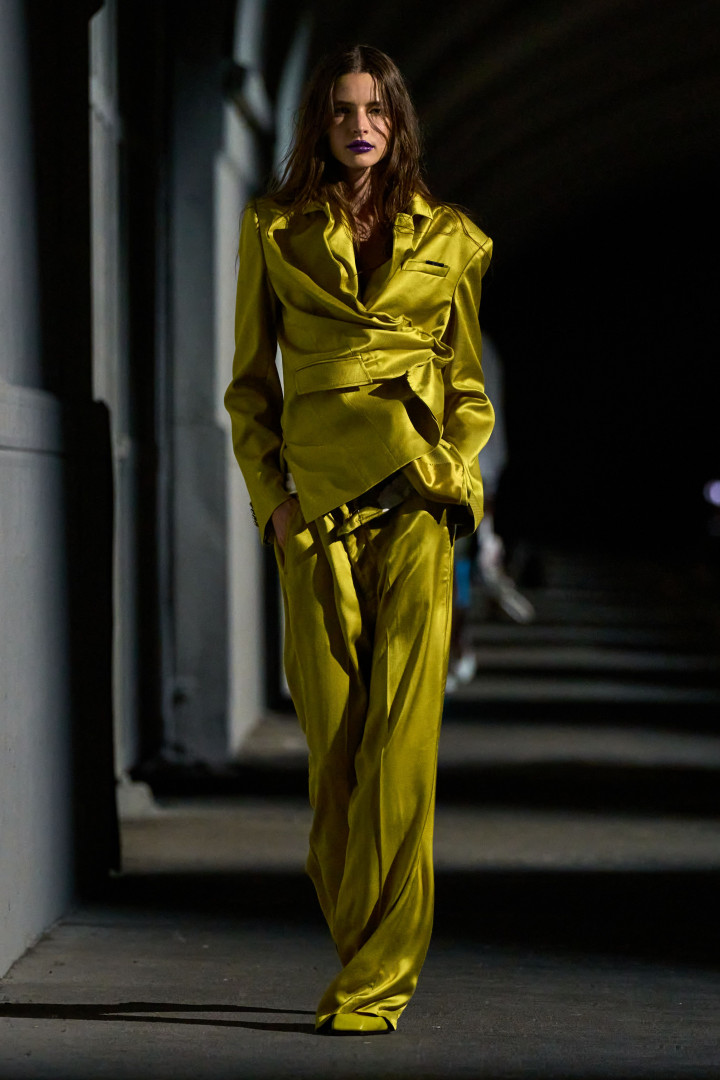
The most compelling aspect of Spring/Summer 2027 is its refusal to define a single Attico woman. There is the woman of sharp shoulders and precise tailoring; the woman wrapped in lingerie; the woman who wants glamour; the woman who wants protection; the woman who wants to disappear beneath layers of fabric; and the woman who wants every eye in the room to follow her. None replaces the other. They coexist.
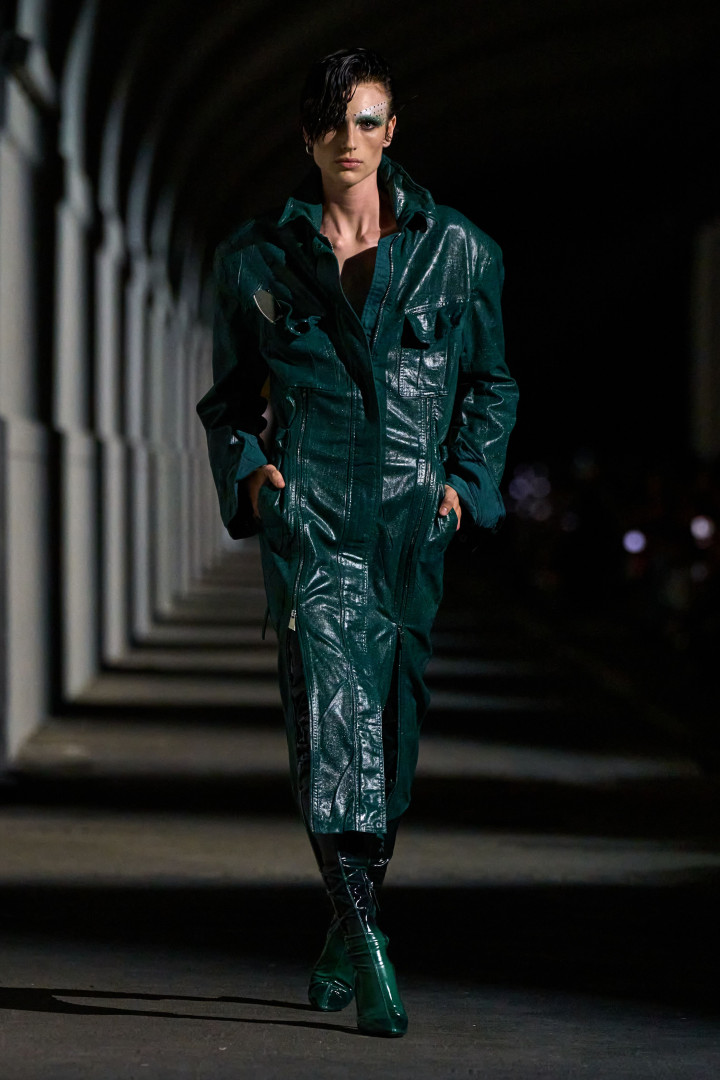
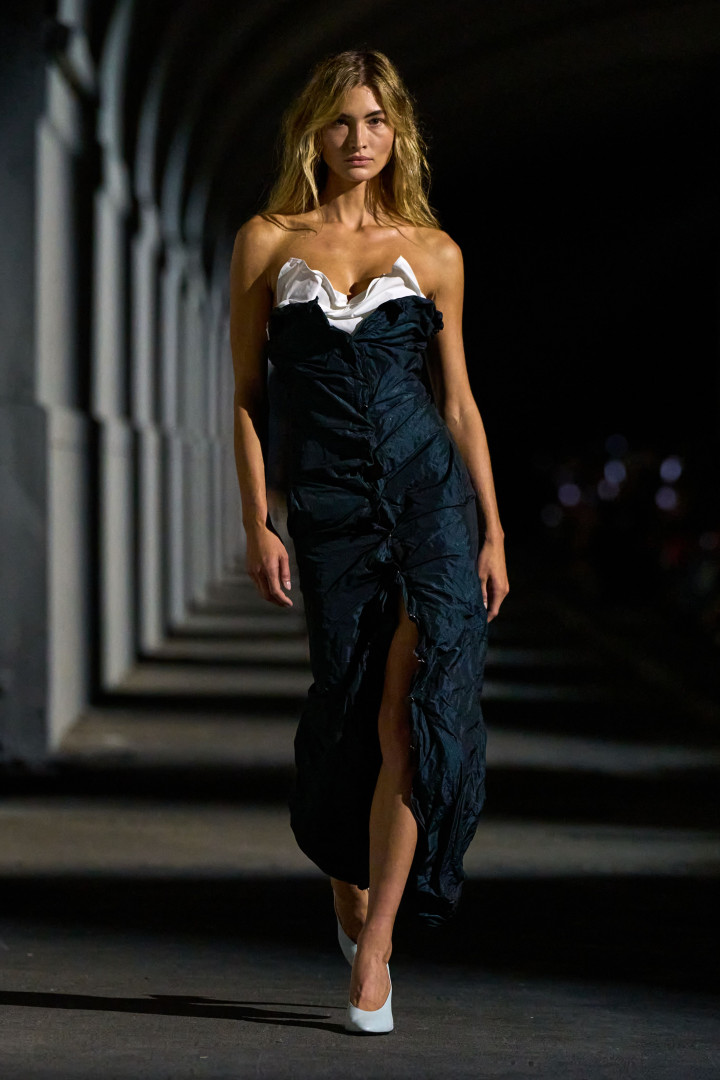
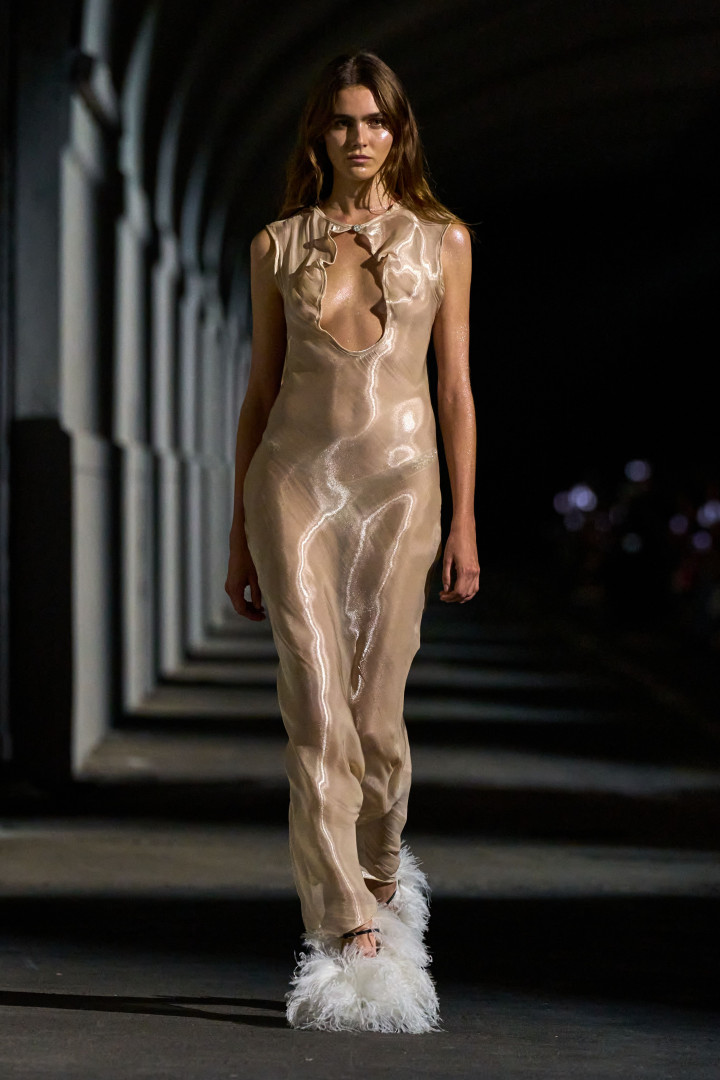
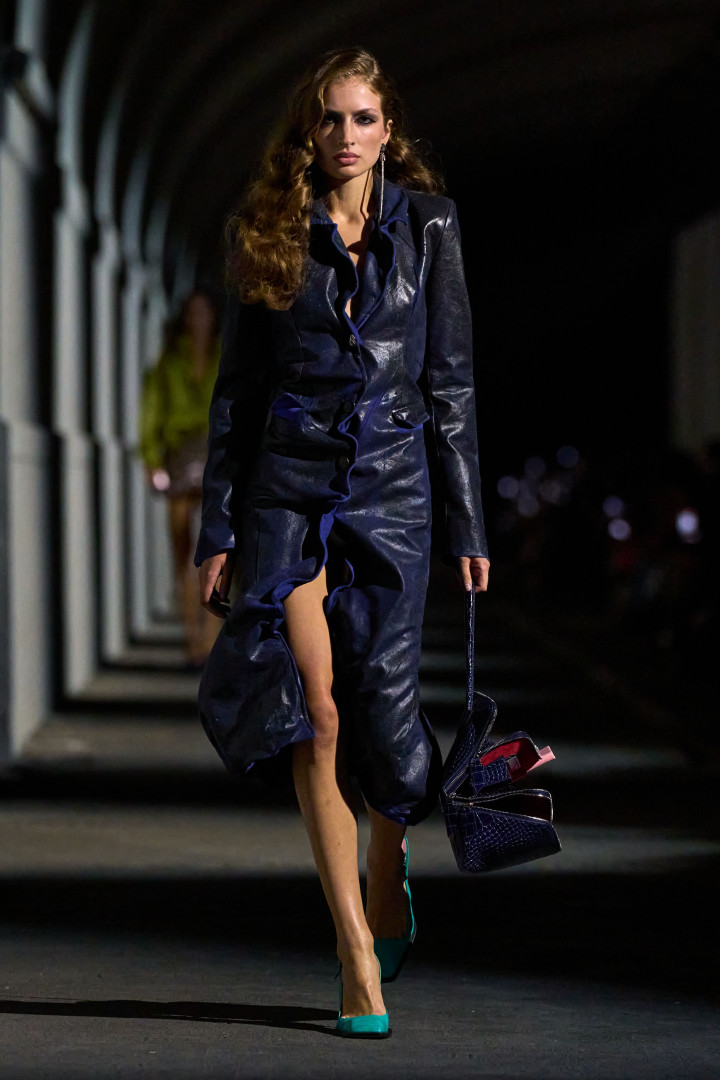
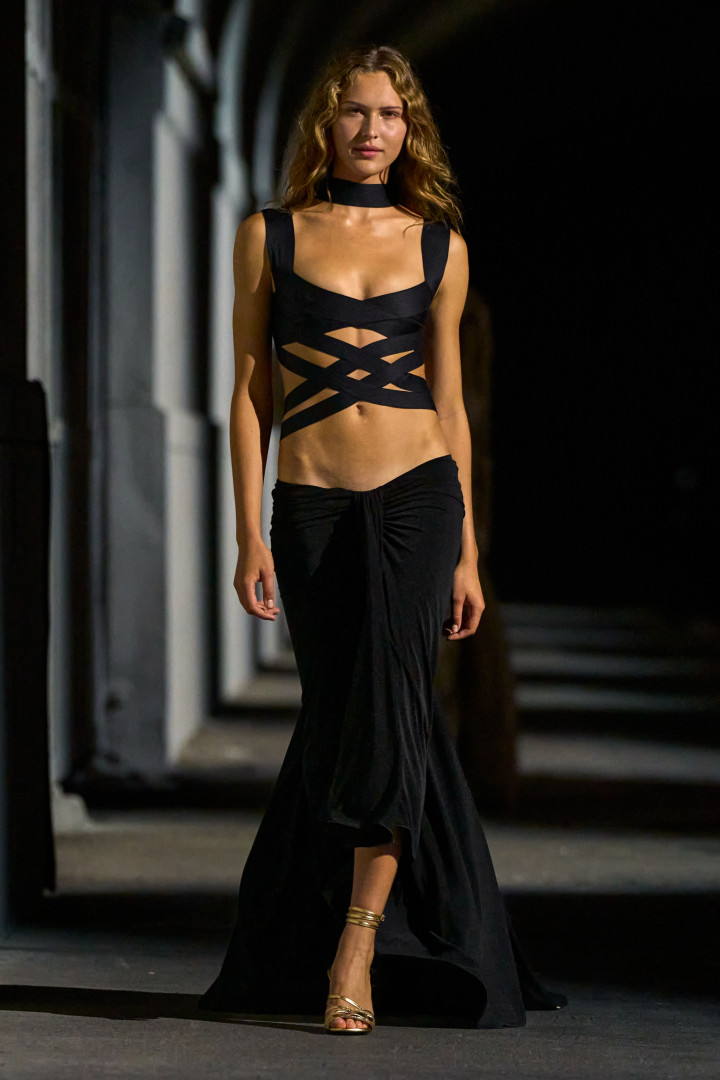
This multiplicity is translated into garments that appear deliberately unsettled. Dresses, skirts and trousers are draped, twisted and crushed, creating silhouettes that feel as though they have been caught in the middle of transformation. Metal wire incorporated into certain pieces gives the fabric a memory of its own, allowing shapes to be manipulated, distorted and held in unexpected positions.
There is something deeply human in this imperfection. The clothes do not always appear freshly constructed. They look lived in. They suggest what happened before the photograph, before the entrance, before the audience arrived. The crease becomes intentional. The wrinkle becomes design. The undone becomes desirable.
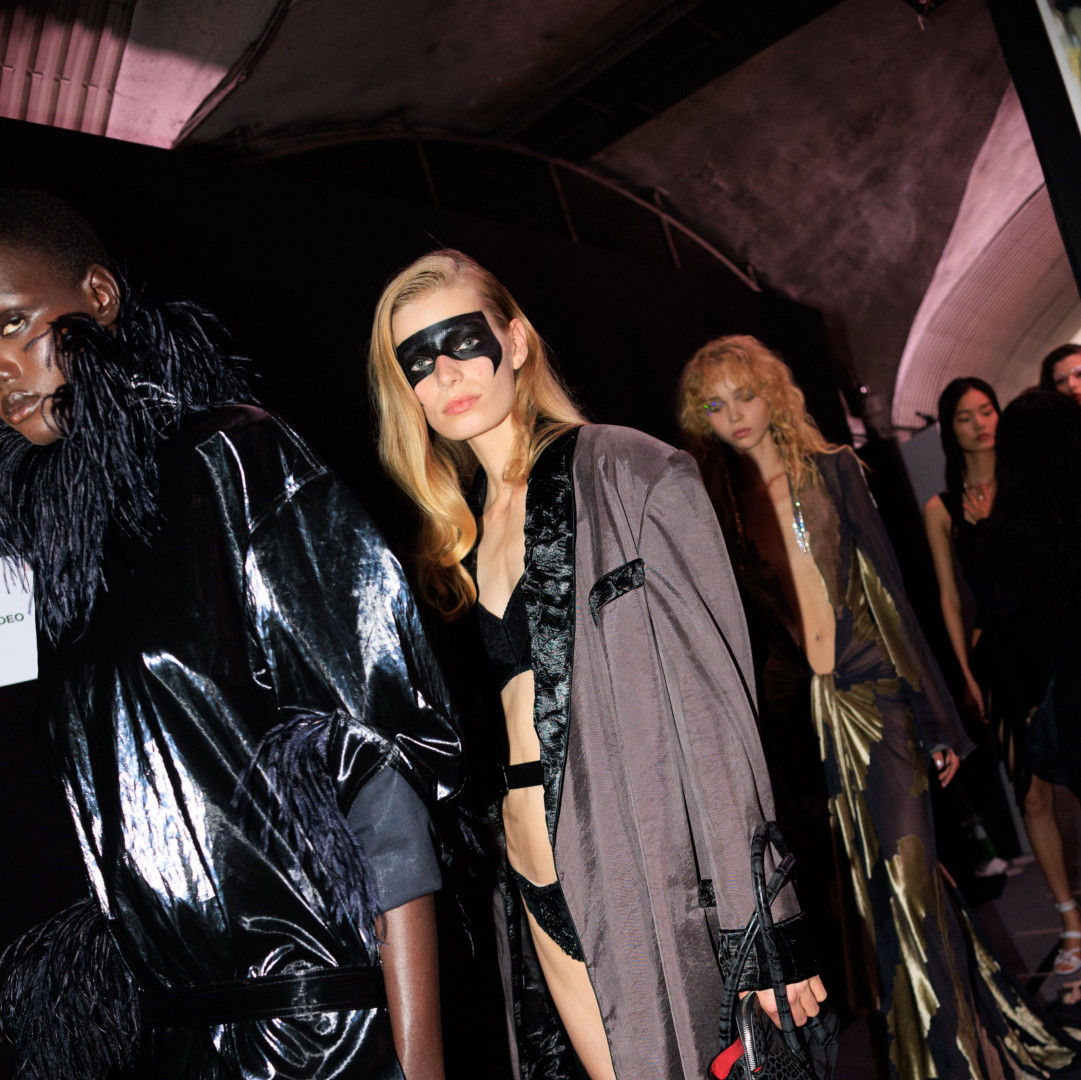
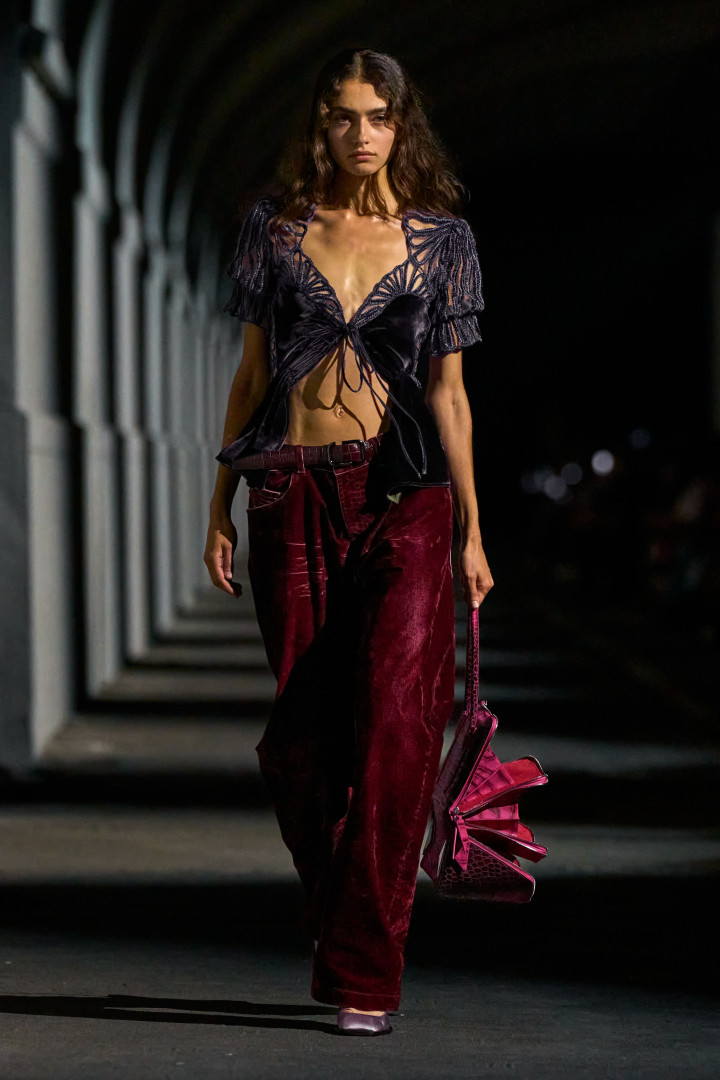
The dressing gown, one of The Attico's early signatures, returns with an almost operatic sensuality. Velvet is treated as both intimate and extravagant, blurring the boundary between something worn privately and something designed to be seen. Throughout the collection, that tension remains constant.
Lingerie meets tailoring. Sheer fabrics meet structured shoulders. Leather encounters softness. Military references appear alongside feathers, fringe and shimmering evening pieces. Masculine shirts coexist with exposed skin, while utility zippers become sensual details. Low-slung silhouettes and elongated proportions reinforce an attitude that feels simultaneously rebellious, provocative and luxurious.
Yet beneath all of this lies a more fundamental question: why do we dress at all?
Perhaps clothing is not always about presenting ourselves to others. Perhaps, sometimes, it is about discovering ourselves when there is no audience.
For a brand celebrating its first decade, The Attico could have chosen nostalgia. Instead, it chooses introspection. The collection looks backwards only to understand what remains essential. The glamour is still there. So is the sensuality, the sharpness, the provocative proportions and the instinctive understanding of the woman who wants fashion to possess attitude.
But after ten years, those codes no longer need to behave exactly as they once did. They can be twisted. They can be softened. They can be undone. They can be slept in and taken back out into the world the following morning.
This is perhaps where the anniversary becomes most meaningful. Rather than presenting a retrospective of recognizable signatures, Ambrosio and Tordini revisit the emotional territory that has always made The Attico compelling: the freedom to become someone else. Or, perhaps more accurately, the freedom to reveal someone who was already there.
There is an inherent paradox in presenting privacy on a runway. The bedroom is traditionally the place where nobody looks. Fashion week is precisely the opposite: a space built around being seen. The Attico places these two worlds against one another and finds energy in the tension.
The audience watches the models enter a world supposedly designed for the absence of observation. And yet, through that contradiction, the collection makes its most compelling statement. Visibility is not always the same as authenticity. Sometimes the most interesting version of ourselves is the one that appears only when nobody is looking.
Spring/Summer 2027 understands that identity is not fixed. It moves between public and private, control and abandon, masculinity and femininity, elegance and disorder. The Attico does not ask its woman to choose. It gives her permission to be all of them.
And perhaps that is what makes this tenth-anniversary collection feel less like a celebration of the past and more like a declaration of freedom for the decade ahead.