NFW SPRING 2027/ KHAITE: The Architecture of Desire
For Spring 2027, KHAITE turns sensuality into architecture, balancing delicate lingerie, sculptural leather, intricate lace and dramatic volume in a study of strength, fragility and desire.
For Spring/Summer 2027, Catherine Holstein looked inward. Ten years after founding KHAITE, the designer returned to the fundamental language that has shaped the house, leather, tailoring, the female body — but allowed it to become softer, stranger and more romantic. Presented inside the vast darkness of the Brooklyn Navy Yard, the collection emerged almost as a study in chiaroscuro: garments appearing from shadow, their textures revealed only as the light found them.
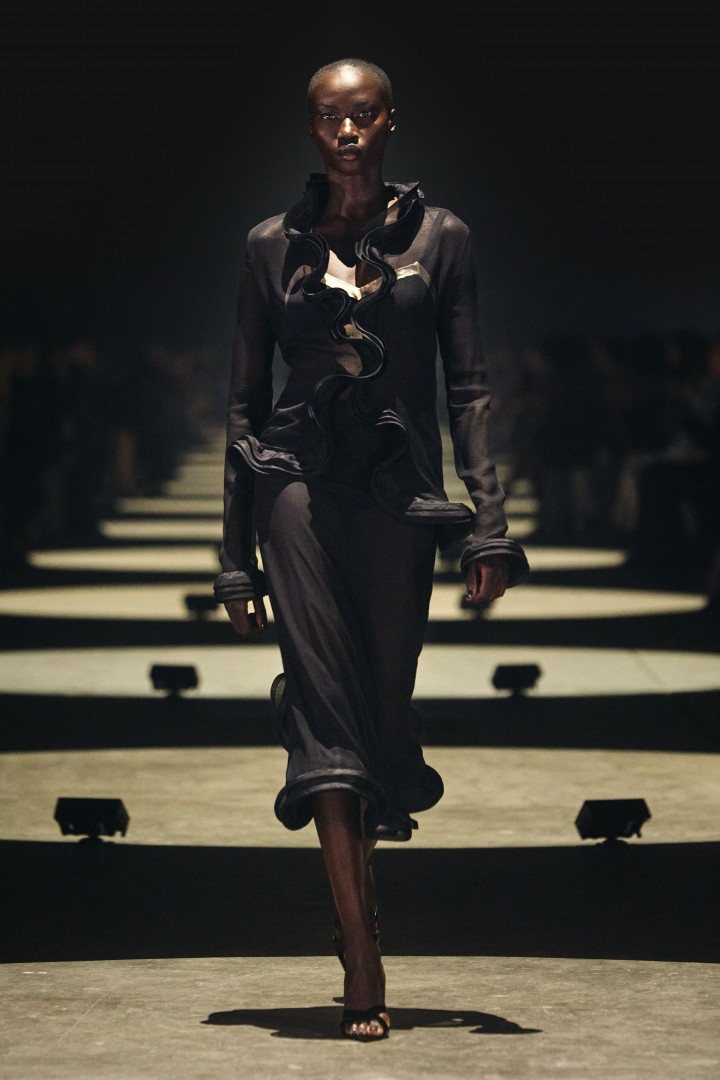
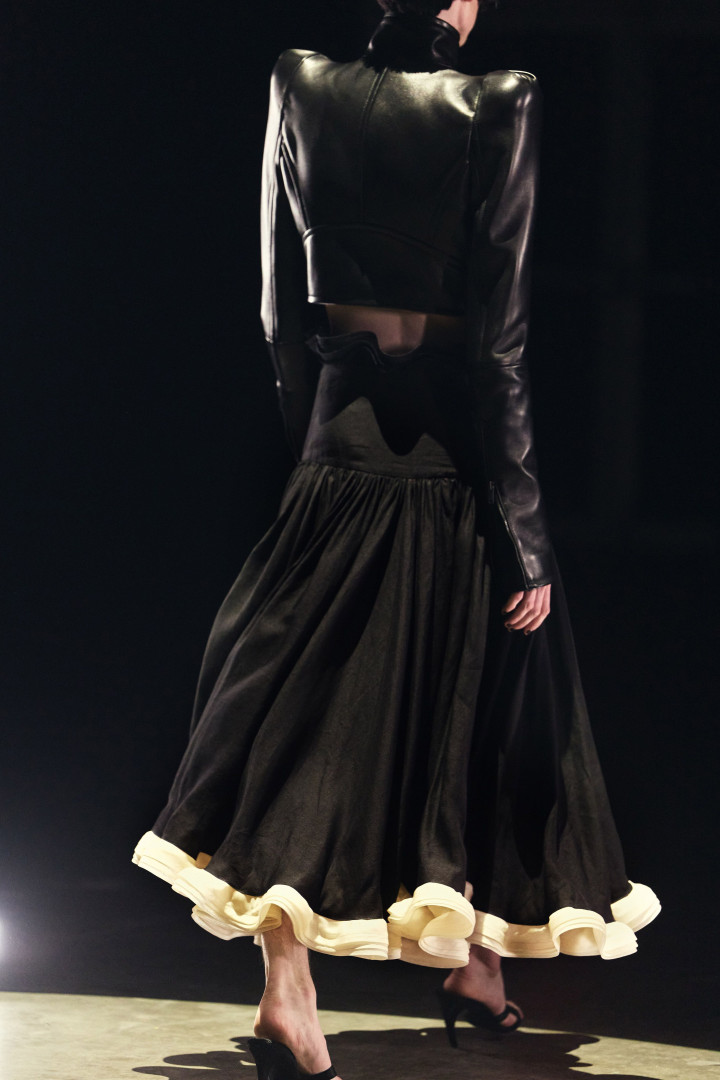
Editorial Reproduction/Spring 2027 Collection
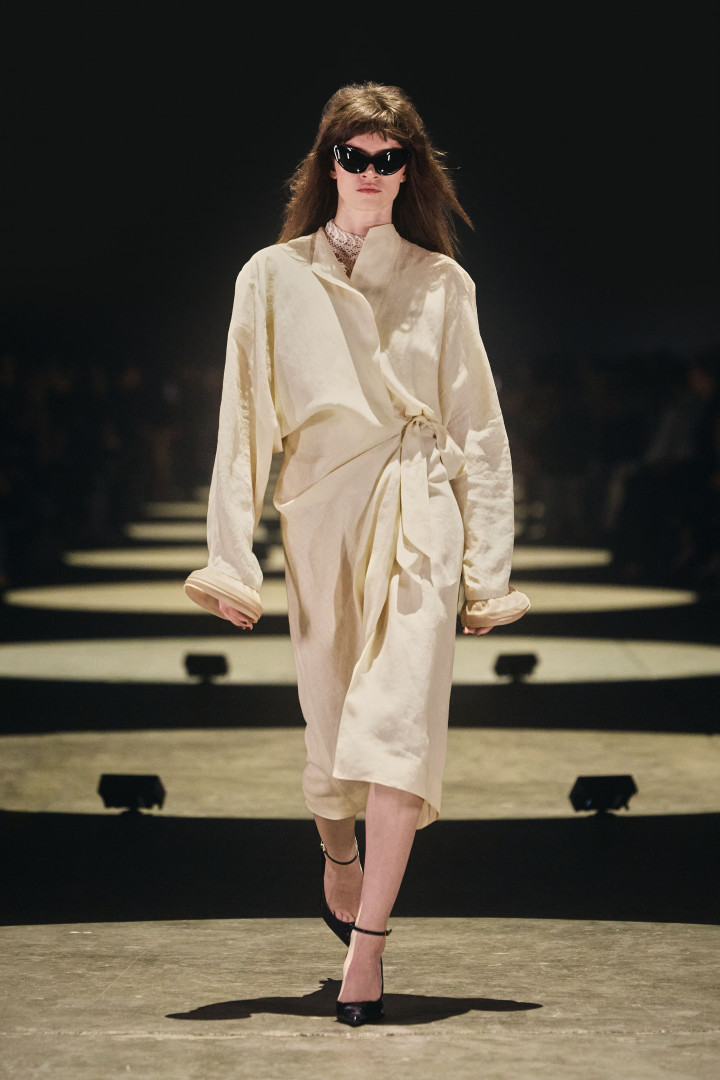
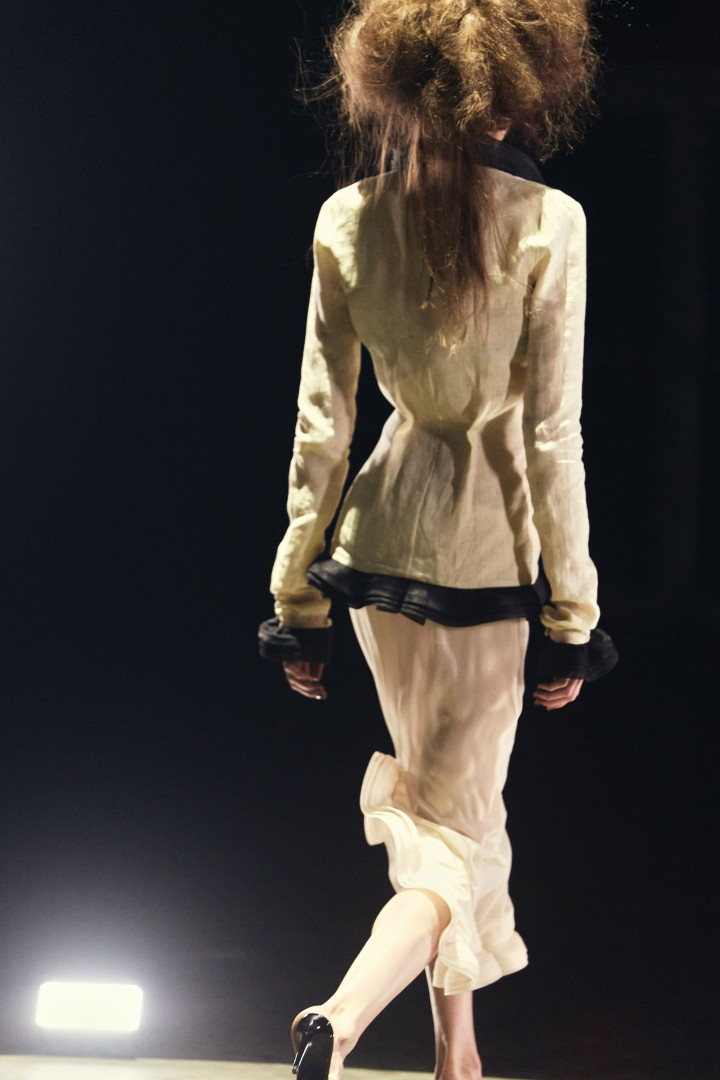
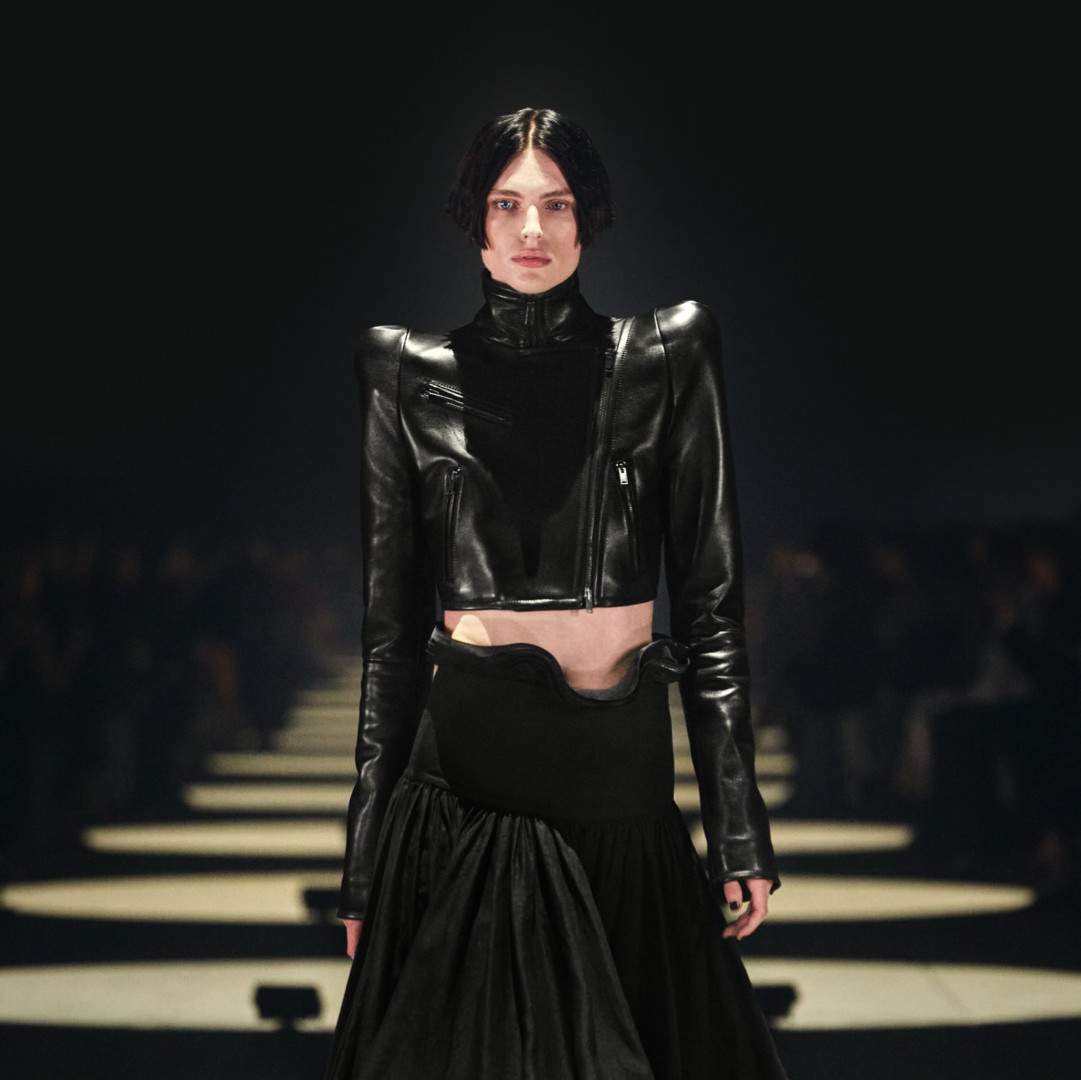
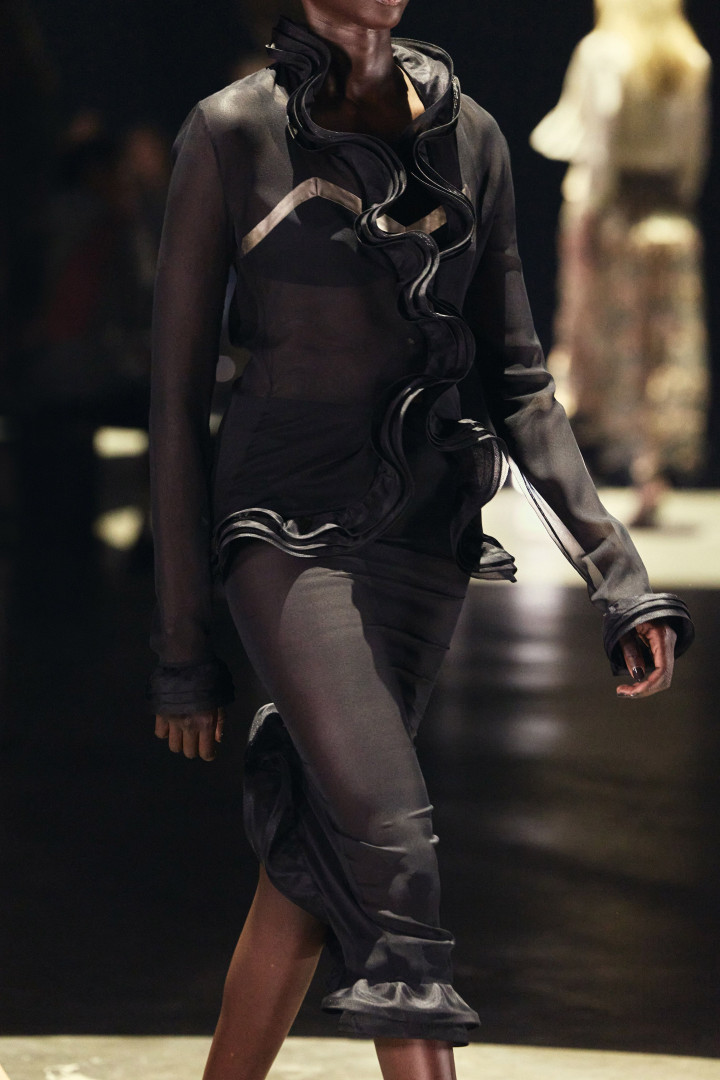
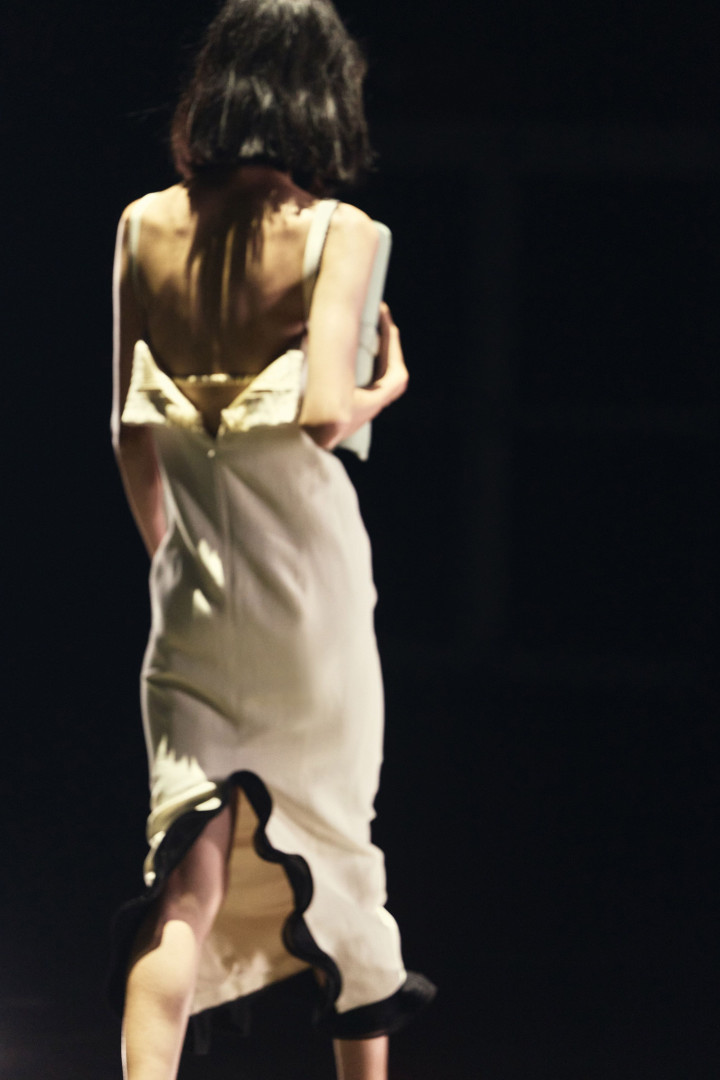
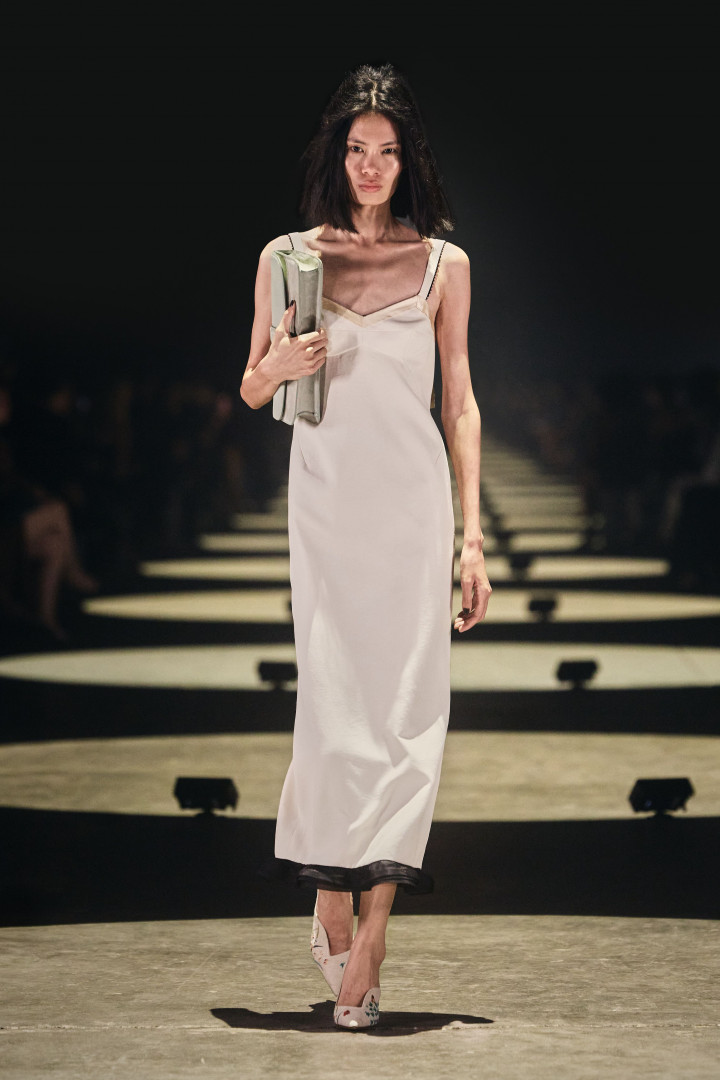
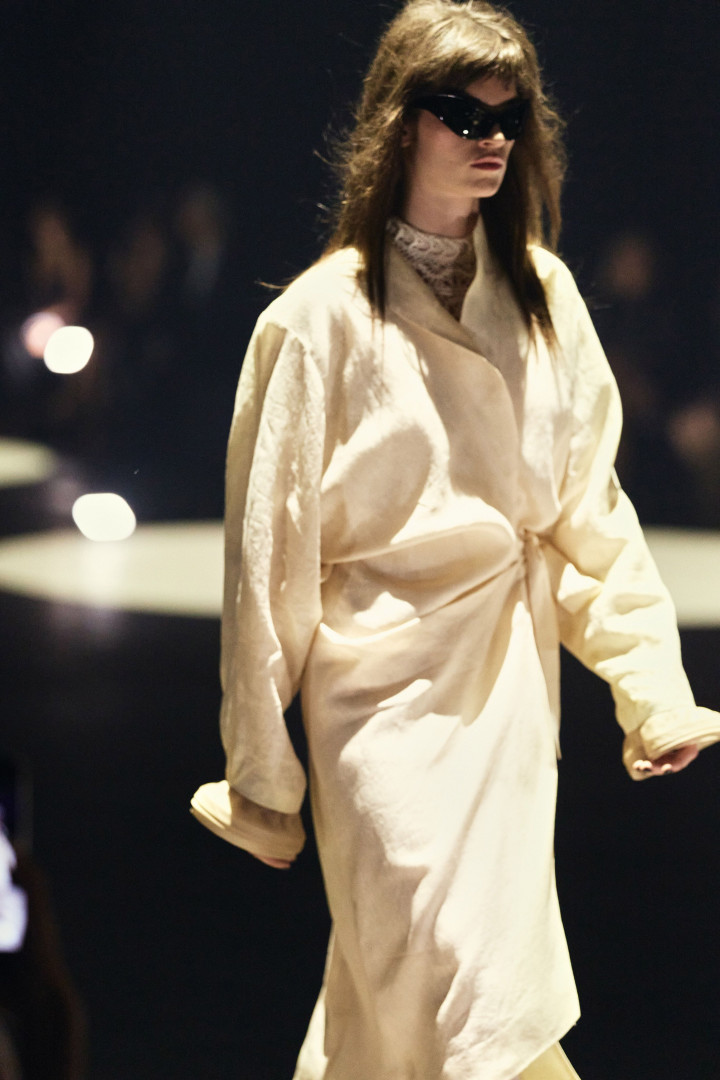
The opening look, worn by Kaia Gerber, established the contradiction immediately: a sculptural white bra beneath a long black leather skirt, exposing the body while simultaneously constructing it. From there, KHAITE moved into a vocabulary of antique corsetry, lingerie, lace, sheer mousseline and exaggerated volumes. Flower-embroidered lace dresses were framed by exterior basques, while trapeze silhouettes and crinoline-like structures gave softness an architectural dimension.
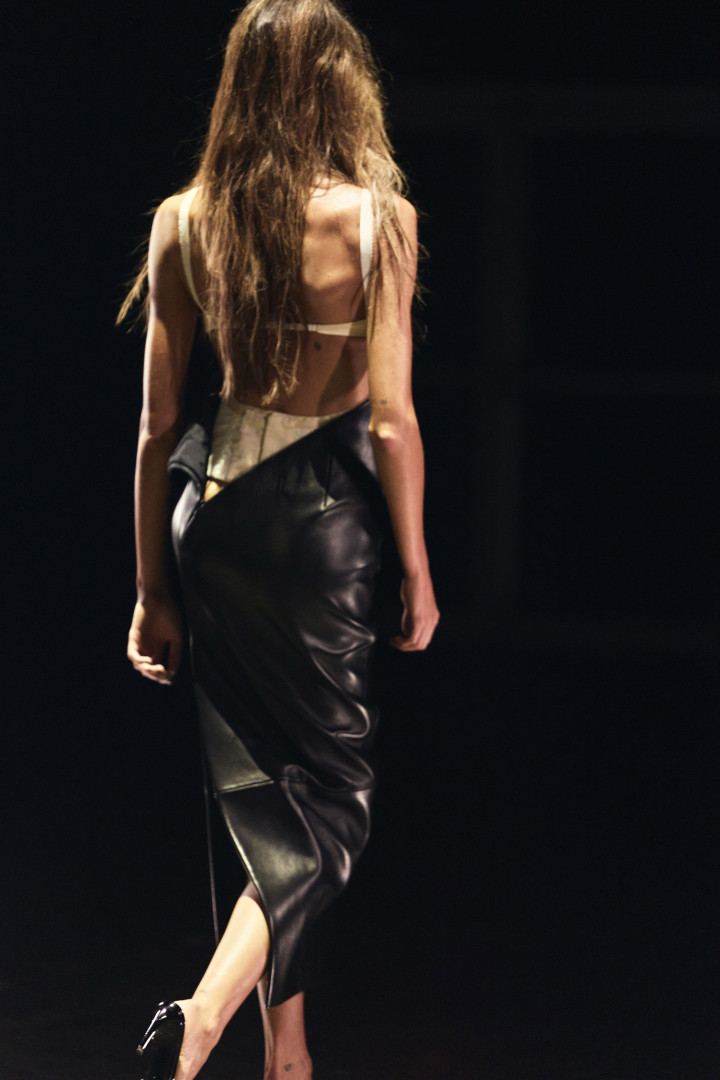
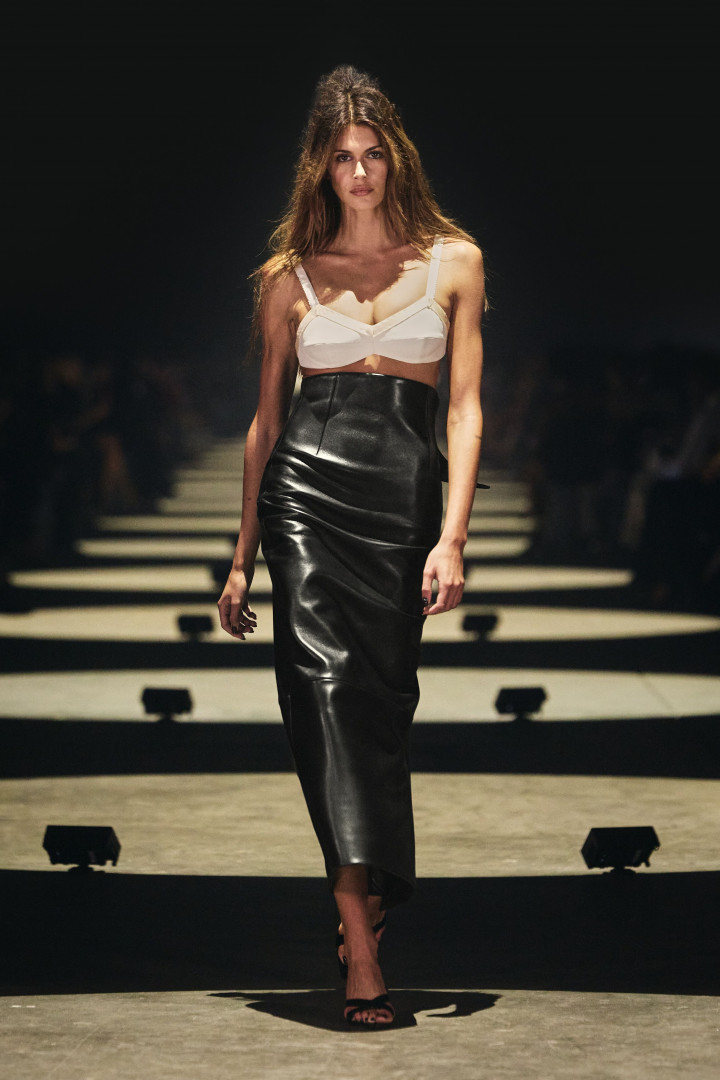
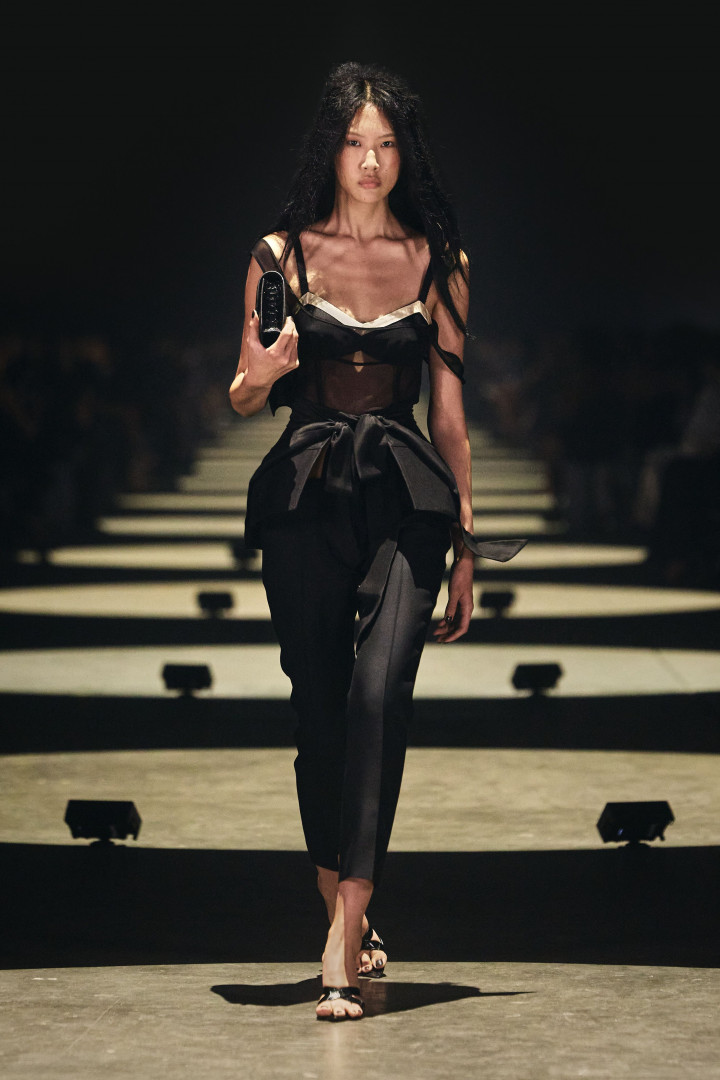
Yet this was not romance in its most delicate interpretation. There was something darker beneath the surface. The transparency of the fabrics was repeatedly confronted by the weight of leather; fragile lingerie codes met sculptural outerwear; narrow, body-conscious forms gave way to dramatic volume. KHAITE describes these tensions as a dialogue between delicacy and strength, intimacy and restraint — and it is precisely within these oppositions that the collection finds its identity.
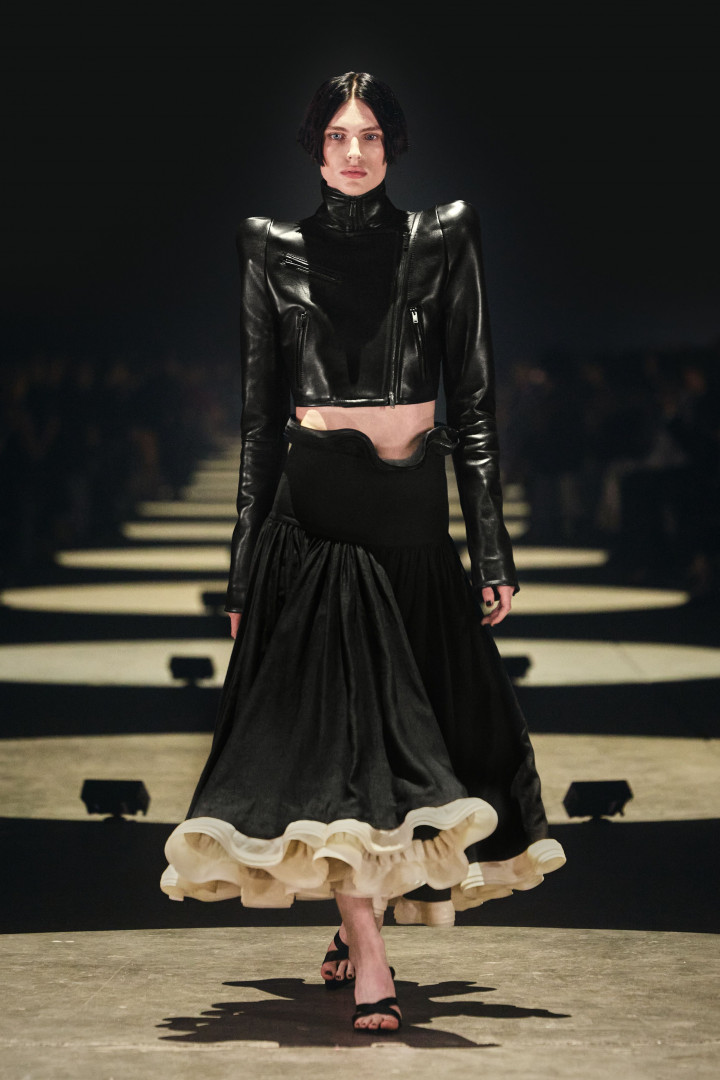
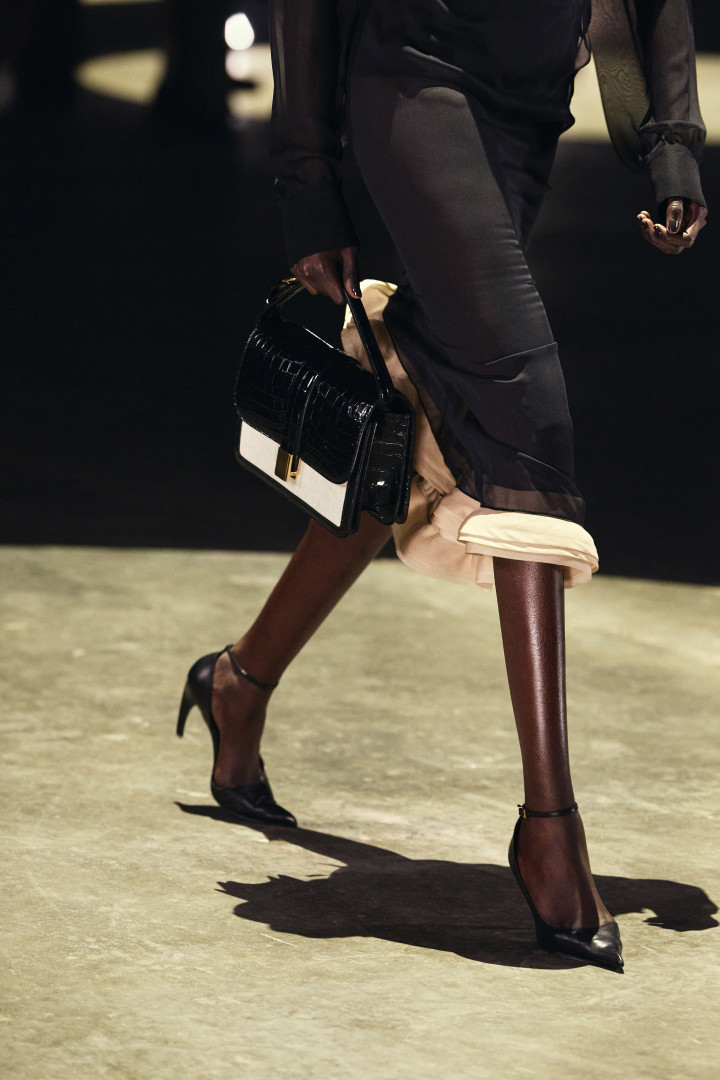
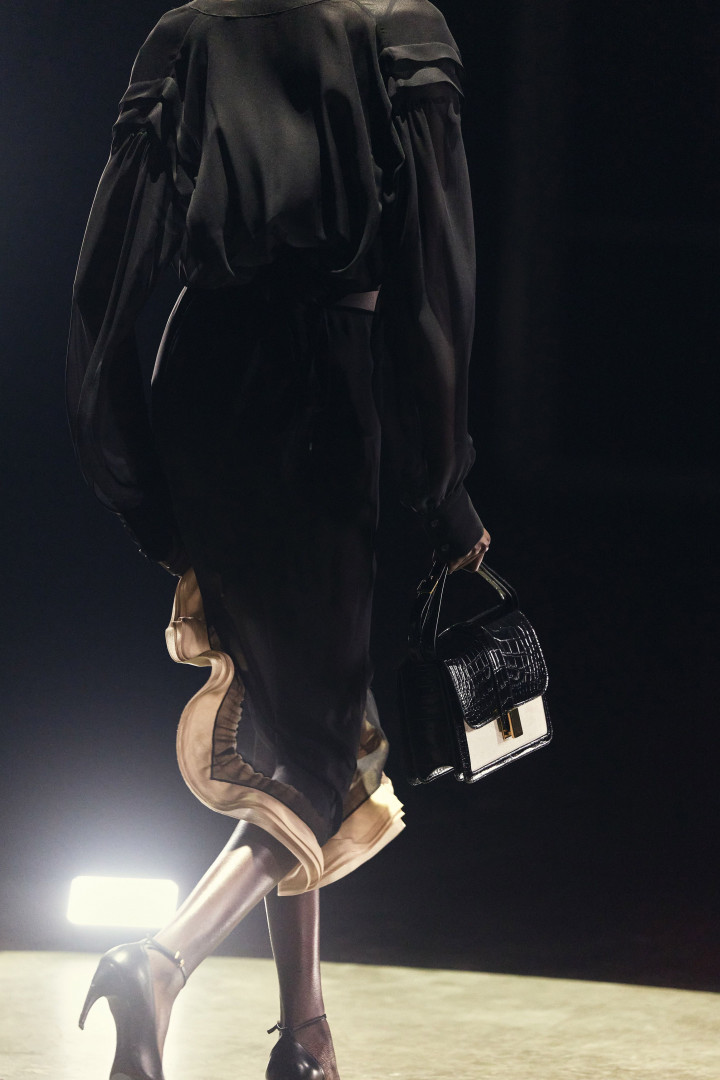
Editorial Reproduction/Spring 2027 Collection
Holstein has spoken of being drawn back into the clothes themselves, asking not what could be removed, but what could be added. That instinct is visible in the details: hand-finished corsetry, delicate embroidery, pleating, picot edges and intricate surfaces that reward a closer look. The collection also carries an unexpected memory of Venice, where the shifting light and layered architecture informed some of its forms and details.
What emerges is a more intimate KHAITE, not a departure from the house’s established sensuality, but an examination of where that sensuality comes from. The body is still the centre, but now it is treated less as an object of certainty than as a landscape of contradiction: protected and exposed, disciplined and undone, severe and romantic.
For its tenth year, KHAITE did not need to reinvent itself. Instead, it looked beneath the surface of its own vocabulary. Spring 2027 suggests that the most compelling form of evolution may sometimes be an act of excavation — returning to what is already there, and discovering that it contains far more than first imagined.