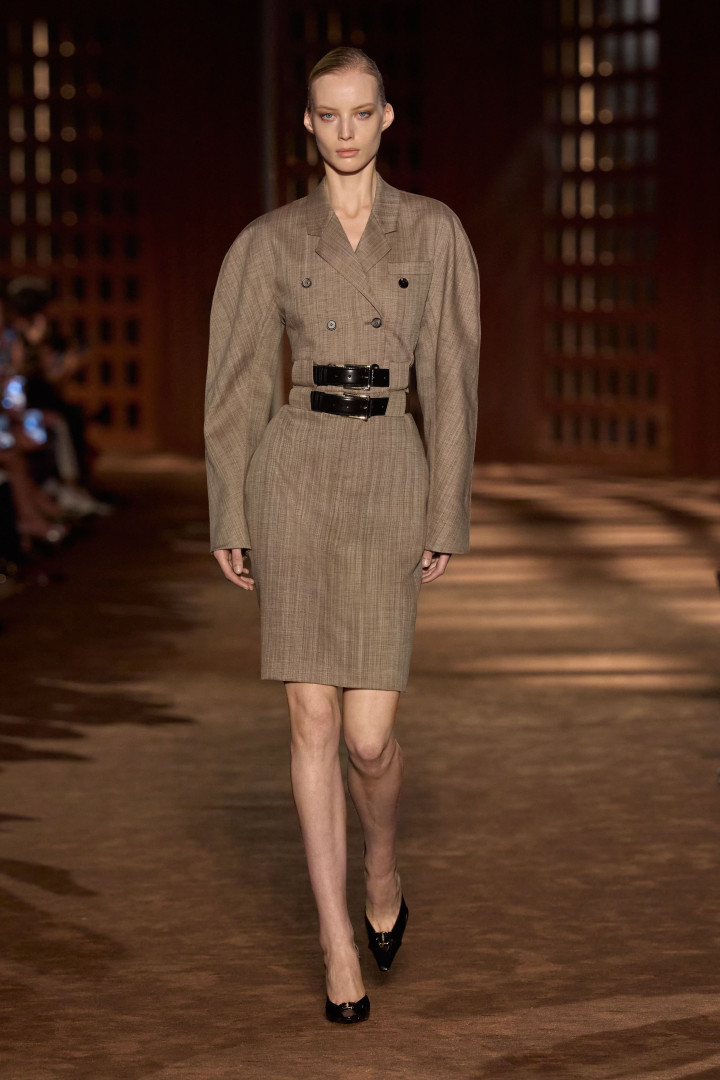
Ferragamo SS 2027/ The past has never existed
Ferragamo Spring/Summer 2027 explores the dialogue between heritage and reinvention, as Maximilian Davis transforms archival references, sculptural tailoring and sensual textures into a contemporary vision of freedom, movement and desire.
There are fashion houses that preserve their history, and then there are those that understand how to make history feel alive. At Ferragamo, the past has never existed simply as something to be admired from a distance. For Spring/Summer 2027, Maximilian Davis once again approaches the House’s extraordinary heritage not as an archive to be replicated, but as a language to be questioned, disrupted and ultimately transformed.
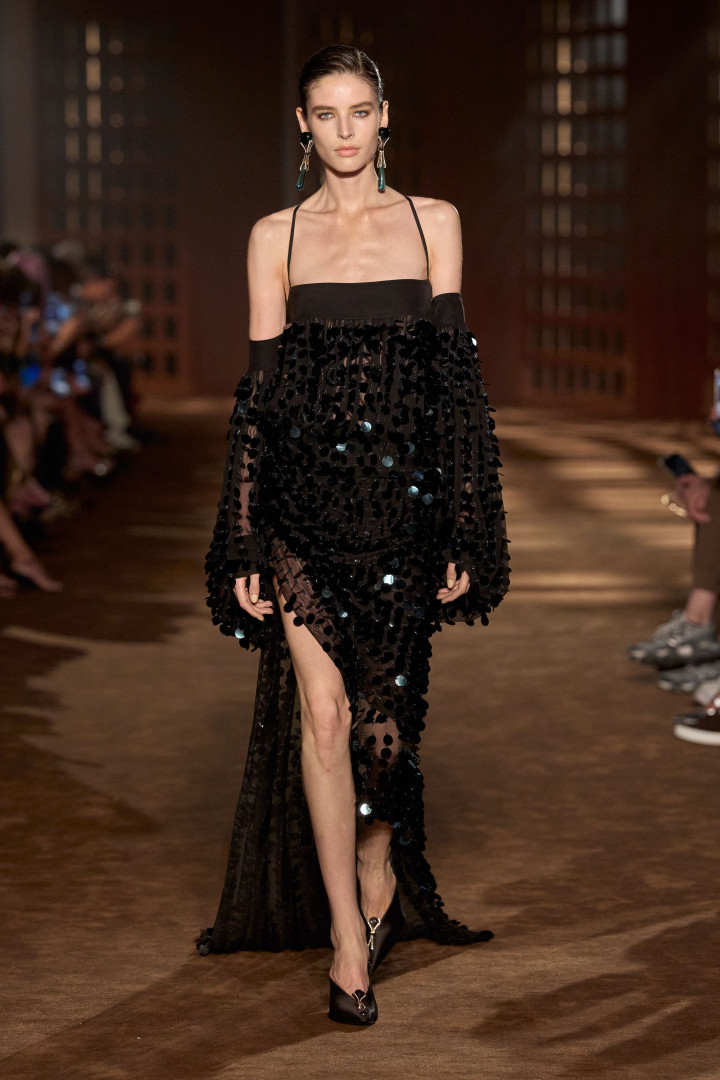
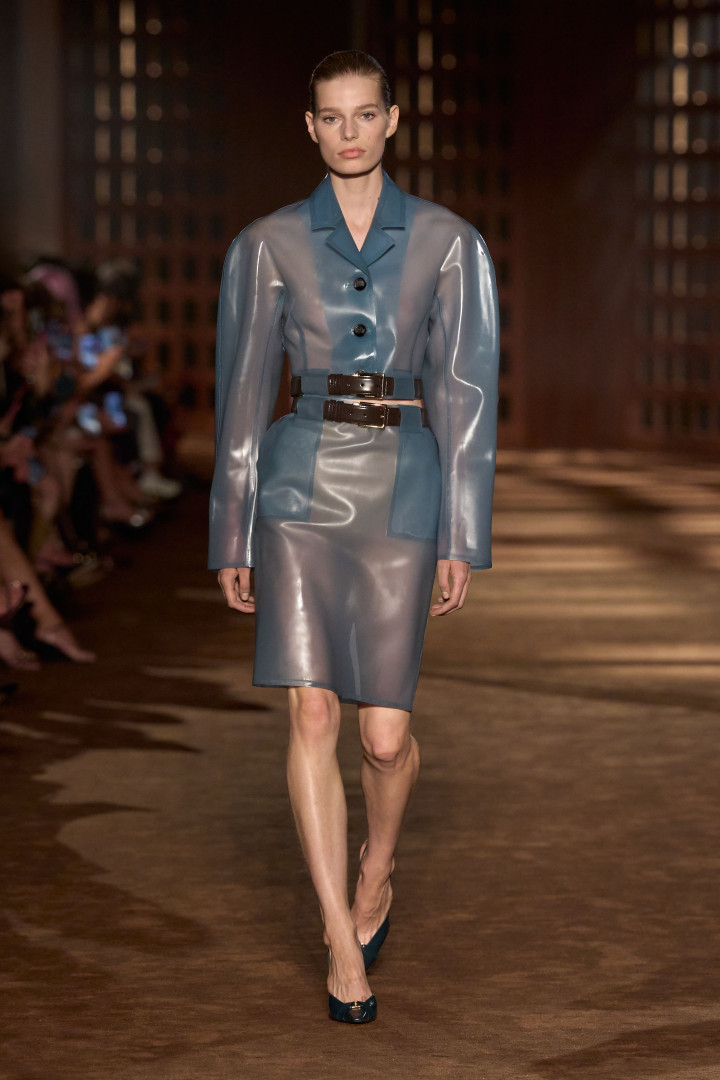
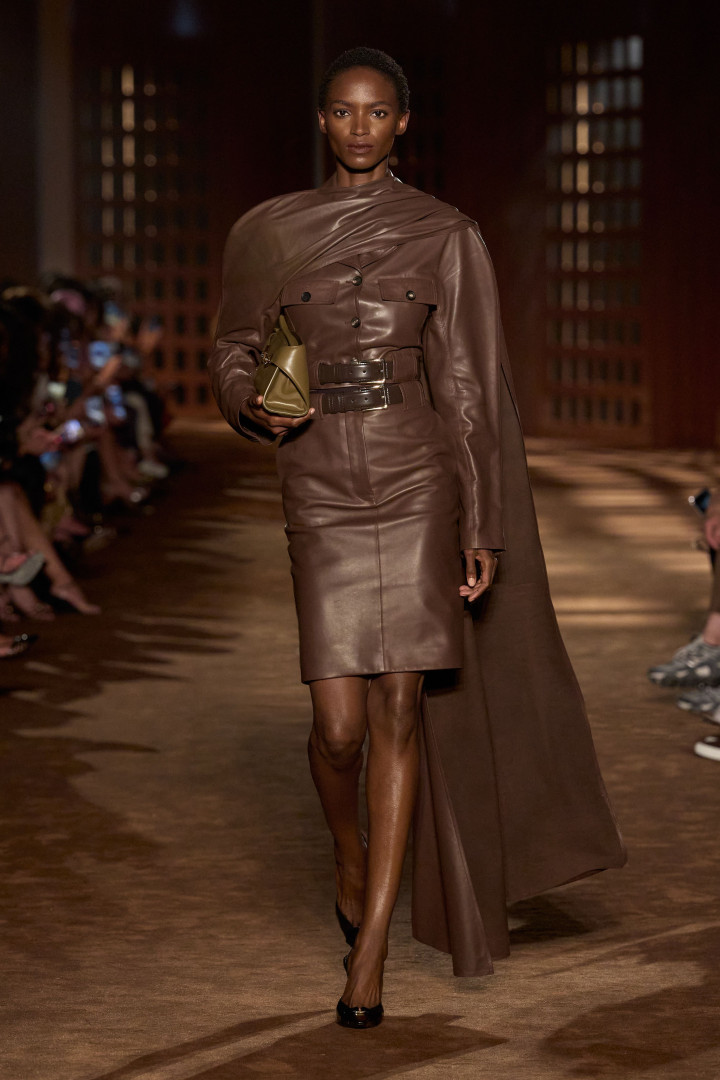
Editorial reproduction/ Ferragamo
Presented during Milan Fashion Week, the collection moves through the visual vocabulary of the 1940s, drawing upon an era defined by discipline, utility and powerful silhouettes, while gradually allowing those codes to dissolve into something more sensual and instinctive. The result is a collection suspended between structure and movement, restraint and desire, history and reinvention.
At its centre is the spirit of Salvatore Ferragamo himself. The Invisible Sandal, originally created in 1947, becomes an important point of departure, an object that represented experimentation at a time when fashion was still deeply rooted in conventional ideas of construction. Its seemingly impossible transparency and sculptural form become a reminder that innovation has always been part of Ferragamo’s DNA. Davis takes that spirit forward rather than looking backwards.
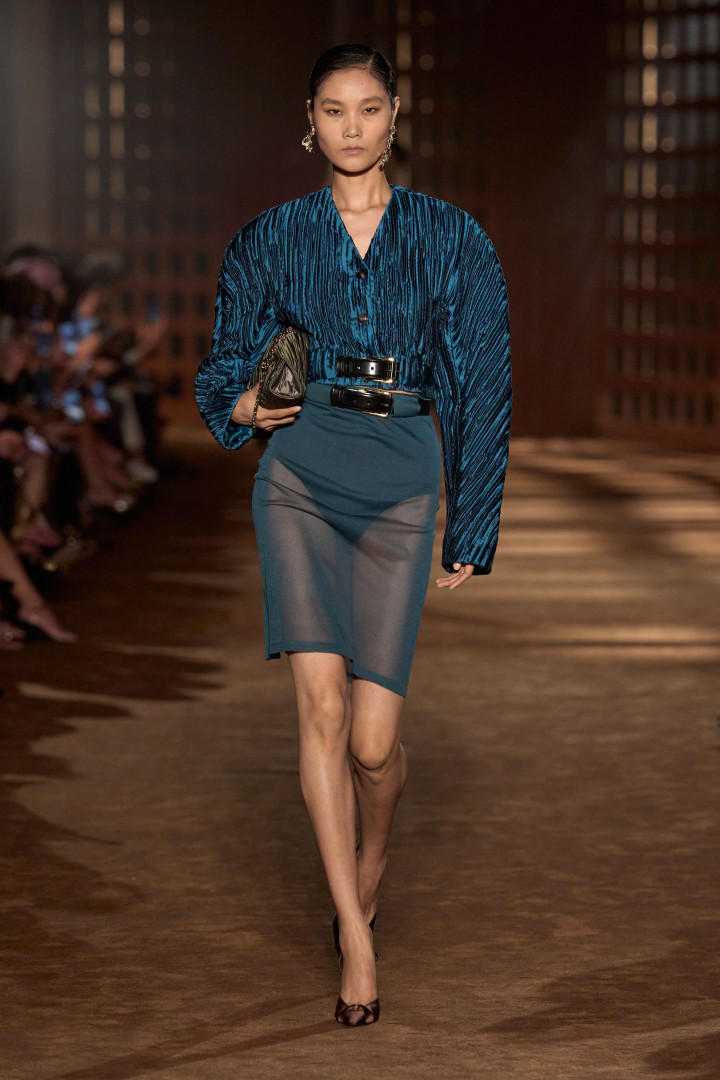
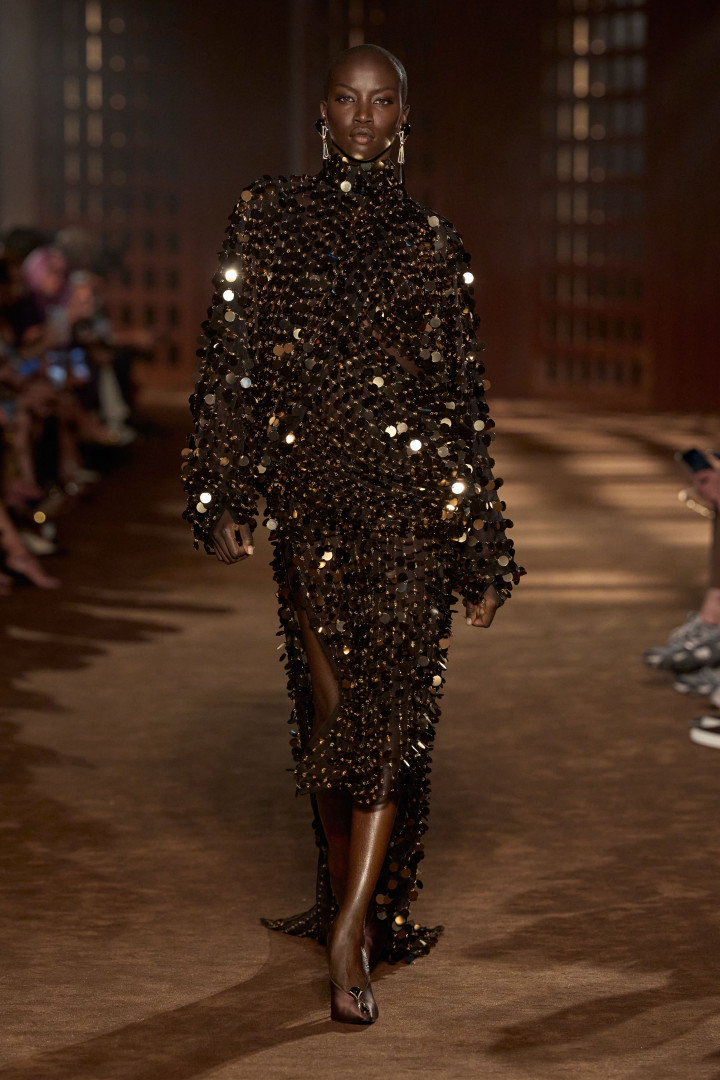
The silhouettes initially carry the authority of the past. Shoulders are defined, waists are sharply drawn, tailoring feels precise and military references appear through pockets, belts and utilitarian details. Yet nothing remains rigid for long. The structure begins to soften around the body, tailoring becomes more fluid and garments seem to move away from the idea of uniform towards something distinctly personal.
That distinction is essential. Davis takes references associated with a period in which clothing often communicated social expectations and transforms them into expressions of individuality. Jackets curve around the body rather than simply covering it. Skirts move with rather than against the figure. Workwear becomes sensual. The codes of discipline remain visible, but their authority has disappeared.
There is an almost cinematic quality to the collection, particularly in its relationship with photography and the women who shaped the visual culture of the twentieth century. Lee Miller emerges as an important presence, not through literal imitation but through the atmosphere of travel, discovery and transformation associated with her work. Her photographs of Egypt, together with the experimental imagery created with Man Ray, offer Davis a vocabulary of light, shadow, landscape and distortion.
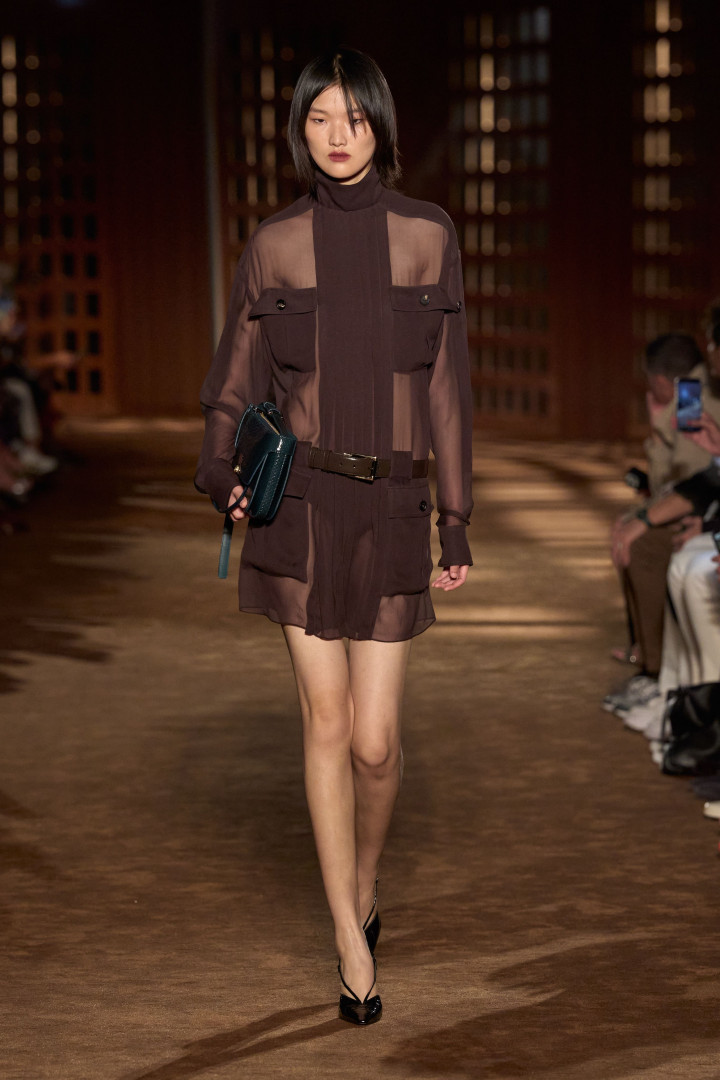
Ferragamo Spring/Summer 2027 therefore feels less like a return to the 1940s than a conversation with them. The collection takes the authority of an earlier era and removes its limitations. It takes the uniform and gives it sensuality. It takes tailoring and gives it movement. It takes the archive and gives it freedom.
This is the quiet strength of Maximilian Davis’s approach to Ferragamo.