Chanel SS27: The Woman Within the Woman
Matthieu Blazy traces the many lives of Gabrielle Chanel, transforming the house’s heritage into a story of movement, identity and freedom.
For Spring/Summer 2027, Matthieu Blazy looks at Chanel not as a fixed legacy, but as a living history. Presented beneath the Grand Palais, the collection becomes a conversation with Gabrielle Chanel herself — not the icon preserved in photographs, but the woman who continuously changed, challenged conventions and reinvented the way women dressed. Blazy’s starting point is the idea of the many women contained within one woman: different identities, different moments, different versions of the self, all existing at once.
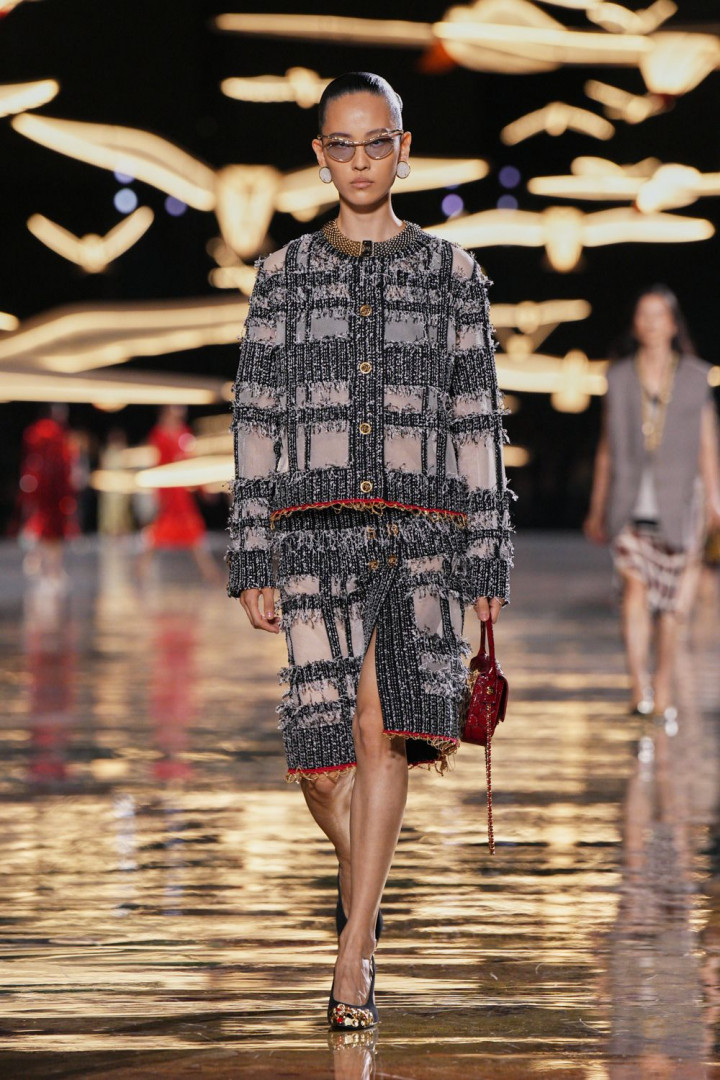
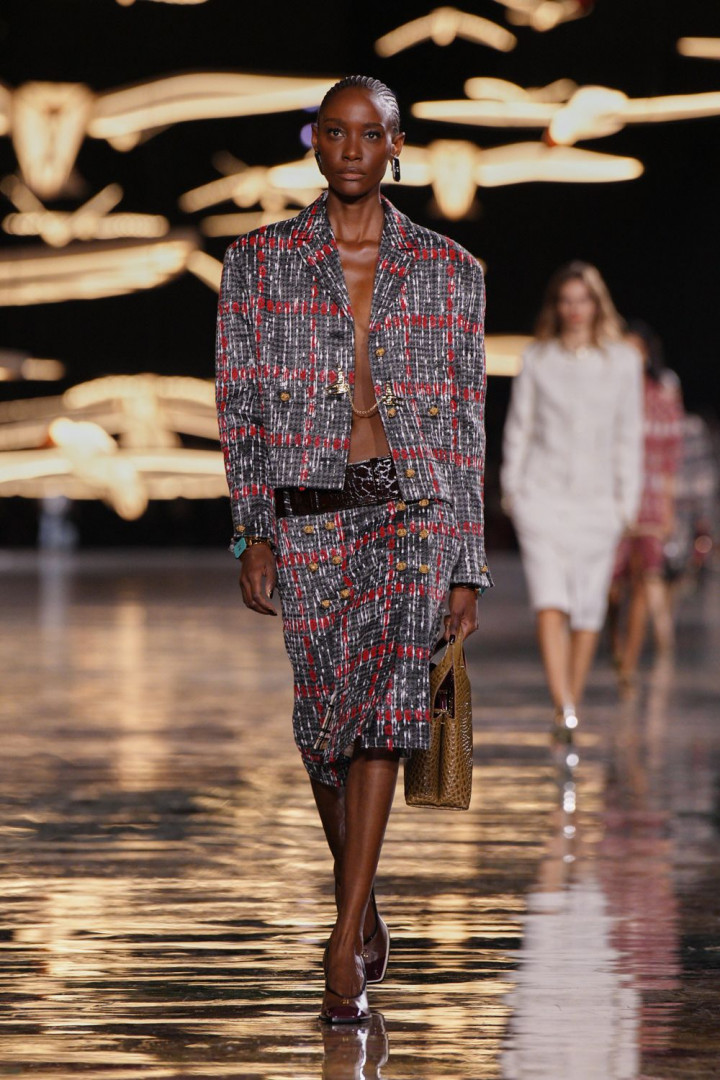
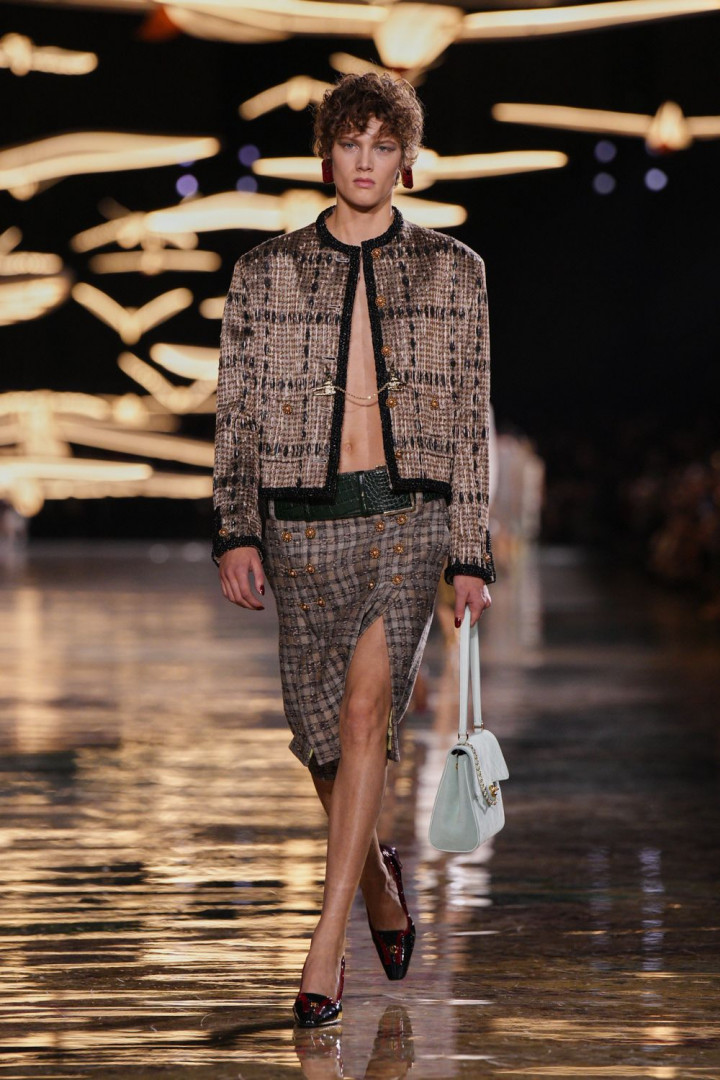
Chanel editorial reproduction
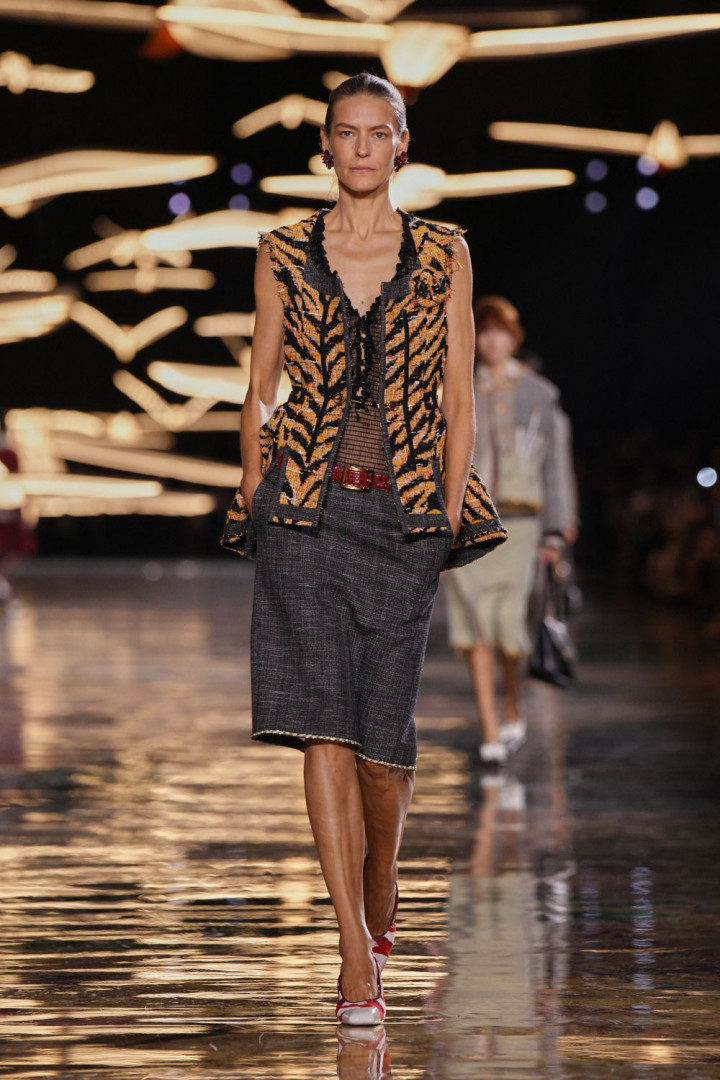
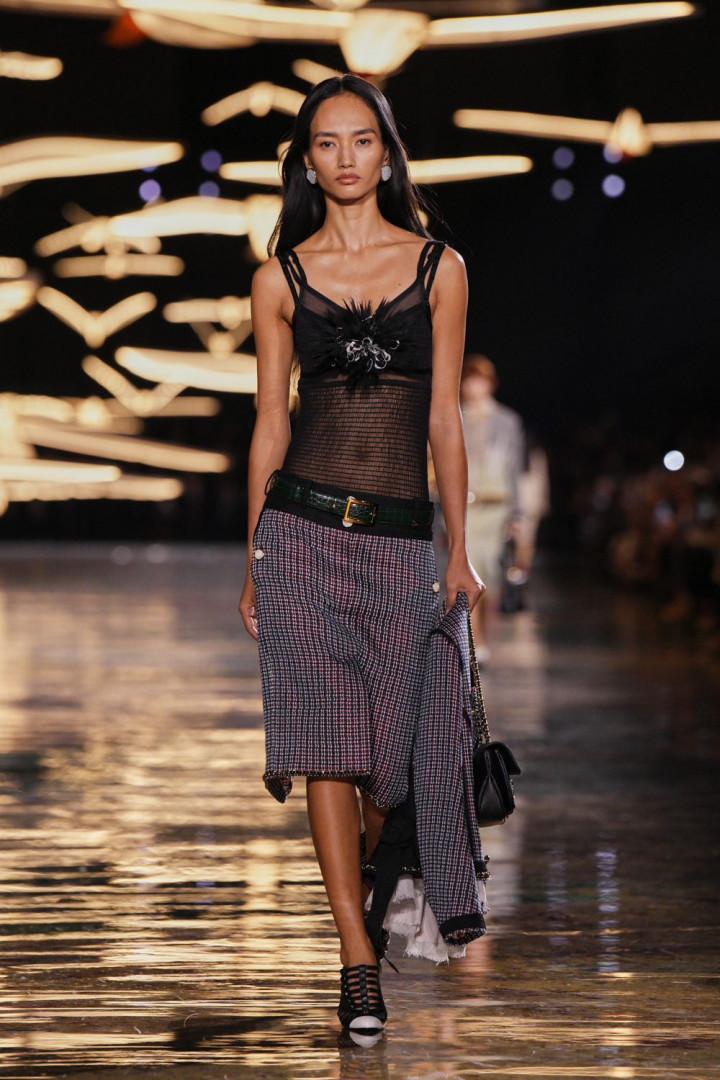
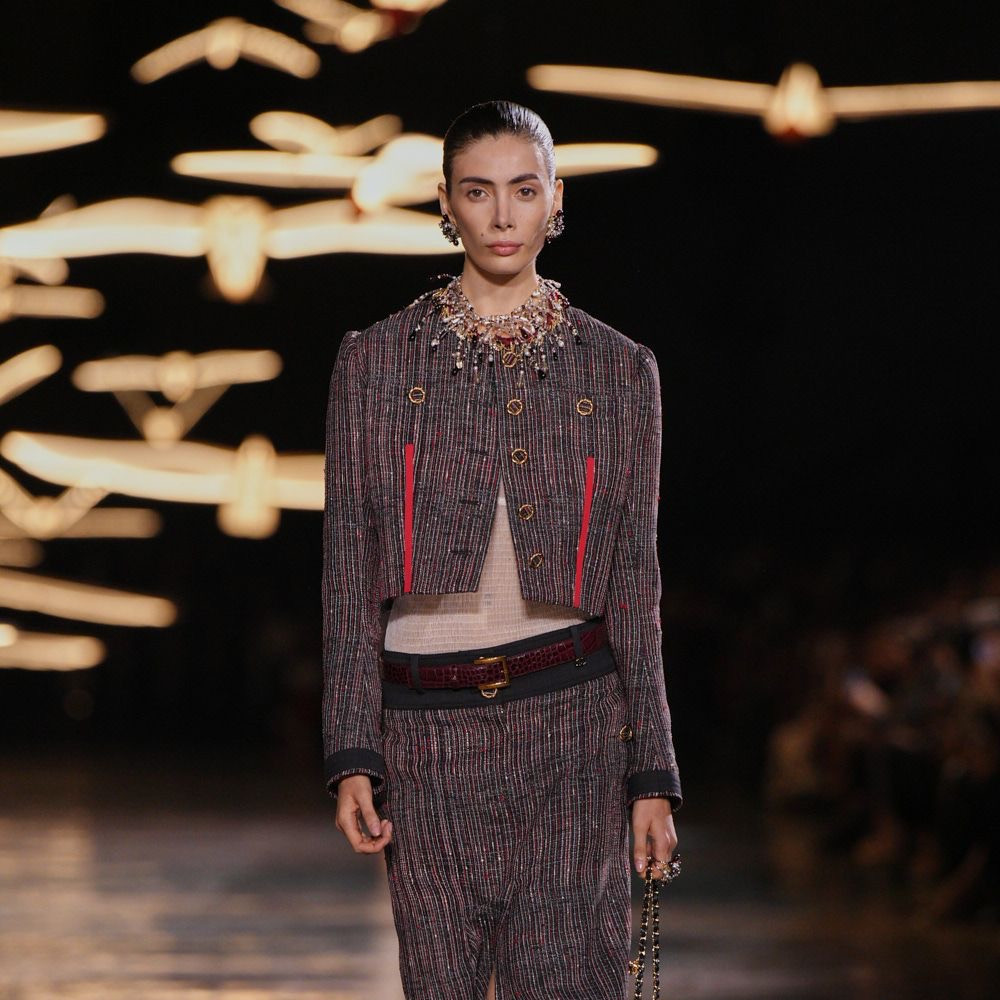
The collection moves through that history without becoming a historical reconstruction. Instead, familiar Chanel codes are loosened, transformed and given new movement. The early revelation of jersey and underwear evolves into a contemporary interpretation of the suit, worn almost like a second skin against the body. Tailoring becomes lighter, softer and more instinctive, while the traditional Chanel jacket is approached as something that can be dismantled and rebuilt. Men’s formalwear is cut raw at the edges and transformed into gilets and skirts, while evening dresses borrow the ease of knitwear and the fluidity of the body.
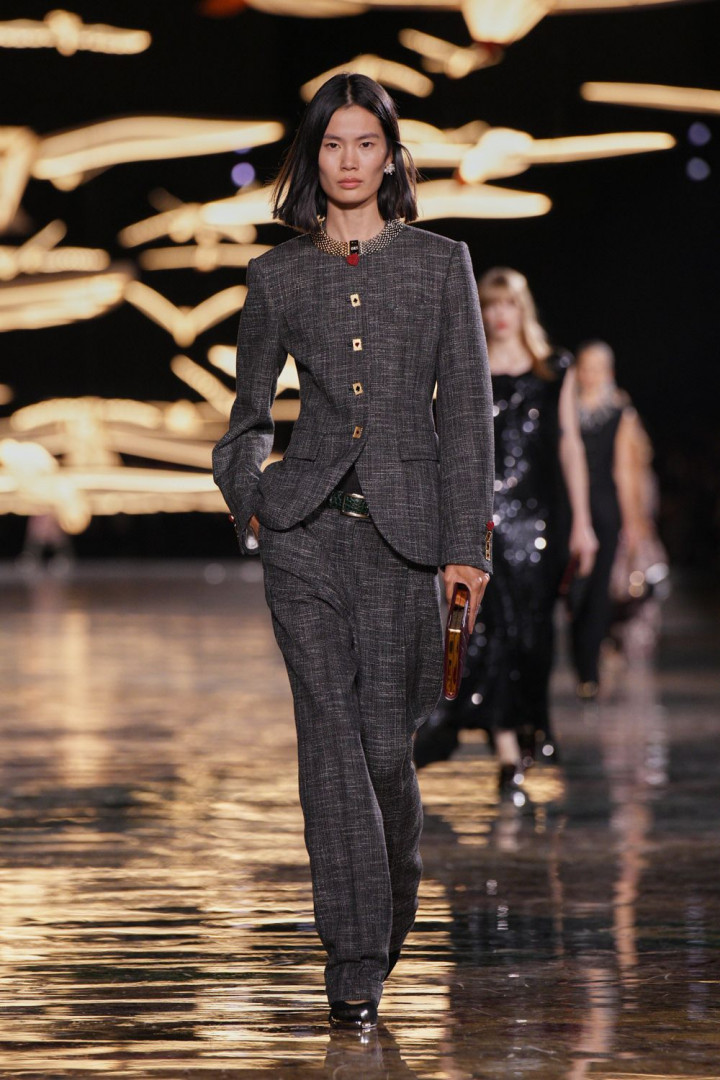
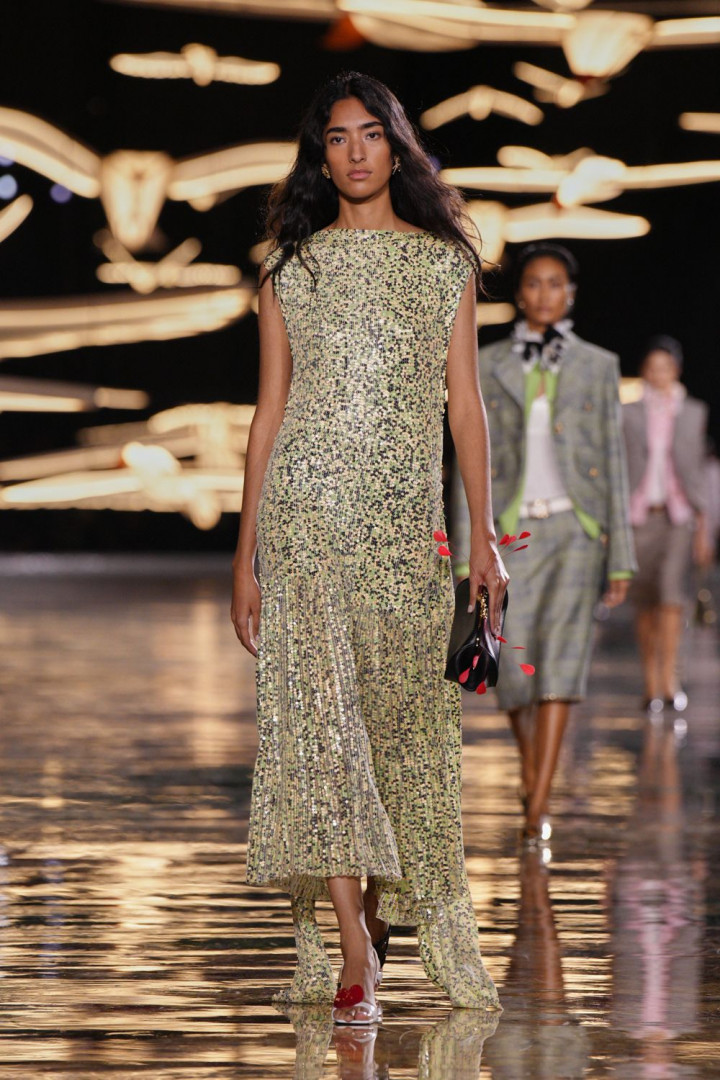
There is a particular beauty in the way Blazy allows construction and deconstruction to exist together. Traces of older silhouettes remain visible, a shadow of boning, the suggestion of a peplum, the curve of a bodice or a ruffled collar — but they appear almost like memories rather than quotations. Chanel’s past is present, but never frozen.
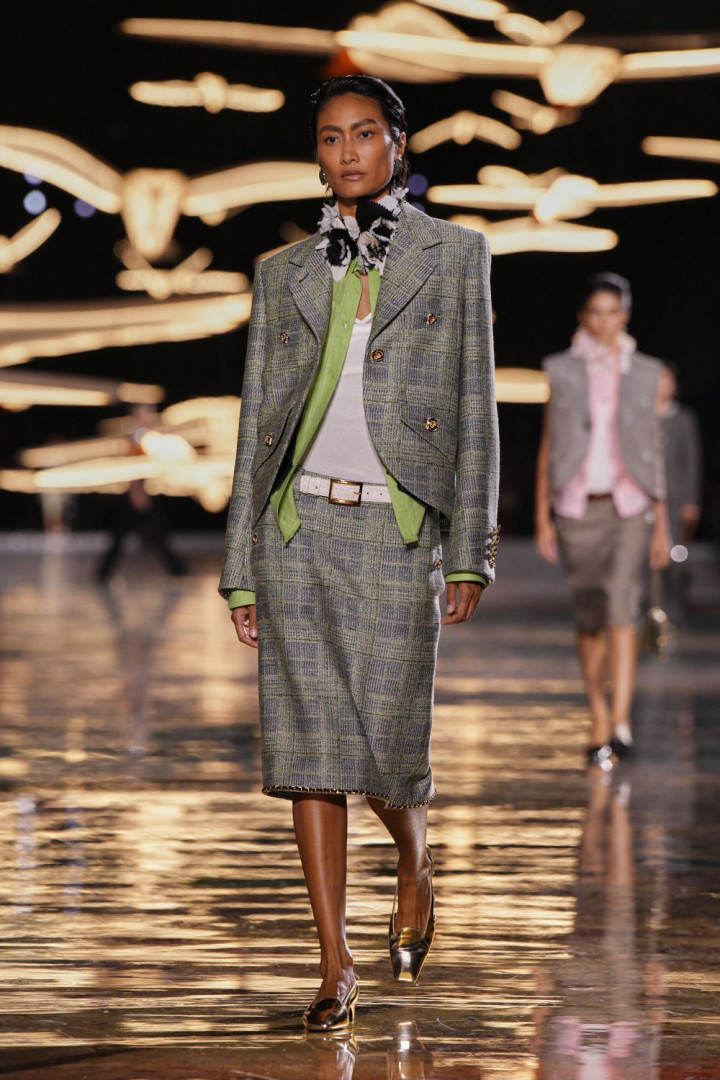
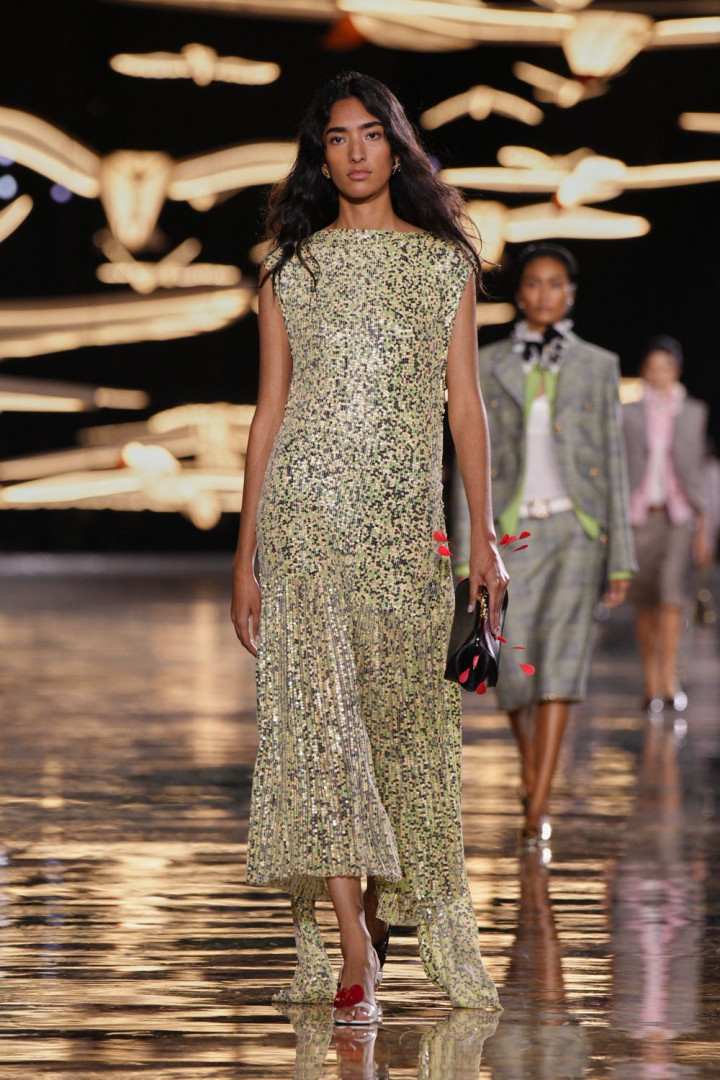
Movement becomes equally important. Layers of translucent silk create cloud-like silhouettes that seem to change as the body moves, evoking different moments of the day, from morning to golden hour and finally night. The effect is remarkably light, almost atmospheric. Even the house’s famously structured codes begin to breathe.
Then comes the bird. Swallows and swifts appear across jewellery, embroidery and buttons, becoming the visual symbol of a collection fundamentally concerned with freedom. The motif is not simply decorative; it reflects Blazy’s reading of Chanel as a woman who continually escaped the limitations imposed upon her. The clothes are designed to move, to transform and, ultimately, to allow the woman wearing them to move with them.
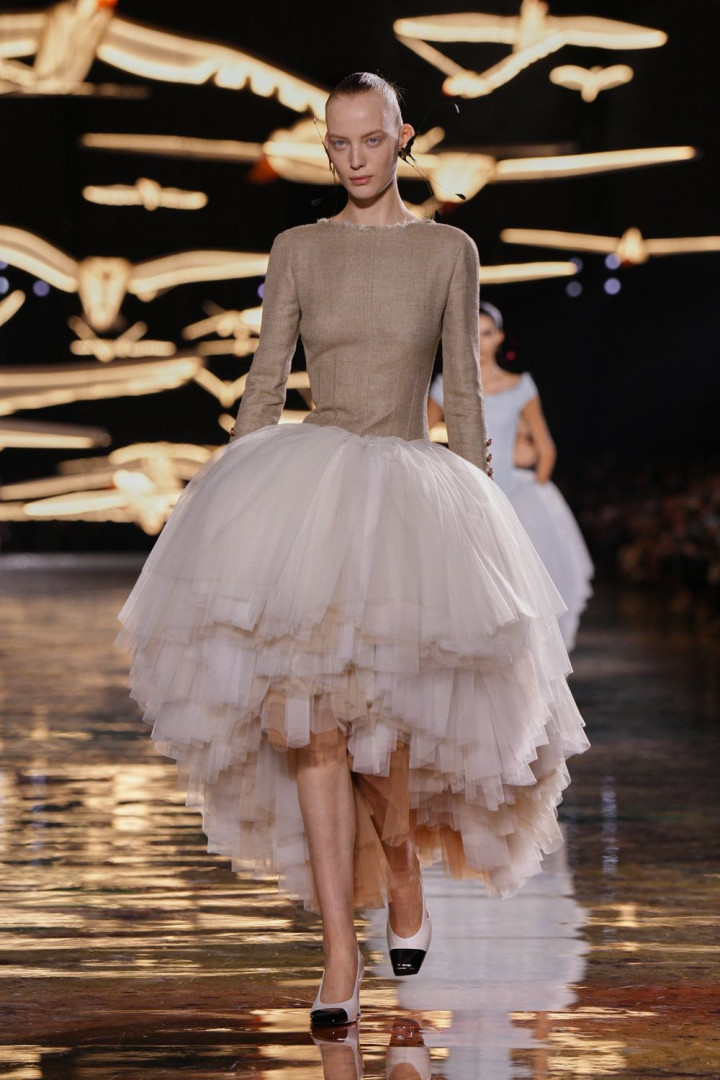
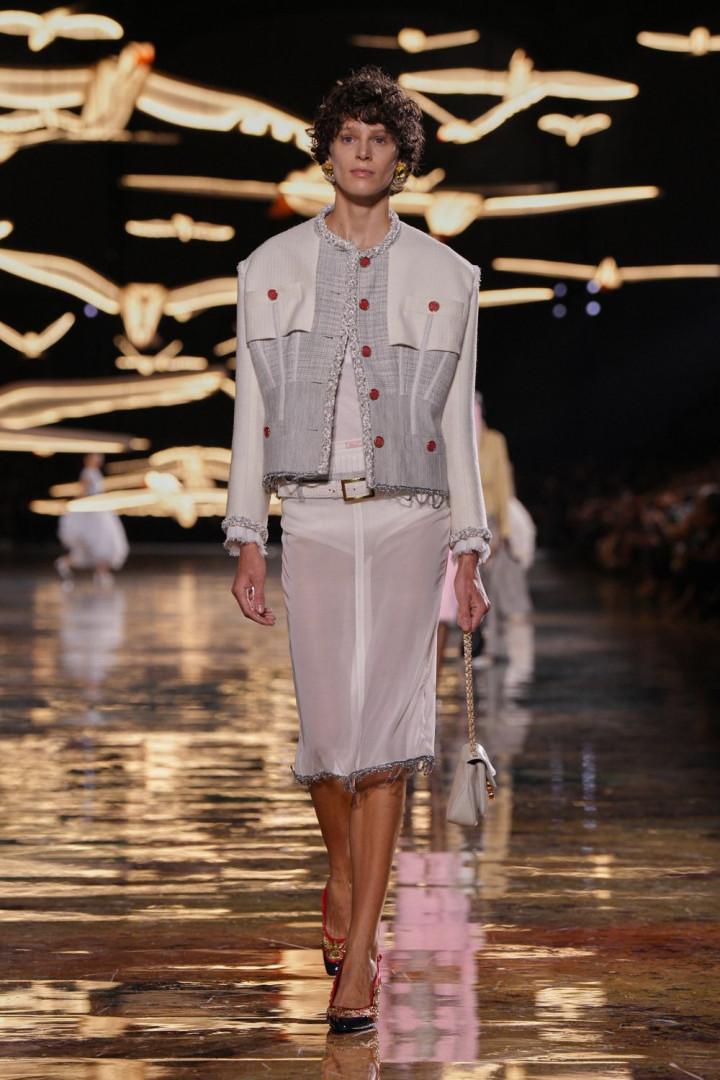
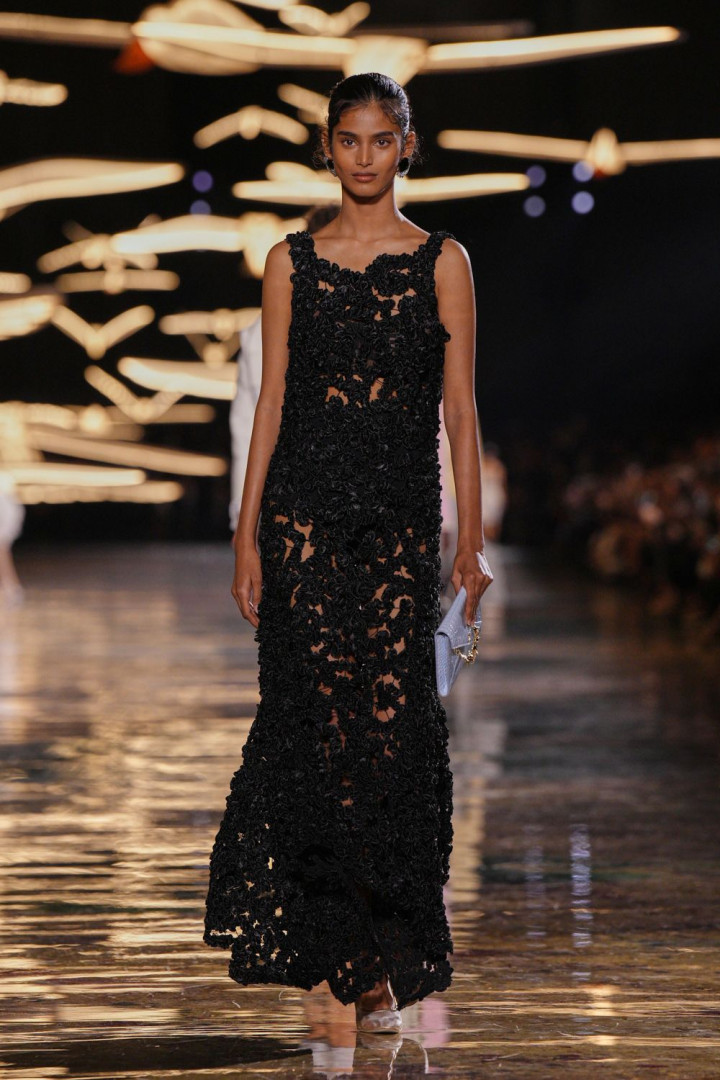
The final chapter brings the story full circle. The underwear that begins Gabrielle Chanel’s journey returns in the form of a new “smocked tweed” suit — flexible, light and almost elastic in its construction. It retains the recognisable language of Chanel while suggesting an entirely different relationship with the body. The suit is no longer something that structures the woman; it becomes something that follows her.
This is perhaps the most compelling aspect of Blazy’s Chanel. Rather than protecting the maison’s identity through repetition, he understands that its greatest tradition is transformation. Gabrielle Chanel changed the rules because she refused to remain one version of herself. SS27 follows that same principle.
Chanel, in Blazy’s hands, is not a woman from the past. She is every woman she became along the way.