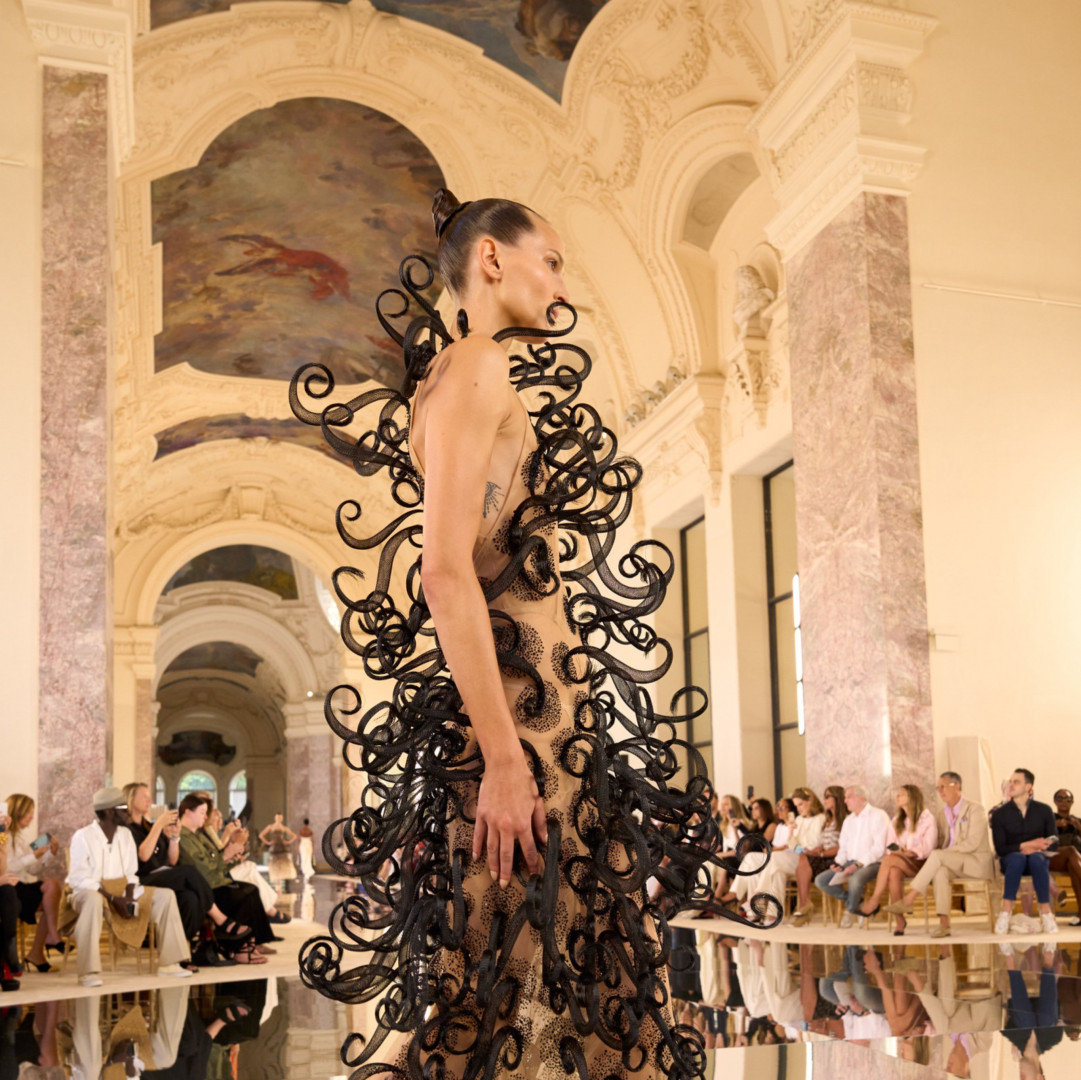
Schiaparelli Haute Couture Fall/Winter 2026–2027: The Abyss
In The Abyss, Daniel Roseberry transforms the unknown into a place of extraordinary beauty, where haute couture emerges as a living dialogue between the human body, nature and the unseen forces that shape creation.
There is something profoundly human about our fascination with the abyss. We fear it because we cannot see its end, yet we are irresistibly drawn towards it, believing that beneath the darkness lies the possibility of discovery. Throughout history, the abyss has represented uncertainty, mystery and the invisible forces that exist beyond our comprehension. For Daniel Roseberry, however, it becomes something altogether different. In Schiaparelli's Haute Couture Fall/Winter 2026–2027 collection, The Abyss is not portrayed as a place where life disappears, but as the silent depth from which beauty itself begins.
Editorial Reproduction/ Schiaparelli
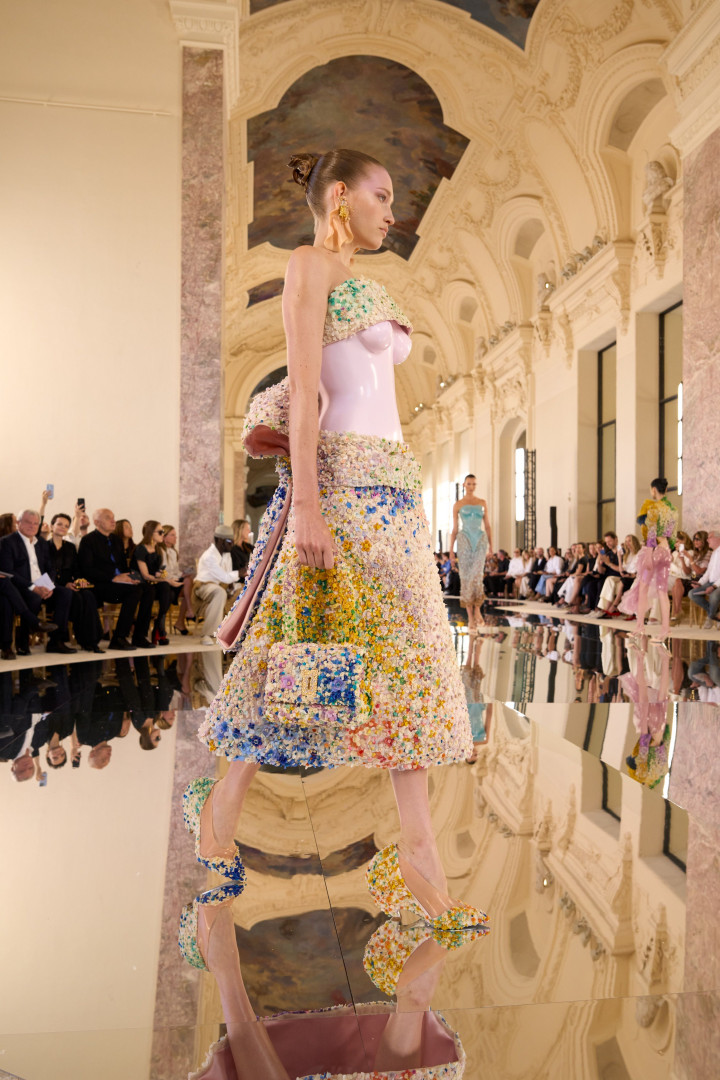
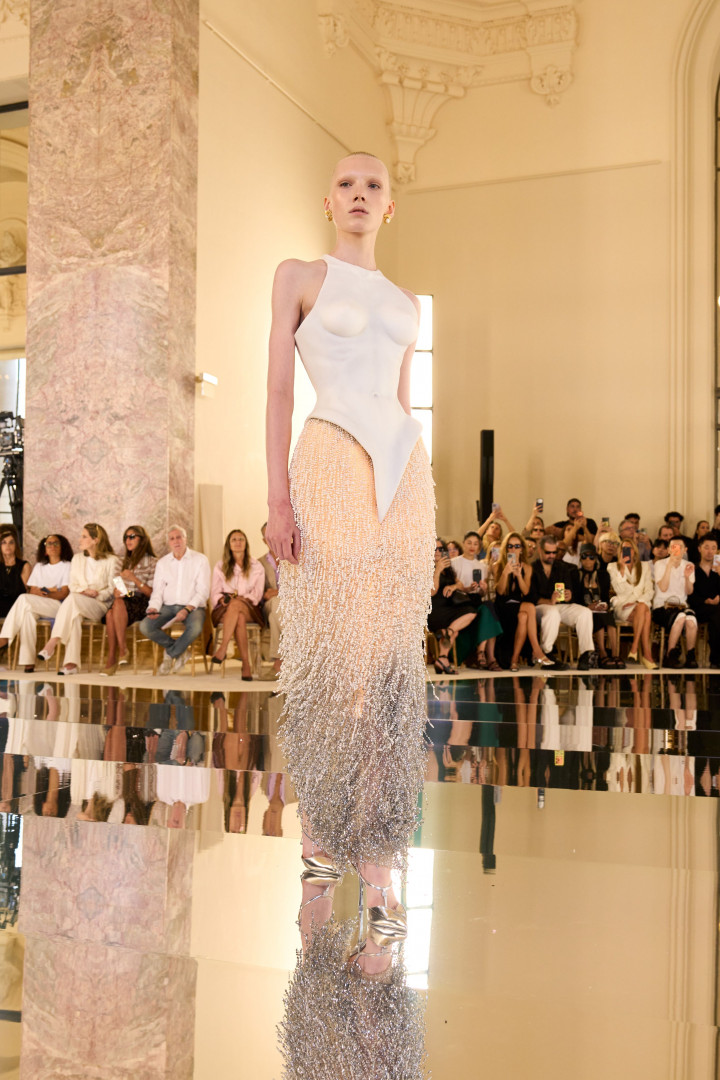
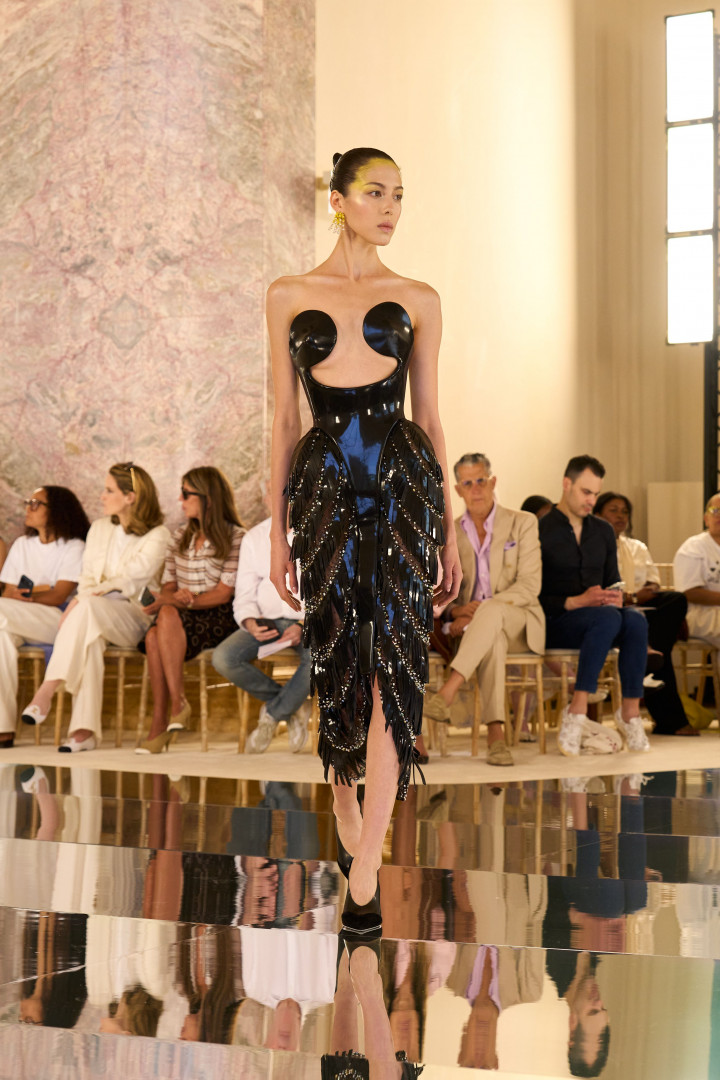
The collection's sculptural bodices illustrate this transformation with extraordinary restraint. Their immaculate, almost porcelain-like surfaces embrace the contours of the torso with an uncanny serenity, reducing the body to its most essential form. There is no excess, no unnecessary ornamentation. The human figure becomes an architectural foundation upon which another world slowly begins to emerge.
That emergence is most visible in the extraordinary surfaces Roseberry constructs around his silhouettes. Thousands of hand-applied embellishments accumulate into richly textured landscapes that recall coral reefs, mineral formations, microscopic organisms and marine gardens. From a distance, they resemble traditional couture embroidery; upon closer observation, they reveal themselves as living topographies, each element contributing to an intricate ecosystem of colour, light and texture. The garments appear less sewn than cultivated, as though time itself had patiently deposited layer upon layer of organic life upon their surfaces.
Editorial Reproduction/ Schiaparelli
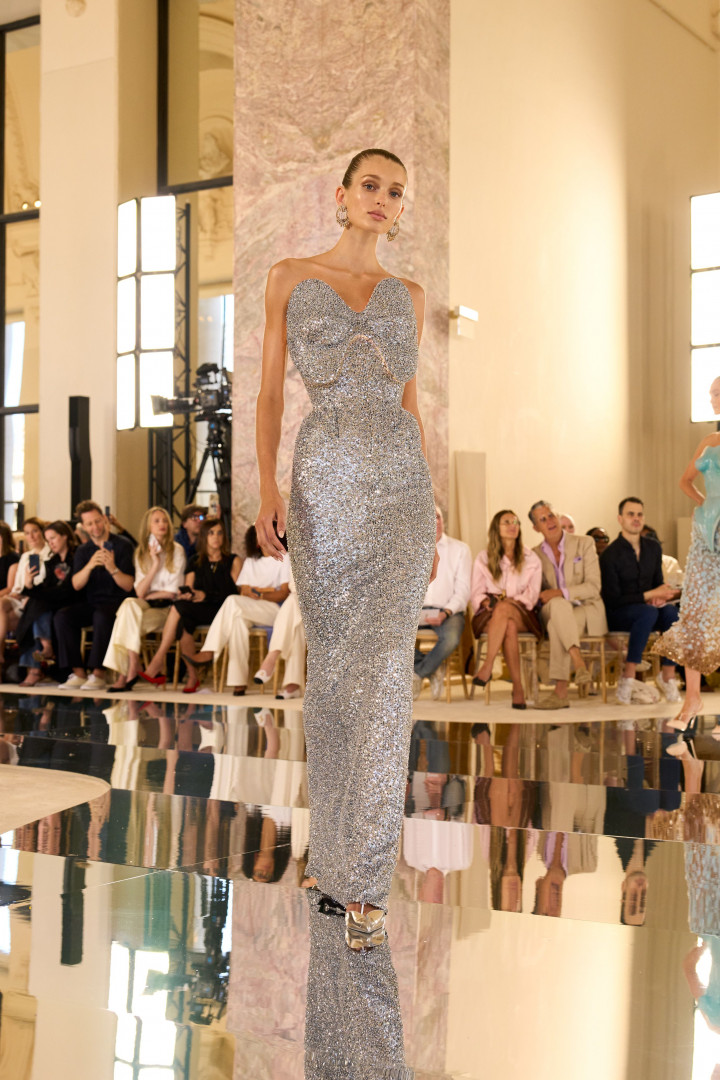
Movement becomes equally significant. Crystal fringes descend like shimmering currents, responding to every step with fluidity that evokes water rather than fabric. Rigid sculptural forms coexist with astonishing lightness, creating a dialogue between permanence and impermanence, between structure and motion. It is within these contrasts that The Abyss finds its emotional depth. Nothing remains entirely fixed. Every silhouette appears suspended within an ongoing process of transformation.
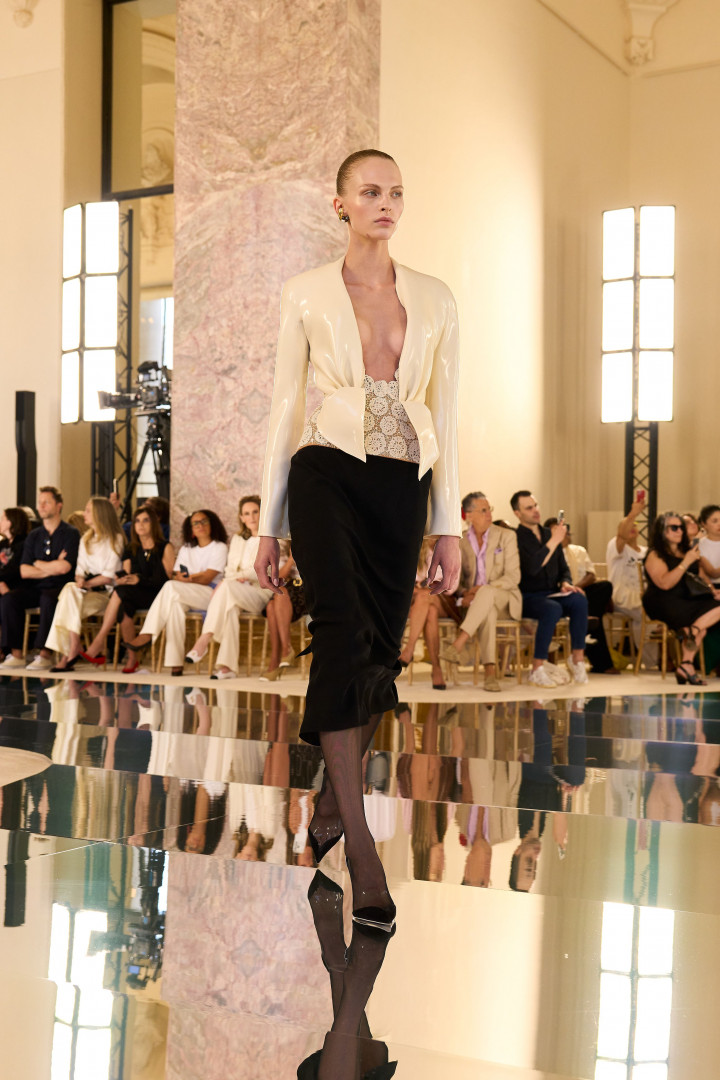
Perhaps the collection's greatest surprise lies in its palette. A title such as The Abyss might suggest darkness, opacity and dramatic severity. Instead, Roseberry introduces luminous whites, delicate lavenders, pale blues, soft ivories and subtle bursts of colour that seem illuminated from within. These hues evoke not the absence of light but the extraordinary bioluminescence that flourishes where sunlight cannot reach. The abyss, in Roseberry's hands, is therefore neither black nor empty. It is quietly radiant, filled with fragile forms of life that exist beyond ordinary perception.
This inversion of expectation reveals the collection's deeper philosophical proposition. Humanity has long imagined the unknown as something hostile simply because it escapes understanding. Yet nature continually demonstrates the opposite.
The deepest oceans, once believed to be lifeless voids, contain some of the planet's most extraordinary ecosystems. Likewise, the unseen spaces within ourselves—the places shaped by uncertainty, vulnerability and introspection—often become the source of our greatest transformation. Roseberry appears to suggest that beauty is not born in certainty, but in exploration.This season, Roseberry abandons spectacle in favour of contemplation. Rather than overwhelming the audience with surrealist provocation, he offers a quieter, more philosophical vision of couture—one that asks us to reconsider the relationship between the human body and the natural world.
Editorial Reproduction/ Schiaparelli
Elsa Schiaparelli believed that fashion should challenge perception. She understood clothing not simply as adornment, but as a language capable of transforming reality through imagination. Roseberry continues this legacy, though his surrealism has evolved into something less literal and infinitely more sophisticated. Gone are the overt anatomical jewels and theatrical symbolism that characterised many of his earlier collections. Instead, surrealism emerges through material itself. The garments do not imitate nature—they appear to have grown from it.
Editorial Reproduction/ Schiaparelli