Iris van Herpen Haute Couture Fall/Winter 2026–2027:
Sonic Starquakes Couture 2027
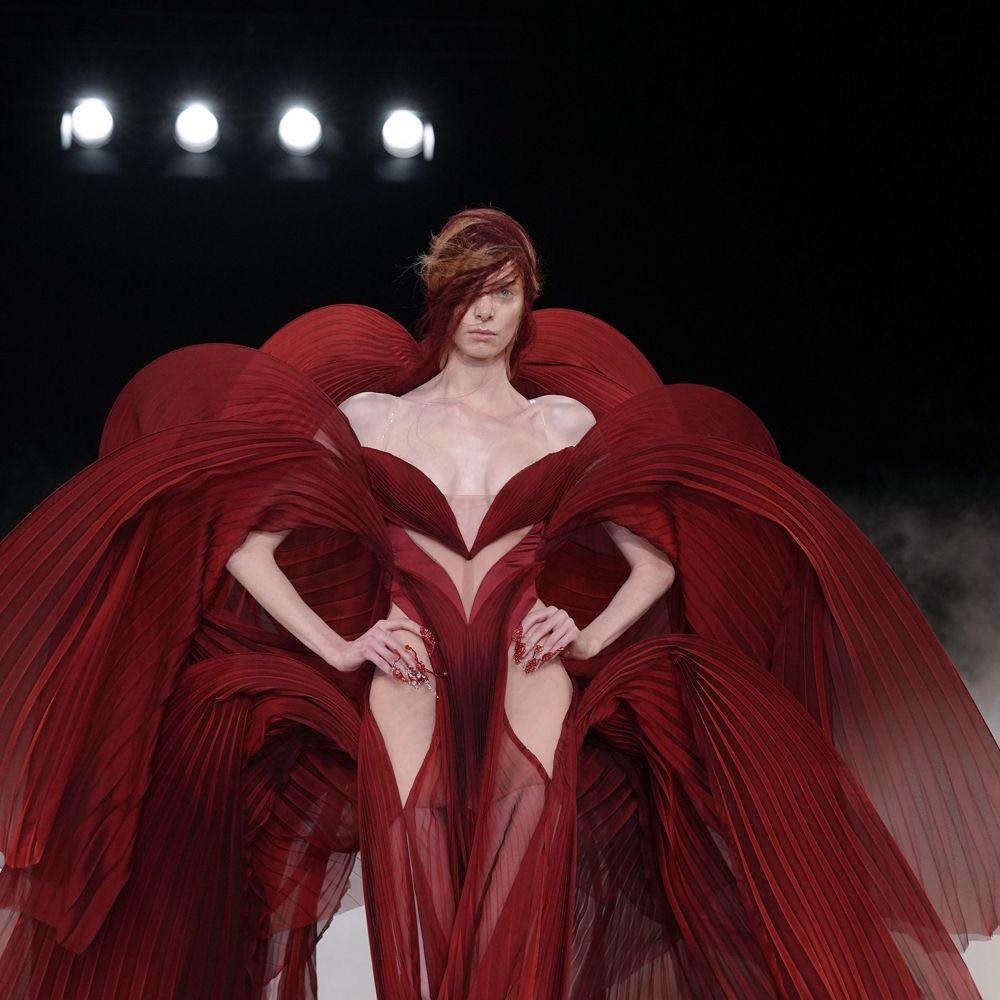
There are few designers capable of dissolving the boundaries between fashion, science and art as effortlessly as Iris van Herpen. While the fashion industry often revolves around silhouettes, trends and commercial narratives, Van Herpen has spent nearly two decades constructing an entirely different language—one in which haute couture becomes a medium for exploring the unseen forces that shape our universe. Her collections are never simply about garments; they are investigations into biology, physics, architecture and the poetry hidden within natural phenomena. With Sonic Starquakes, presented for Haute Couture Fall/Winter 2026–2027, she continues this remarkable dialogue, transforming invisible vibrations into sculptural forms that appear suspended somewhere between the celestial and the earthly.
Iris van Herpen/ editorial reproduction
Iris van Herpen/ editorial reproduction
The title itself evokes a sense of cosmic instability. A starquake—an astronomical phenomenon in which the crust of a neutron star fractures under immense magnetic pressure—becomes both metaphor and design principle. Rather than illustrating this concept literally, Van Herpen imagines what such invisible energies might look like if translated into movement, texture and light. Every silhouette feels animated by frequencies that cannot be seen, as though sound itself had crystallised into couture.
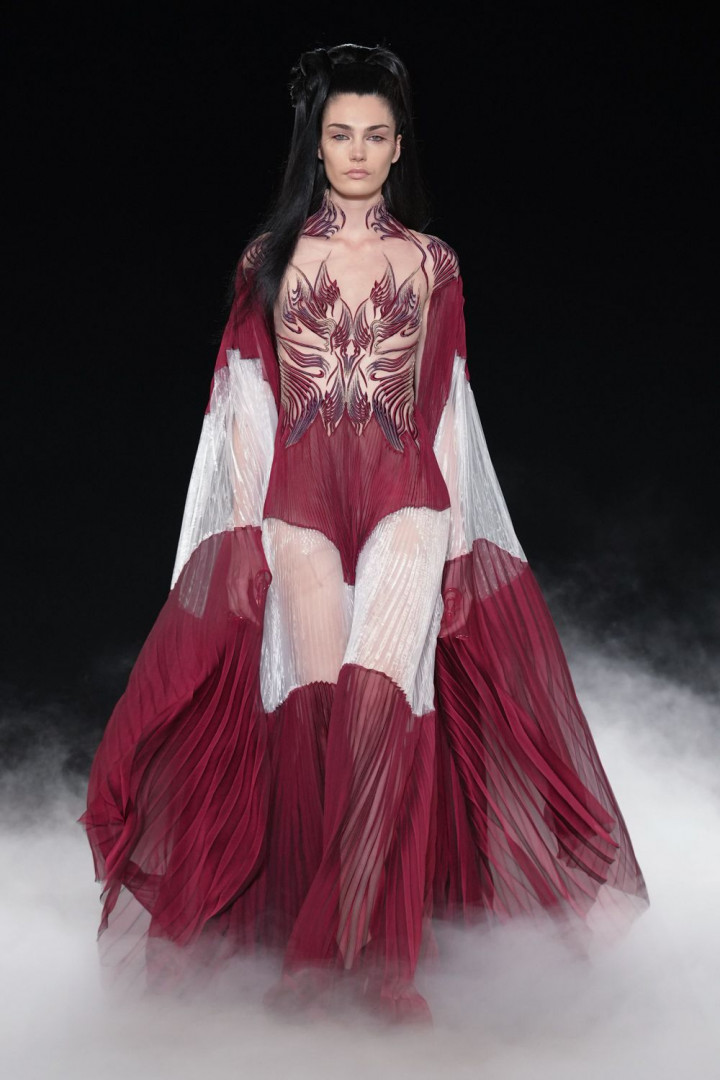
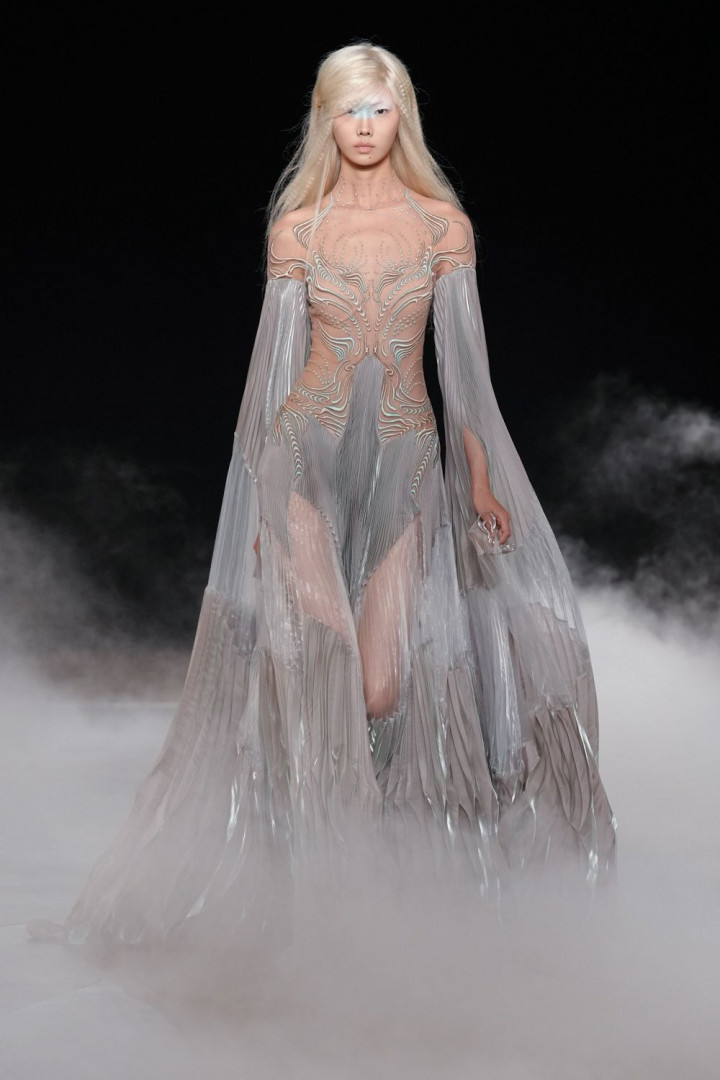
Throughout the collection, the body becomes the centre of an expanding wave. Embroidered motifs spread across illusion tulle like seismic currents radiating through space, tracing delicate topographies over the skin that resemble neural pathways, magnetic fields or celestial cartography. These intricate embellishments do not function as decoration alone; they become visual representations of energy in motion, suggesting that every garment exists within a constant state of transformation.
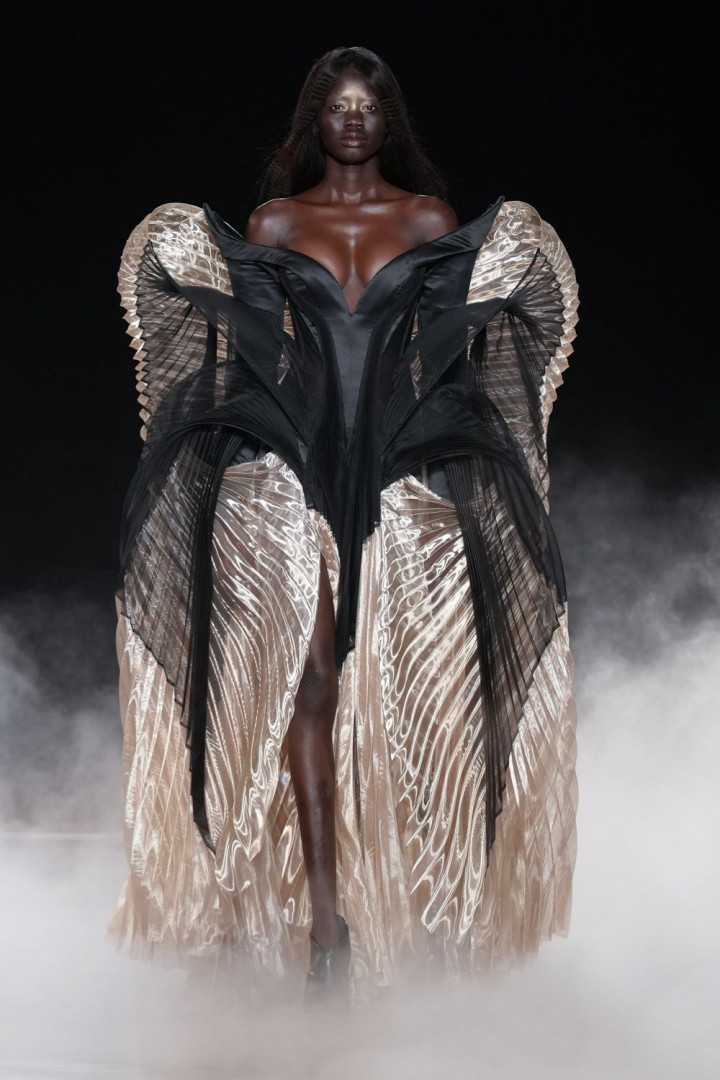
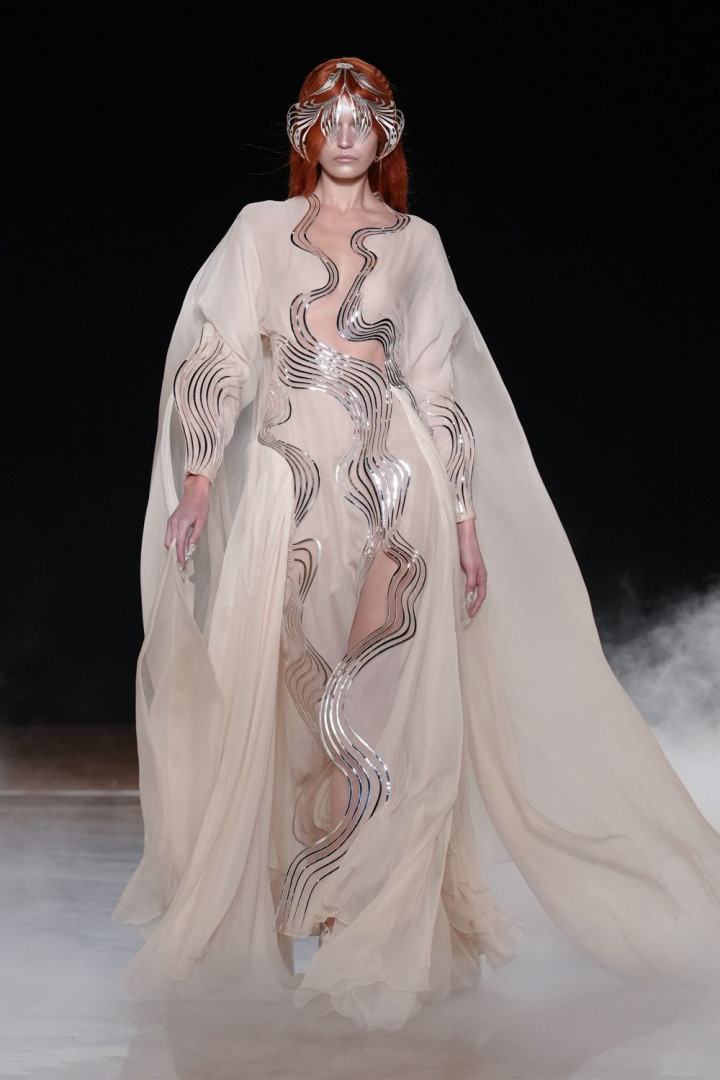
Movement has always been one of Van Herpen's greatest obsessions, and Sonic Starquakes continues this exploration with extraordinary refinement. Fine plissé fabrics cascade around the body with an almost liquid fluidity, expanding into architectural volumes that appear weightless despite their complexity. Layers of translucent textiles catch and diffuse light, allowing the garments to change continuously with every step taken by the models. Rather than imposing rigid structure, the silhouettes breathe, pulse and oscillate, creating the illusion that they respond to invisible currents flowing through the runway itself.
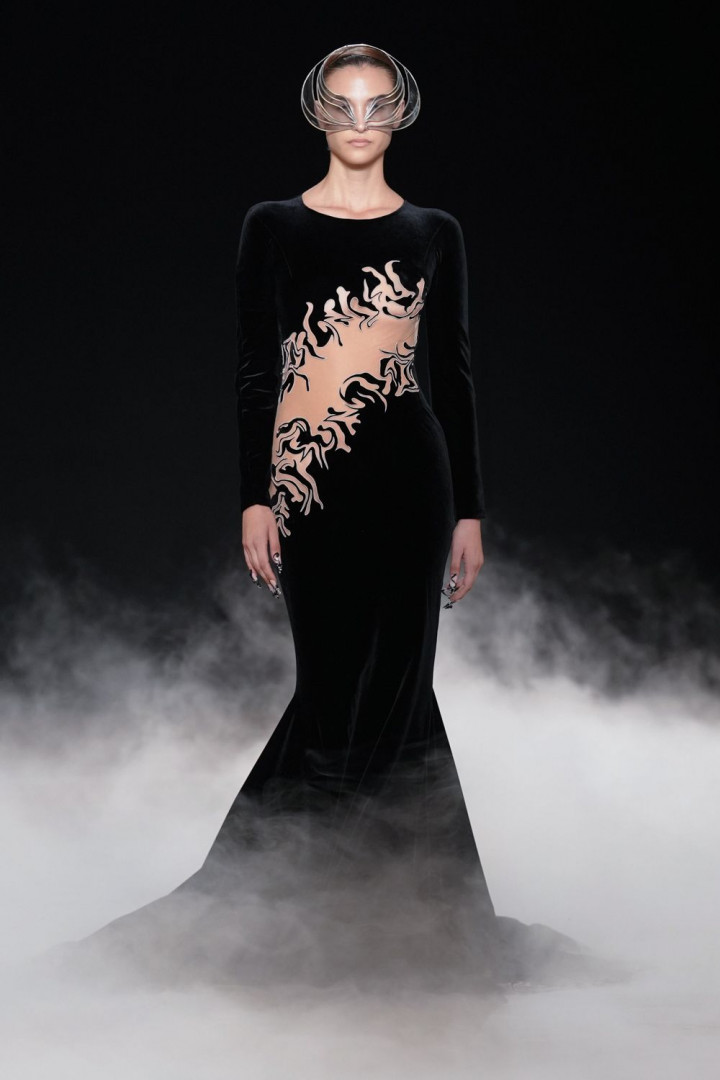
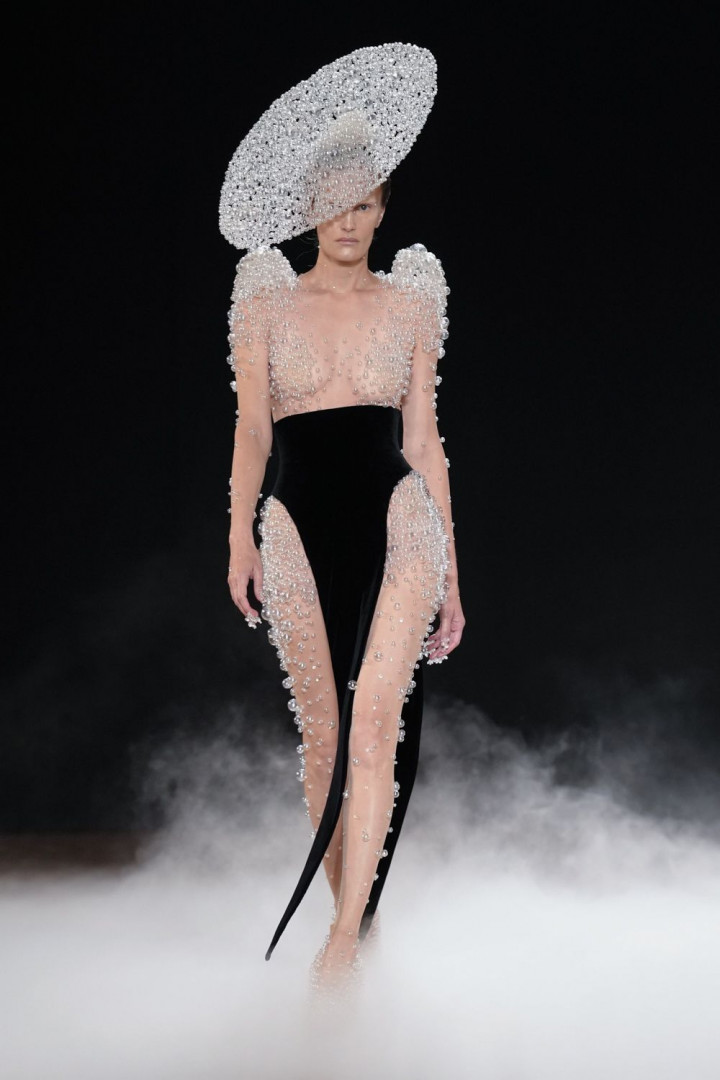
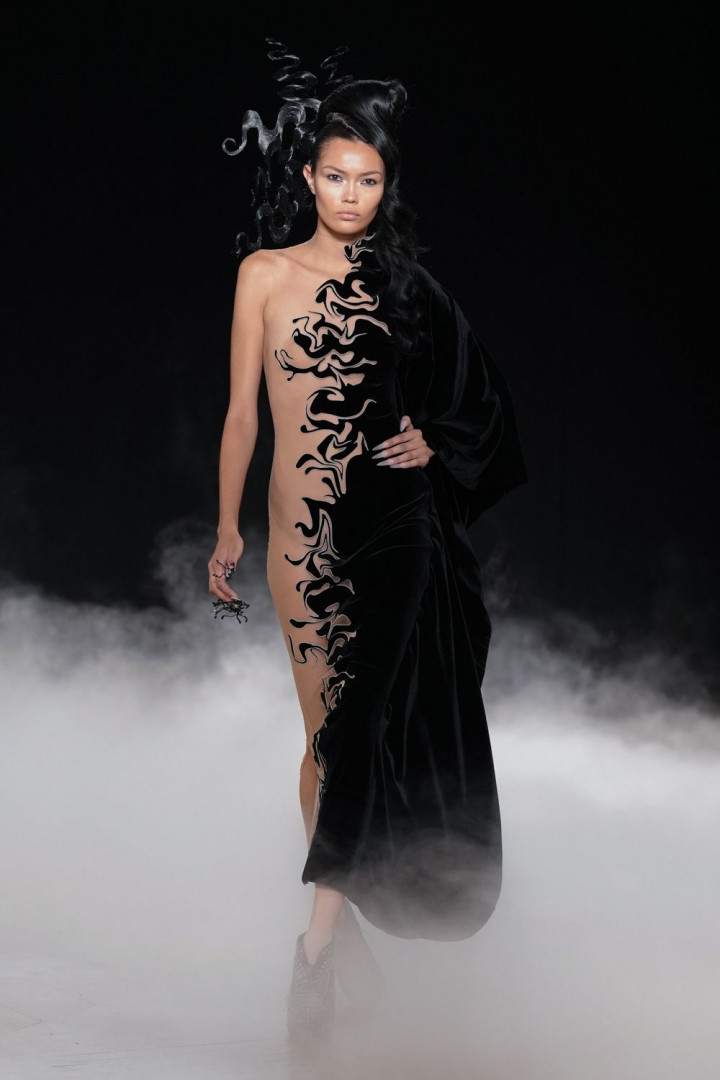
The collection reveals a remarkable balance between delicacy and power. Deep burgundy tones dissolve into translucent whites through intricate pleating, producing gradients that recall waves travelling through atmosphere or light dispersing across the cosmos. Elsewhere, sculptural black velvet gowns are interrupted by fluid inlays framed with embroidered organic motifs that seem to emerge directly from the body, blurring the distinction between skin, textile and sculpture. In some of the collection's most dramatic moments, monumental pleated constructions unfold from the shoulders like celestial wings, framing the figure with forms that are simultaneously architectural and biological. Their reflective surfaces capture light from every angle, reinforcing the sensation that the garments are in perpetual motion rather than fixed objects.
Iris van Herpen/ editorial reproduction
Despite the extraordinary visual complexity, Van Herpen never allows innovation to overshadow craftsmanship. Every piece reflects an obsessive commitment to couture techniques, where countless hours of hand embroidery, precision pleating and material experimentation coexist with technological innovation. This balance has become the defining hallmark of her practice. Rather than treating technology as spectacle, she integrates it seamlessly into the language of haute couture, allowing scientific research and artisanal savoir-faire to enrich one another. The result is clothing that feels impossible, yet unmistakably human in the patience and precision required to create it.
What distinguishes Iris van Herpen from many contemporary designers is her refusal to separate fashion from intellectual inquiry. Her collections consistently invite audiences to contemplate the invisible systems that connect humanity with the natural world, whether through water currents, cellular structures, ecosystems or cosmic phenomena. Sonic Starquakesextends this philosophy by suggesting that sound, vibration and energy are not abstract concepts but living architectures capable of shaping both matter and emotion. In her hands, couture becomes less about dressing the body than revealing the hidden rhythms that surround it.
The beauty of Sonic Starquakes ultimately lies in its ability to evoke wonder. These garments do not demand immediate understanding; instead, they encourage prolonged observation, revealing new details with every glance. Pleats become waves, embroidery becomes resonance, transparency becomes atmosphere and sculpture becomes movement. Each silhouette exists somewhere between the microscopic and the astronomical, reminding us that the same invisible forces governing distant stars also echo through the human body.
Iris van Herpen/ editorial reproduction