
Gaurav Gupta Couture — Light Song ’26: Where Light and Shadow Become One
A poetic meditation on light, shadow, and cosmic transformation, Gaurav Gupta’s Light Song ’26 turns couture into something almost otherworldly—where sculptural silhouettes, intricate embellishment, and ethereal movement converge in a deeply spiritual vision of contemporary Indian couture.
There are moments when fashion transcends the physical and enters something closer to the spiritual. Light Song ’26, Gaurav Gupta’s latest couture offering, exists within that rare territory — a collection that feels less like a procession of garments and more like an encounter with another dimension.
Inspired by the cosmic convergence of light and shadow, Light Song begins with an eclipse: a fleeting celestial phenomenon in which opposing forces momentarily surrender their distinction and become part of the same rhythm. In Gupta’s hands, this idea becomes a language of couture, expressed through sculptural silhouettes, liquid surfaces, intricate embellishment and an almost otherworldly relationship between the body and the garment.



Photo credits/Gaurav Gupta editorial reproduction
The darkness surrounding the collection is not simply a dramatic backdrop. It becomes part of the narrative. Against an almost infinite blackness, the garments emerge like celestial bodies — illuminated, suspended and seemingly detached from the ordinary laws of space. Silver, ivory, midnight blue and deep black create a visual vocabulary that feels simultaneously earthly and cosmic.
Gupta has long approached couture as an exercise in transformation. His silhouettes rarely behave like conventional clothing; they extend beyond the body, enveloping it, distorting it and redefining its relationship with space. In Light Song, this instinct becomes particularly profound. Draped structures appear to orbit the figure, delicate lines expand into sculptural wings and surfaces shimmer as though catching light from a distant celestial source.
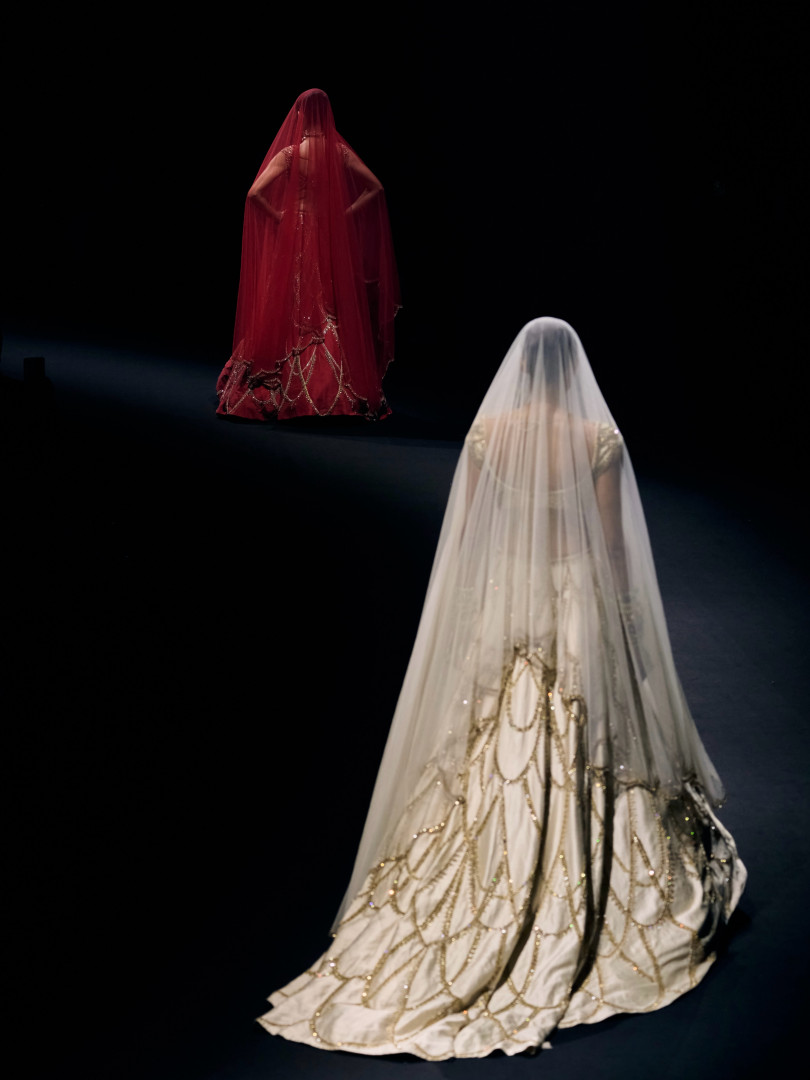
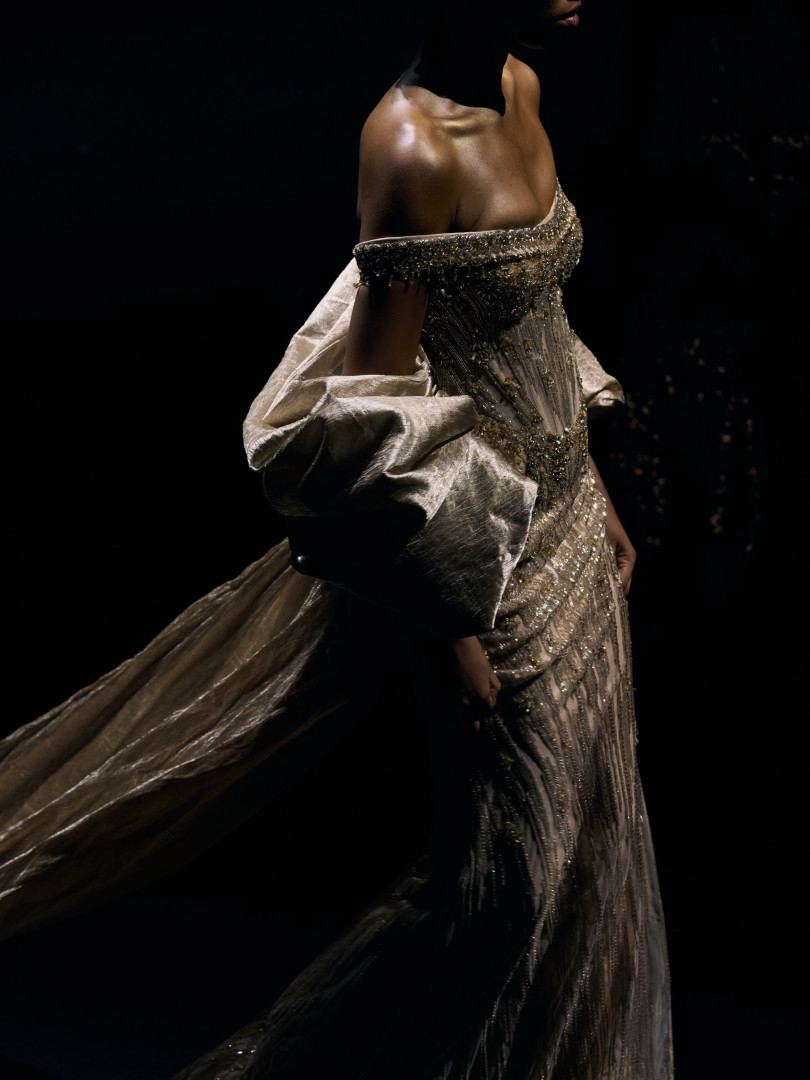
Photo credits/Gaurav Gupta editorial reproduction
One of the collection’s most striking qualities is its ability to make movement feel architectural. Fabric does not simply fall; it curves, spirals and expands. Embellishment does not merely decorate the surface; it creates texture and luminosity. The body becomes the centre of a constantly shifting composition, while the garment seems to possess a life of its own.
There is something almost ritualistic about these silhouettes. The models appear less like conventional figures on a runway and more like celestial beings emerging from darkness. Their movements suggest ceremony rather than spectacle, reinforcing the spiritual dimension at the heart of the collection.
The language of the eclipse is especially powerful because it rejects the idea that light and darkness must exist as opposites. Instead, Gupta proposes a moment of convergence — a space in which one cannot exist without the other. Light becomes more visible because of shadow; shadow acquires meaning because light surrounds it. The collection finds beauty precisely within this tension.
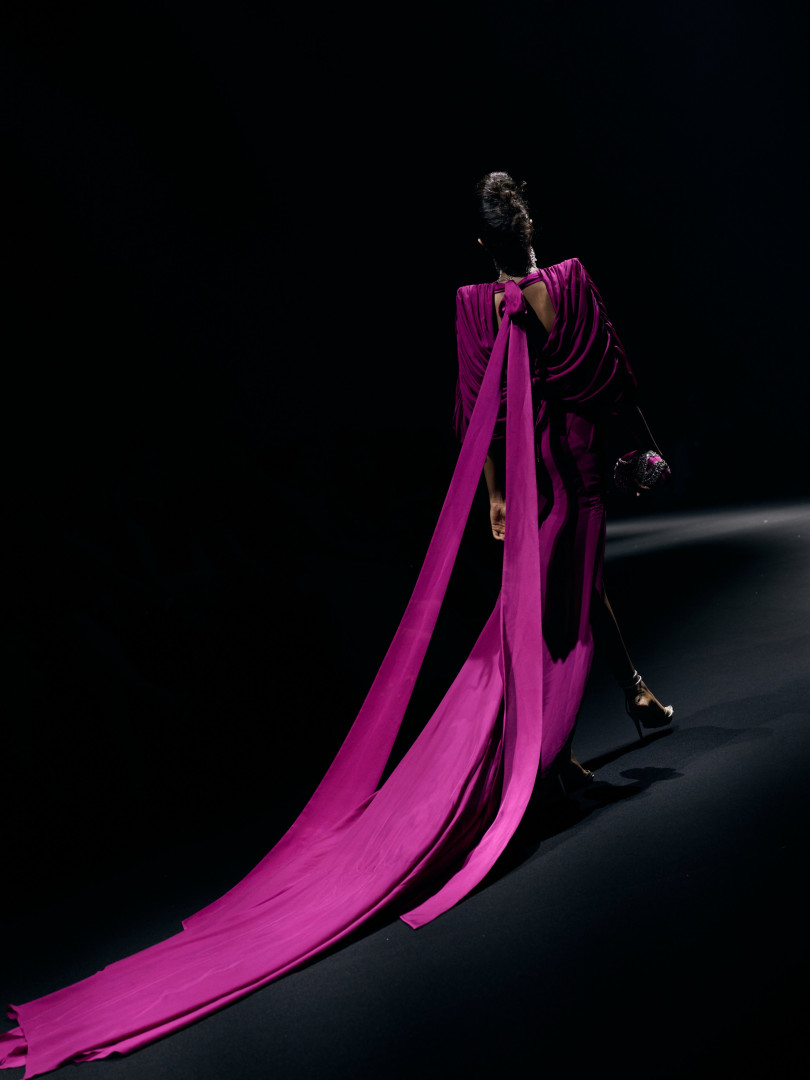
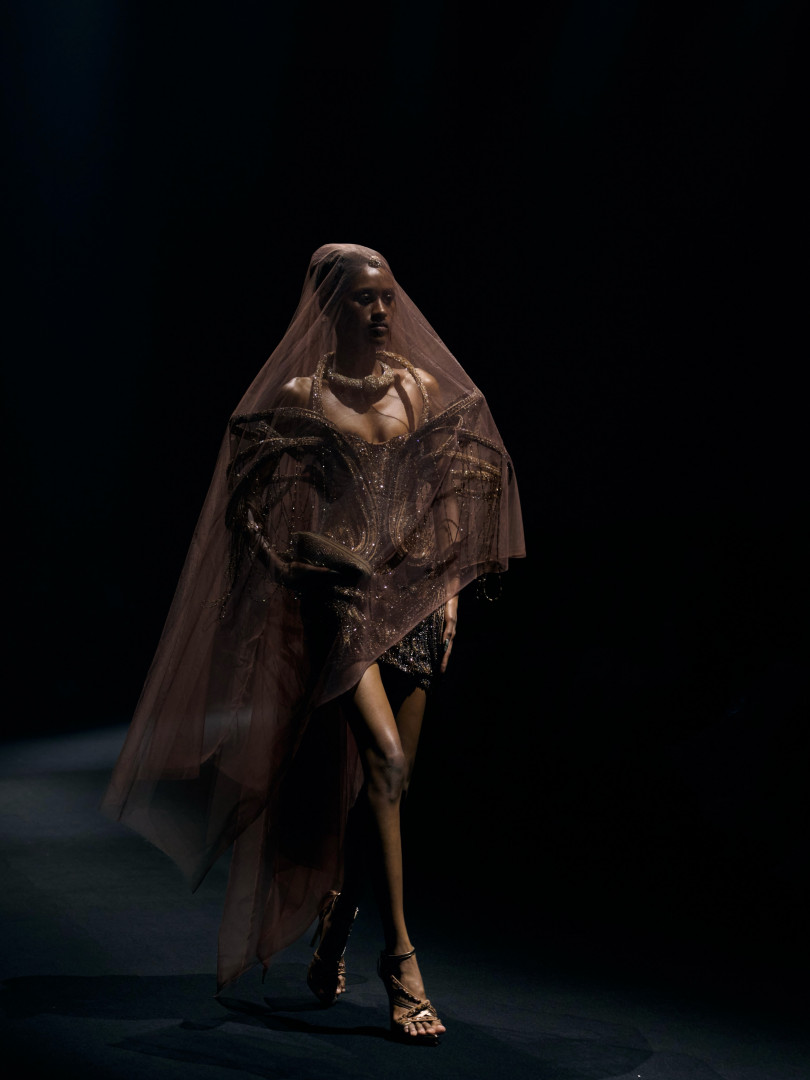
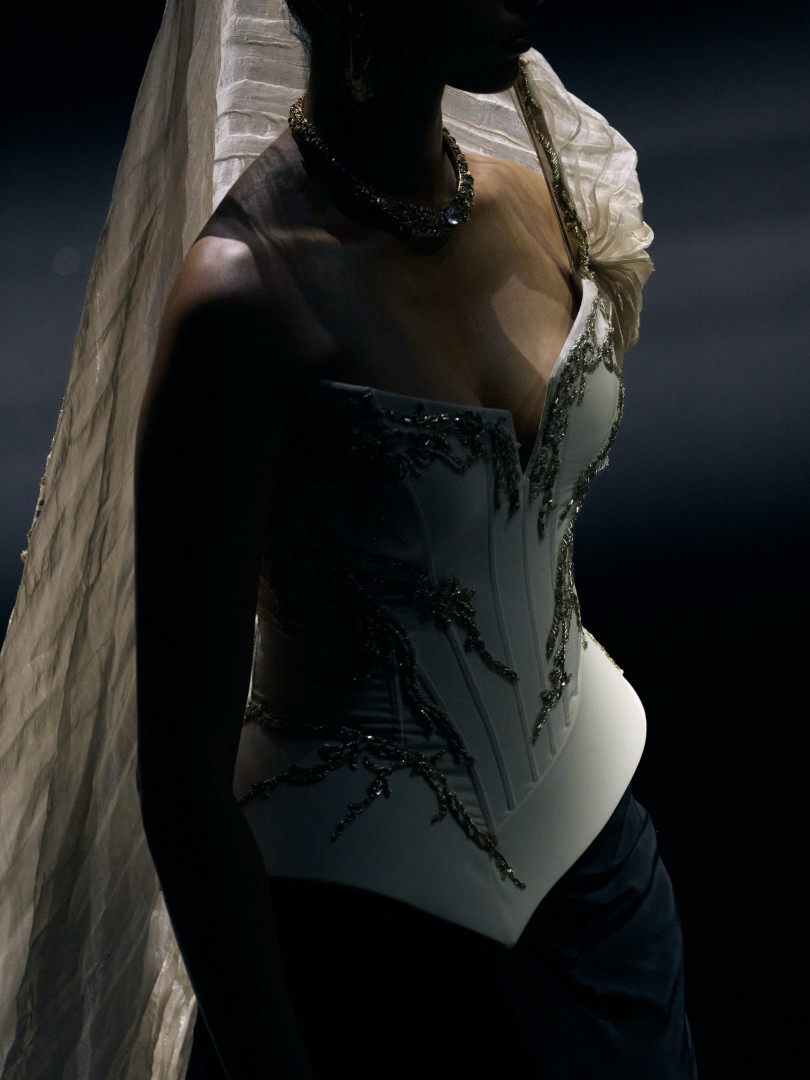
Photo credits/Gaurav Gupta editorial reproduction
This duality is reflected throughout the craftsmanship. The precision of the corsetry contrasts with the fluidity of draped fabric. Rigid structures coexist with soft, almost weightless elements. Dense embellishment meets expansive negative space. Every look appears to contain its own contradiction, creating a visual balance between control and freedom.
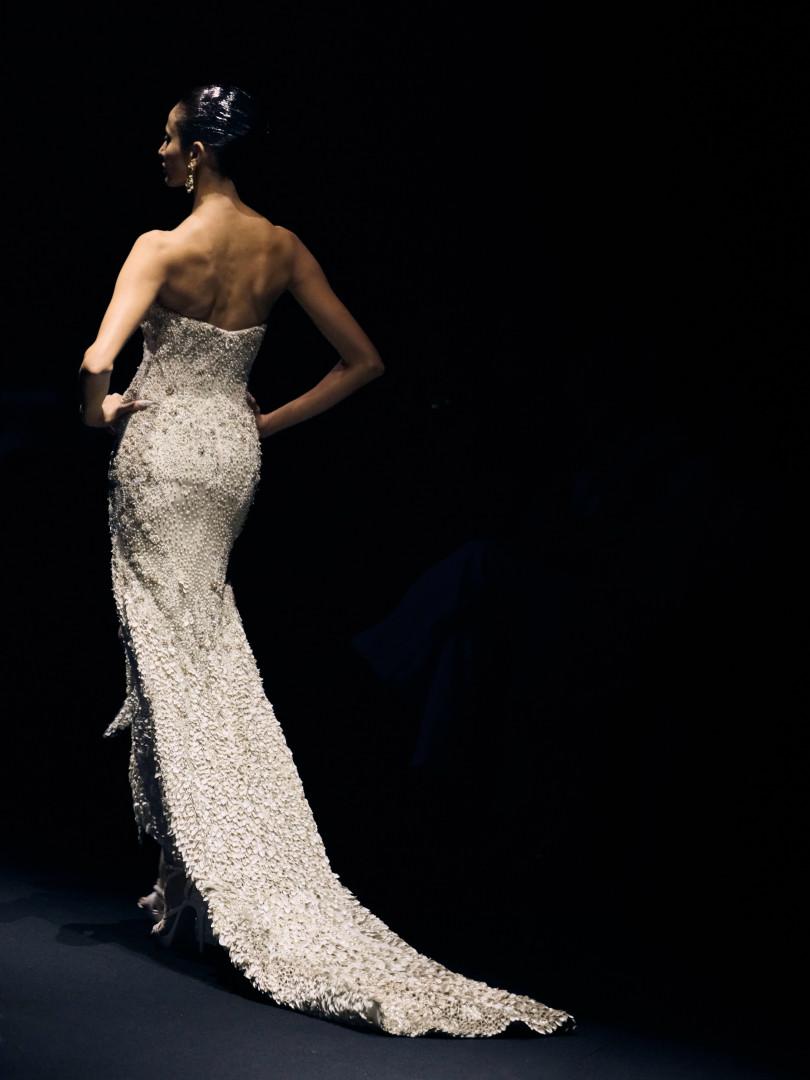
Among the collection’s most memorable silhouettes are those in which the human figure seems almost engulfed by sculptural extensions. Vast, delicate structures frame the shoulders and torso, transforming the wearer into something simultaneously powerful and ethereal. Elsewhere, densely embellished gowns follow the body with extraordinary precision before extending into dramatic trains that disappear into the darkness of the runway.
The effect is deeply cinematic.


Yet beneath the spectacle lies an unusually intimate idea: light is not simply something that illuminates us. It is something that reveals us.
This may be where Light Song becomes most compelling. Gupta does not treat couture merely as a demonstration of technical virtuosity. He uses craftsmanship as a vehicle for emotion, mythology and introspection. The garments ask the viewer to pause and consider the relationship between what is visible and what remains hidden.
In this sense, the collection feels less concerned with fashion’s conventional vocabulary of season, trend and novelty. It belongs to a more timeless language — one concerned with transformation, existence and the eternal movement between opposing forces.
There is also a distinctly Indian sensibility in this search for the cosmic. Without reducing the collection to literal references, Gupta allows a sense of spirituality to permeate the work. The celestial becomes a metaphor for something deeply human: the search for balance between opposing energies, between presence and absence, between illumination and darkness.
And perhaps that is the true meaning of Light Song.
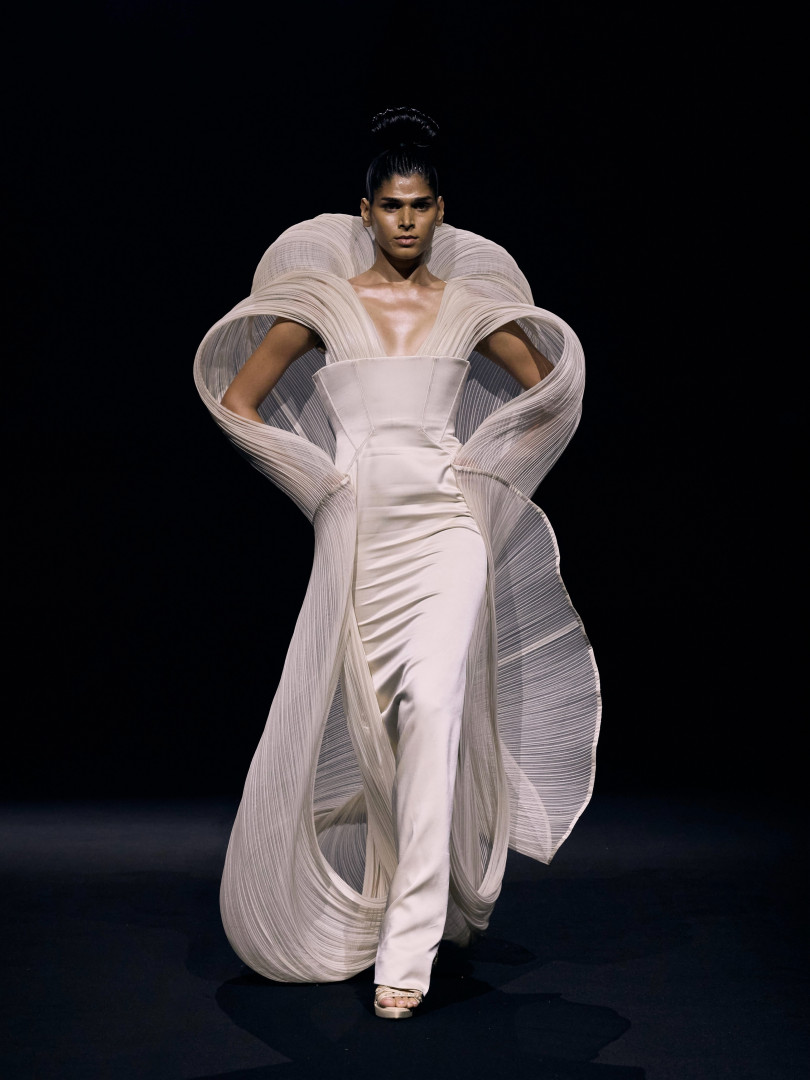
Photo credits/ Gaurav Gupta editorial reproduction