Franck Sorbier Haute Couture Fall/Winter 2026–2027: Le Parfum des Globe-Trotteuses
In Le Parfum des Globe-trotteuses, Franck Sorbier transforms haute couture into a philosophical meditation on travel, cultural memory, and the quiet emancipation of the human spirit.
Fashion has always travelled. Long before the acceleration of modernity transformed the world into an interconnected network of destinations, fabrics, techniques and ideas had already crossed deserts, oceans and mountain ranges, carrying with them the stories of civilizations. Silk arrived in Europe through the great trade routes of Asia, embroidery evolved through cultural encounters rather than isolation, and craftsmanship itself became one of humanity's oldest universal languages. Haute couture, despite its Parisian identity, has never existed in cultural solitude. It is the result of centuries of dialogue between worlds, where every thread carries the memory of a place, a people and a history. With Le Parfum des Globe-trotteuses, Franck Sorbier does not simply acknowledge this legacy; he transforms it into the philosophical foundation of an extraordinary collection that speaks less about fashion than it does about humanity itself.
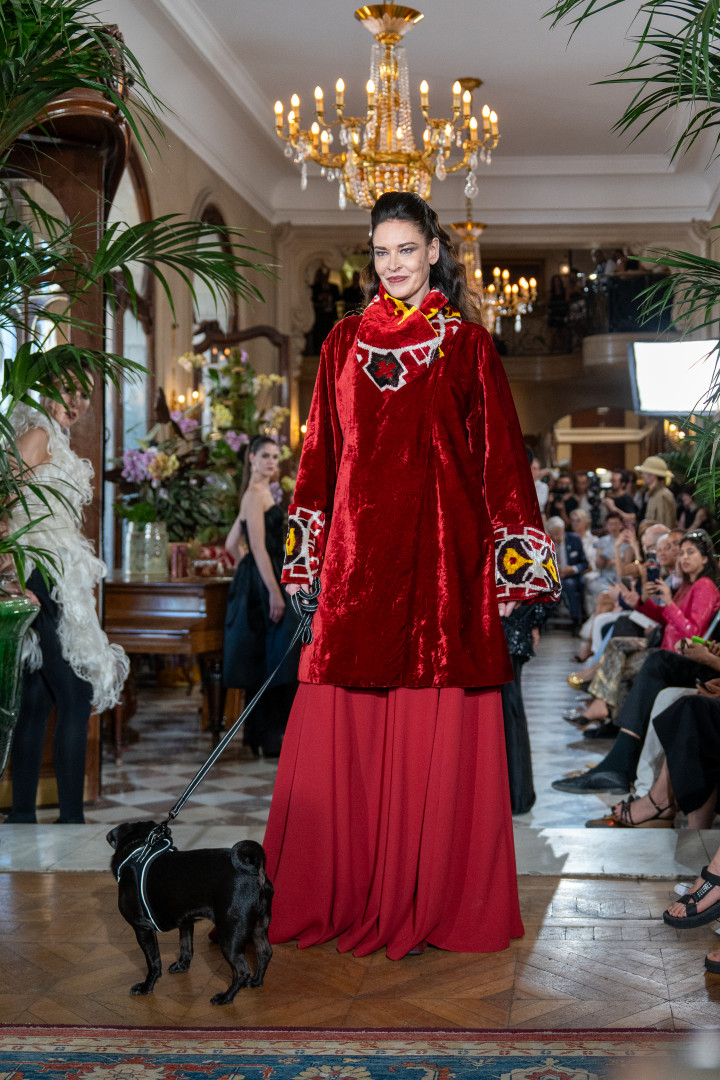
Photo Credits/ Laurent Thevenau
The narrative begins in Paris during the 1900 Universal Exposition, an event conceived as a celebration of progress, innovation and the meeting of civilizations beneath the newly erected Eiffel Tower. It is a significant historical moment, not merely because it represents the optimism of a new century, but because it reflects a time when travel still possessed its deepest meaning. Journeys were not instantaneous. They required patience, curiosity and a genuine willingness to encounter the unfamiliar. Sorbier revisits this era not through historical reconstruction but through imagination, introducing a cast of remarkable women whose lives unfold like the pages of Jules Verne or Marco Polo. They are rebellious aristocrats, visionary dancers, passionate writers, adventurous reporters and insatiable explorers who refuse the limitations imposed by convention. Their identities are not defined by nationality, profession or social status, but by an unrelenting desire to discover the world.
Yet the true brilliance of Le Parfum des Globe-trotteuses lies in understanding that these women are not travellers in the contemporary sense of the word. They are seekers. Their journeys are never acts of consumption, but processes of transformation. They cross continents not to collect destinations, but to reshape themselves through every encounter. This distinction is fundamental. In a world increasingly obsessed with movement, Sorbier reminds us that travelling and being transformed are not synonymous. One may visit countless countries without ever allowing a single culture to alter one's perspective. Conversely, a single authentic encounter can redefine an entire life. His collection therefore proposes a profoundly philosophical question: what if the purpose of travel has never been to discover new places, but to become someone new through them?
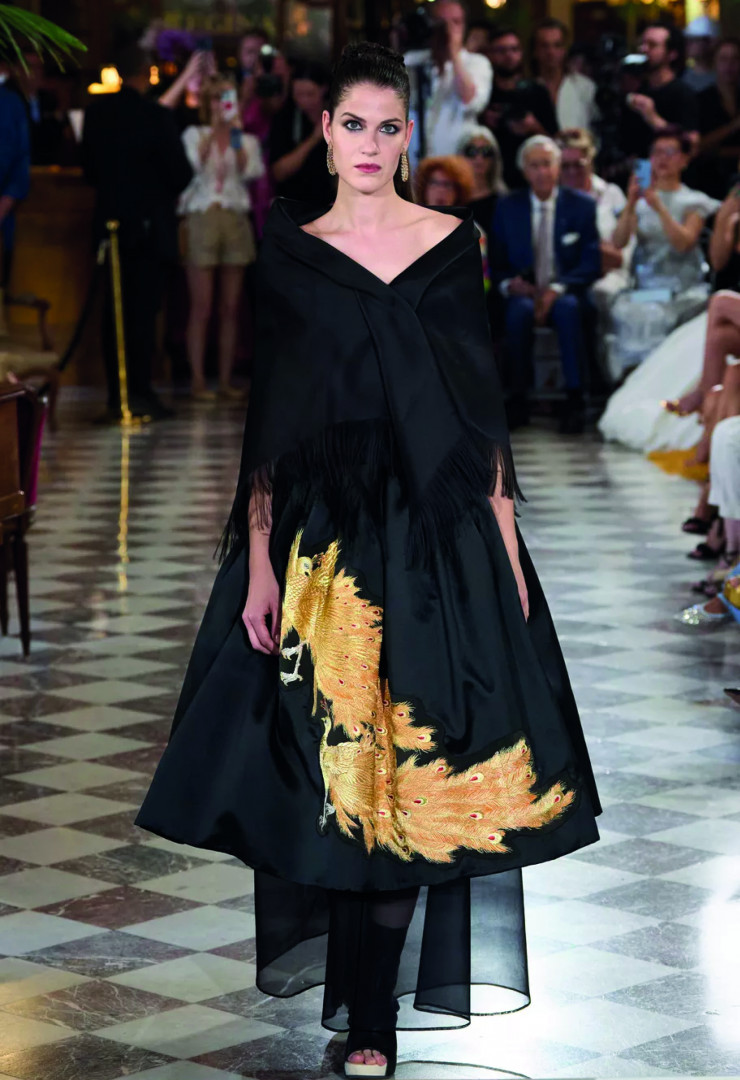
Photo Credits ©LaunchMetrics/FranckSorbier
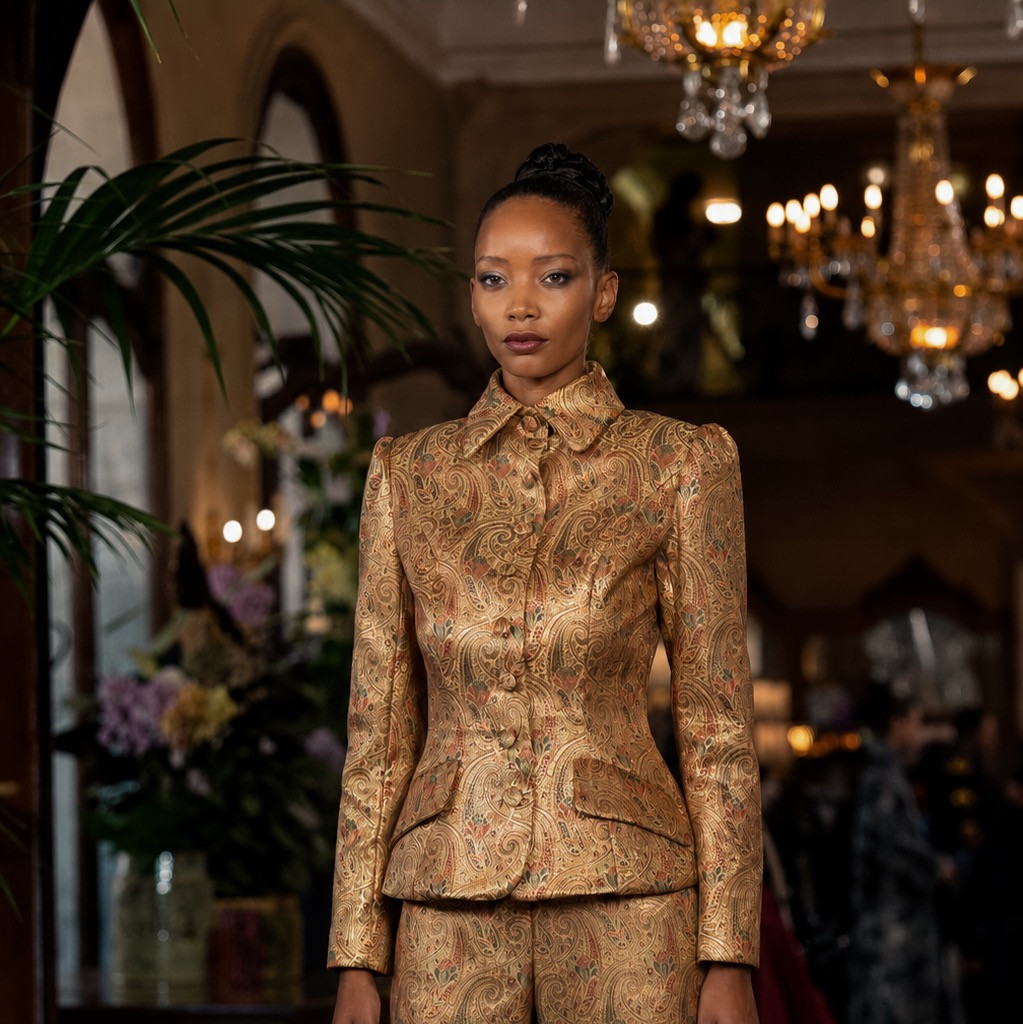
This idea resonates throughout every silhouette. Ottoman-inspired coats coexist effortlessly with Japanese influences, antique kimono embroideries awaken understated black dresses, Uzbek ikats form the foundations of majestic velvet coats, while Persian palmettes and Mughal-inspired motifs emerge through richly woven jacquards. These references never appear as decorative quotations or superficial appropriations. They are presented with remarkable restraint, allowing each culture to retain its dignity while contributing to a larger narrative about coexistence. Sorbier does not construct a wardrobe assembled from borrowed aesthetics; he constructs a living archive of human exchange. Every textile becomes evidence that civilizations have always evolved through dialogue rather than isolation, and that beauty itself has always belonged to those willing to look beyond their own borders.
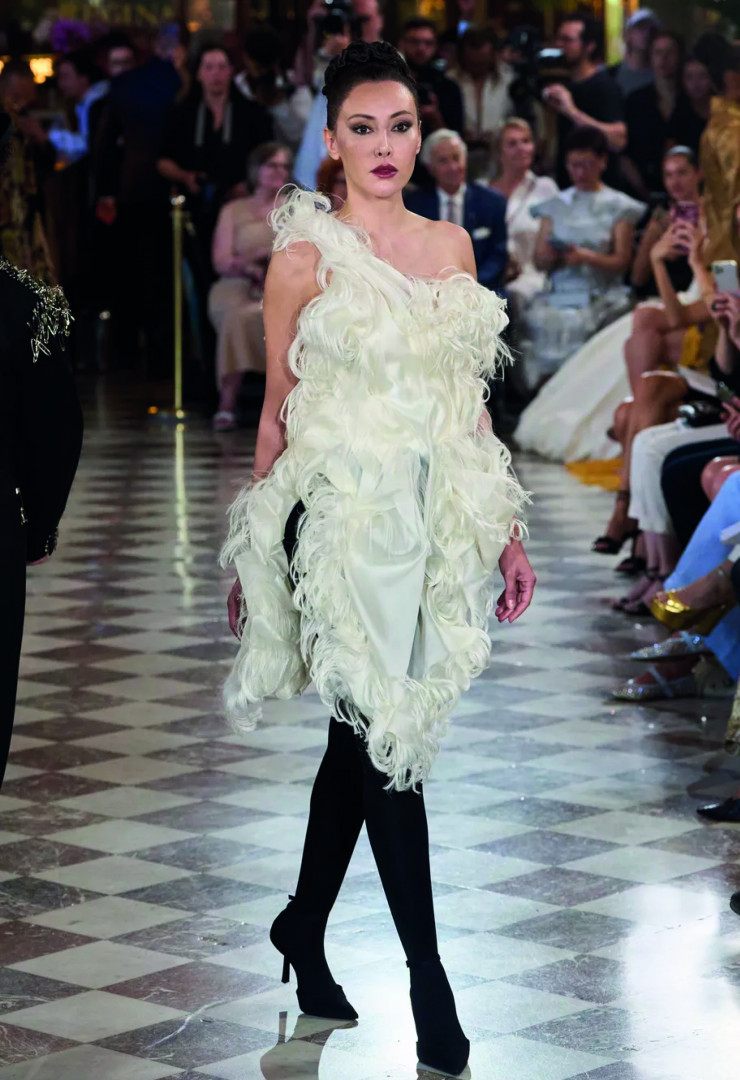
Photo Credits ©LaunchMetrics/FranckSorbier
Perhaps this is why the collection feels unexpectedly contemporary despite its historical references. We inhabit an age in which images of distant cultures circulate endlessly across digital platforms, yet genuine understanding often remains remarkably shallow. We consume places before we experience them. We accumulate photographs instead of memories and familiarity instead of knowledge. Against this relentless acceleration, Le Parfum des Globe-trotteuses proposes slowness as an act of resistance. Sorbier's women travel aboard the Orient Express, sail on the great transatlantic liners, follow the Silk Road by caravan, inhabit monasteries in Tibet and Nepal, navigate Halong Bay aboard traditional junks and cross landscapes that demand contemplation rather than immediacy. Their journeys reject efficiency in favour of experience, reminding us that wisdom cannot be downloaded; it must be lived.
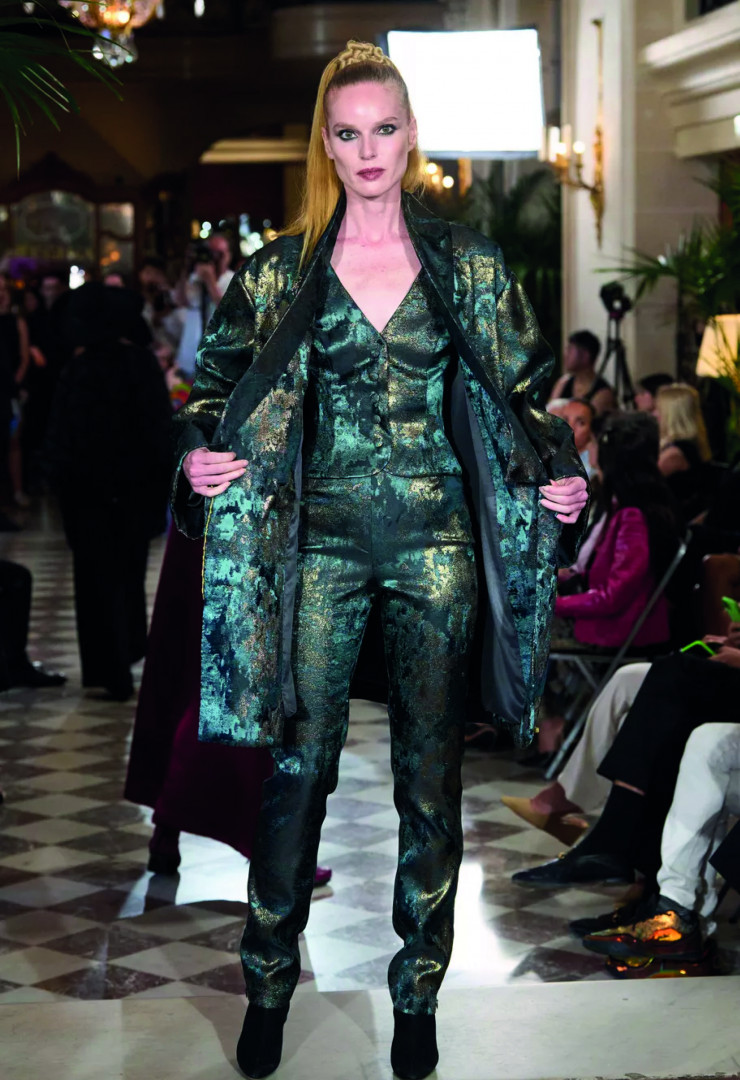
Photo Credits ©LaunchMetrics/FranckSorbier
This philosophy extends beyond geography and finds one of its most eloquent expressions in the omnipresence of trousers throughout the collection. Sorbier himself associates them with the emancipation of women and freedom of movement, yet their symbolism reaches much further. Freedom is not simply the ability to travel without restriction; it is the intellectual courage to question inherited certainties. To move freely across borders is also to move freely across ideas. The women imagined by Sorbier embody precisely this liberation. They are independent not because they reject tradition, but because they refuse to allow tradition to become confinement. Their elegance emerges from knowledge rather than spectacle, from curiosity rather than status. In this sense, Le Parfum des Globe-trotteuses becomes as much a manifesto for intellectual freedom as it is a haute couture collection.
Materiality reinforces this vision with extraordinary subtlety. Embossed jacquards evoke marbled paper, tiger-striped textiles pay homage to the natural world, ivory velvet astrakhan introduces tactile richness, while black silk organza feathers create moments of almost poetic fragility. Variations of crimson bring warmth and vitality, gold and silver punctuate selected silhouettes with measured brilliance, and the enduring dialogue between natural white and black evokes balance rather than opposition. Nothing within the collection appears excessive. Every colour, every embroidery and every texture contributes to a larger conversation about memory, movement and cultural inheritance. Rather than overwhelming the viewer with visual abundance, Sorbier allows craftsmanship to become a language through which history quietly speaks.
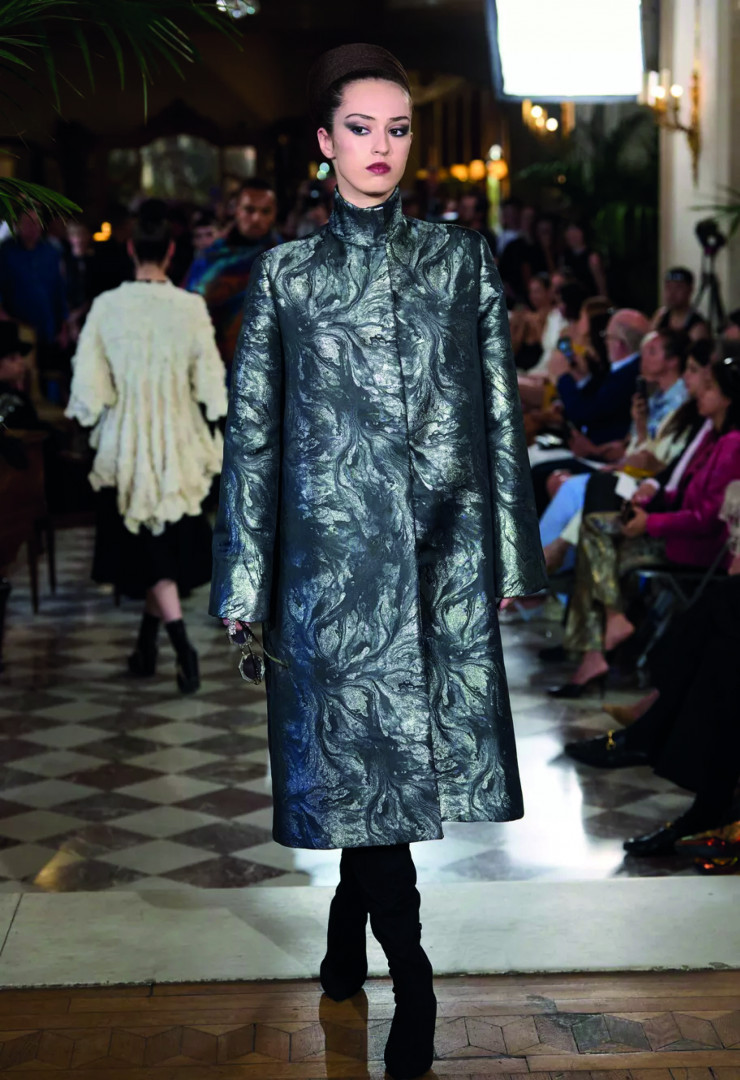
Photo Credits ©LaunchMetrics/FranckSorbier
There is also a profound sense of universality embedded within the collection's narrative. Sorbier returns to the Hôtel Regina, where the International Federation of Red Cross and Red Crescent Societies was founded in 1919, invoking an institution built upon solidarity across borders. This historical reference is far from incidental. It reflects the designer's conviction that art, like humanitarian ideals, possesses the extraordinary ability to transcend geography, language and politics. The women of Le Parfum des Globe-trotteuses are collectors of Aboriginal and Papuan art, Navajo and Hopi jewellery, Beninese masks and paintings from Cuzco, not because they seek possession, but because they recognise that every culture contributes to a richer understanding of our shared humanity. Their collections become acts of admiration rather than ownership, affirming that the true value of discovery lies in respect.
Ultimately, Le Parfum des Globe-trotteuses is not a collection about distant destinations. It is about the invisible transformation that every meaningful journey leaves behind. It argues that elegance is inseparable from curiosity, that culture flourishes through encounter rather than isolation, and that the most sophisticated individual is not the one who has seen the most of the world, but the one who has allowed the world to become part of themselves. In an era increasingly defined by speed, certainty and instant gratification, Franck Sorbier offers something infinitely rarer: an invitation to slow down, to observe, to learn and to travel not in search of novelty, but in pursuit of understanding.
Perhaps this is the greatest achievement of Le Parfum des Globe-trotteuses. It reminds us that the true destination of every journey has never been a place on the map. It has always been the quiet, irreversible transformation of the human spirit.