Elie Saab Haute Couture Fall/Winter 2026–2027: When Couture Becomes the Theatre of the Self
With The Ball of Untamed Dreams, Elie Saab presents more than a Haute Couture collection. He proposes a meditation on identity, illusion, and the profound human desire to become someone else—if only for a single night.
There has always been something inherently theatrical about haute couture. Long before fashion became a language of commerce or visibility, couture belonged to ritual. It was never merely about dressing the body, but about constructing a presence—one capable of altering the way we inhabit both ourselves and the world around us. With The Ball of Untamed Dreams, Elie Saab returns to this forgotten understanding of couture, inviting us into a universe where garments cease to function as objects and instead become instruments of transformation.
Courtesy of Elie Saab
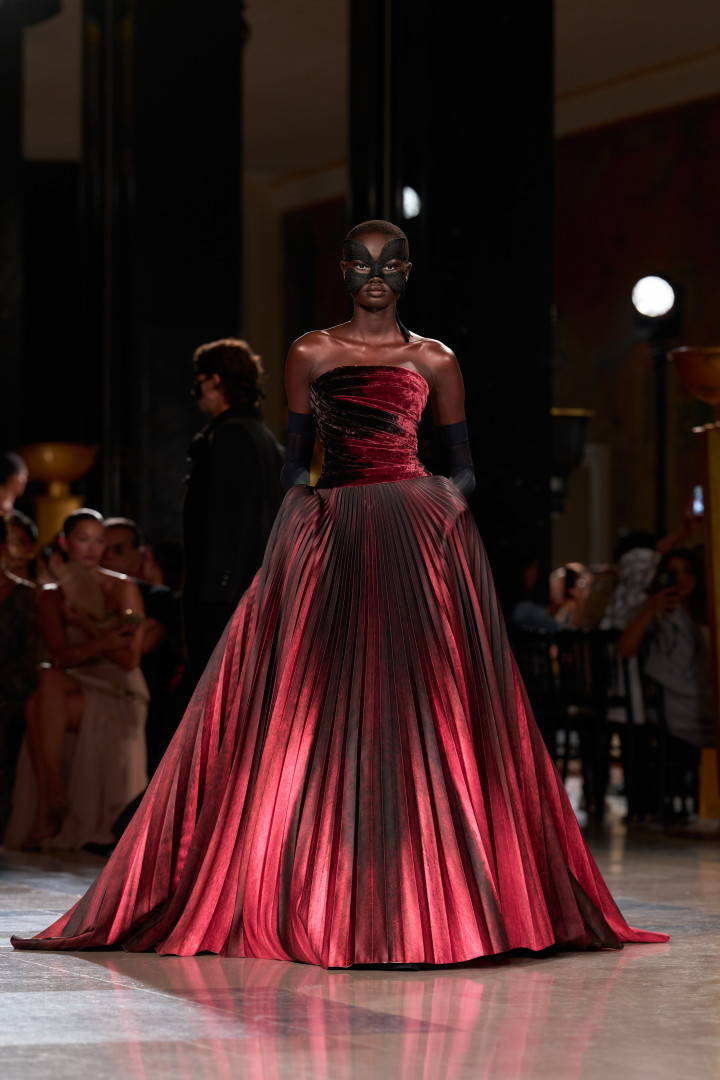
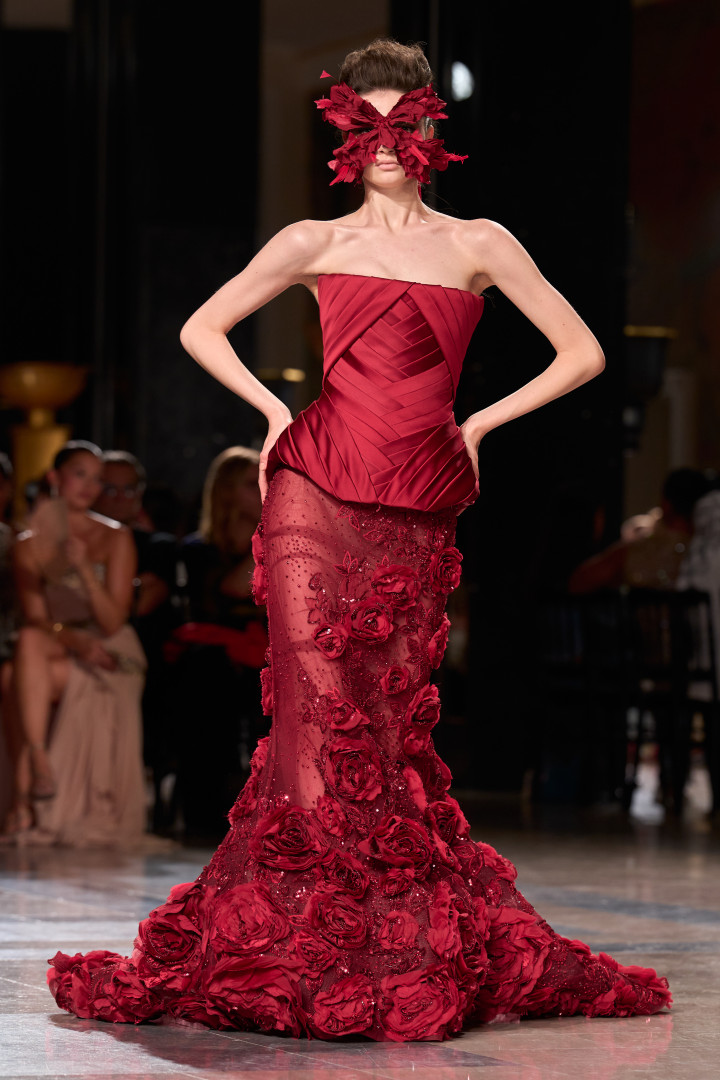
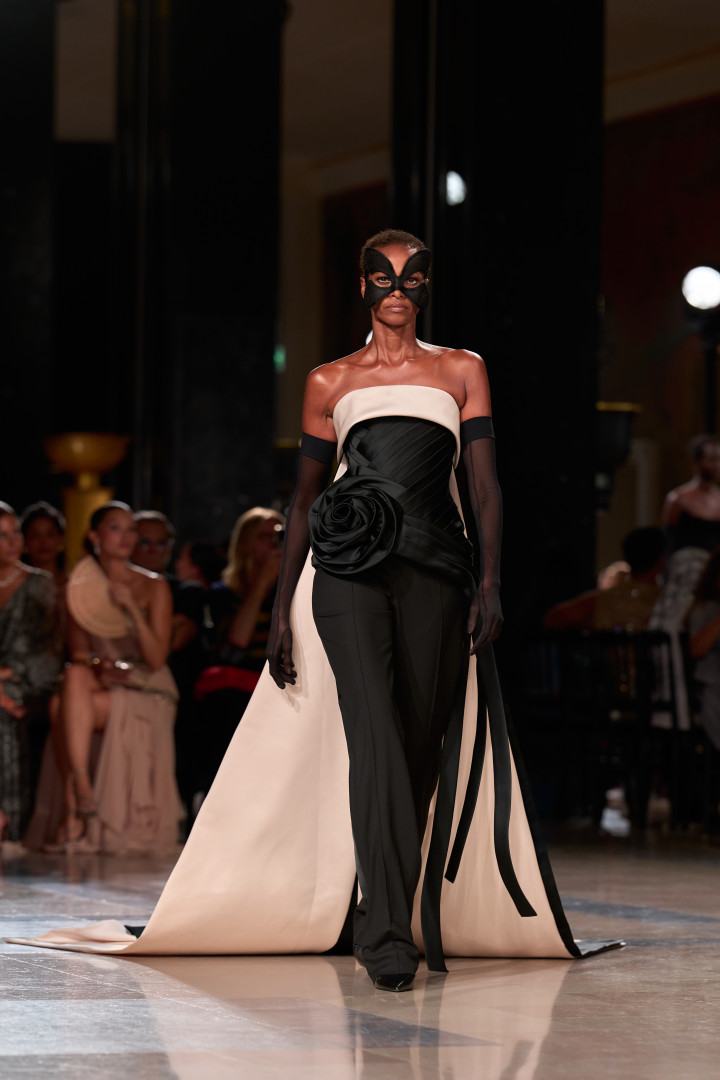
The collection unfolds like a masquerade, yet its masks conceal very little. On the contrary, they reveal an essential paradox of human existence: we often discover our truest selves precisely when we are no longer obliged to appear as ourselves. Throughout history, masks have occupied a curious place within culture. They have hidden identities while simultaneously liberating them, allowing their wearers to transcend social conventions and inhabit emotions, desires and possibilities that daylight rarely permits. Saab embraces this symbolism with remarkable subtlety, constructing a nocturnal world where mystery is not deception but revelation.
Courtesy of Elie Saab
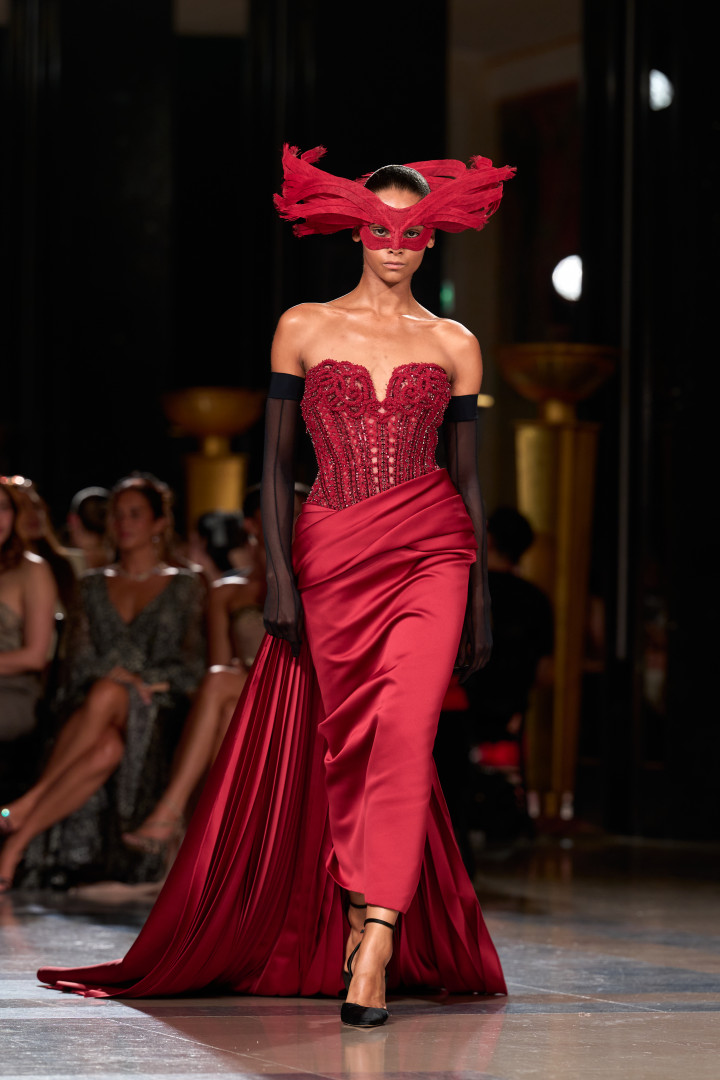
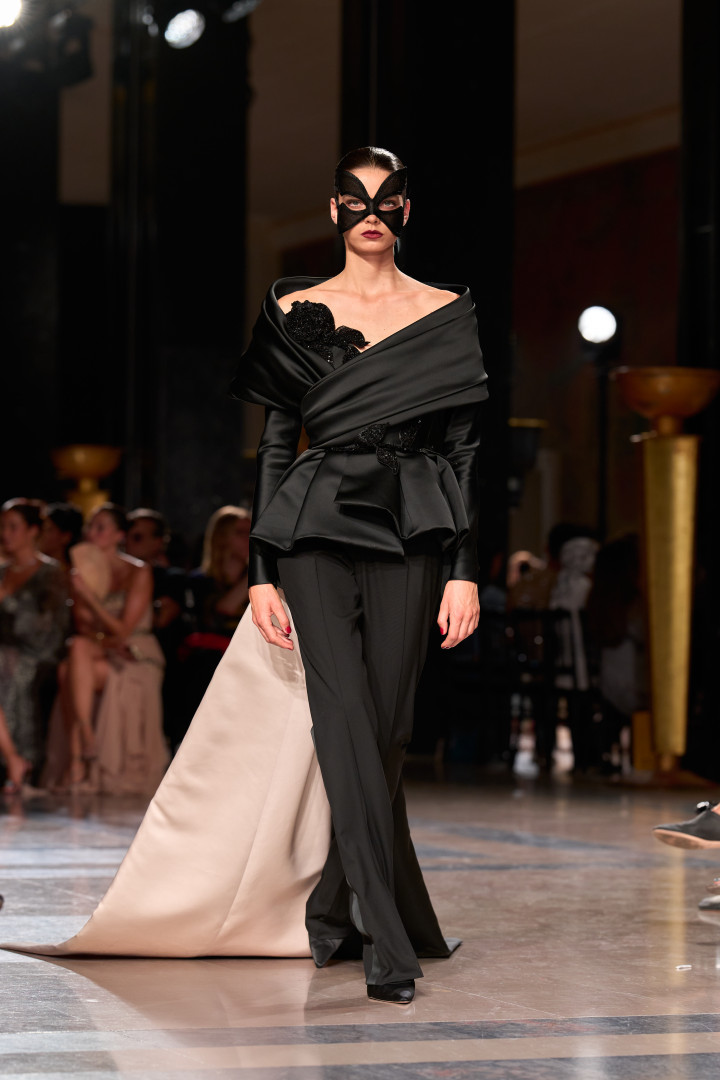
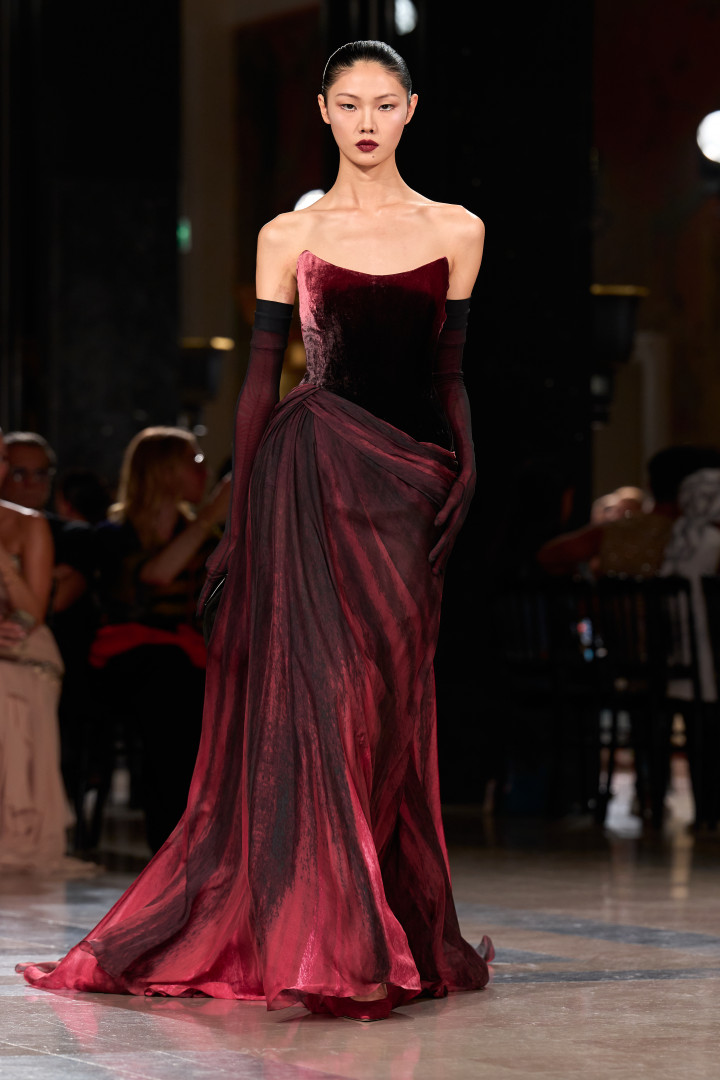
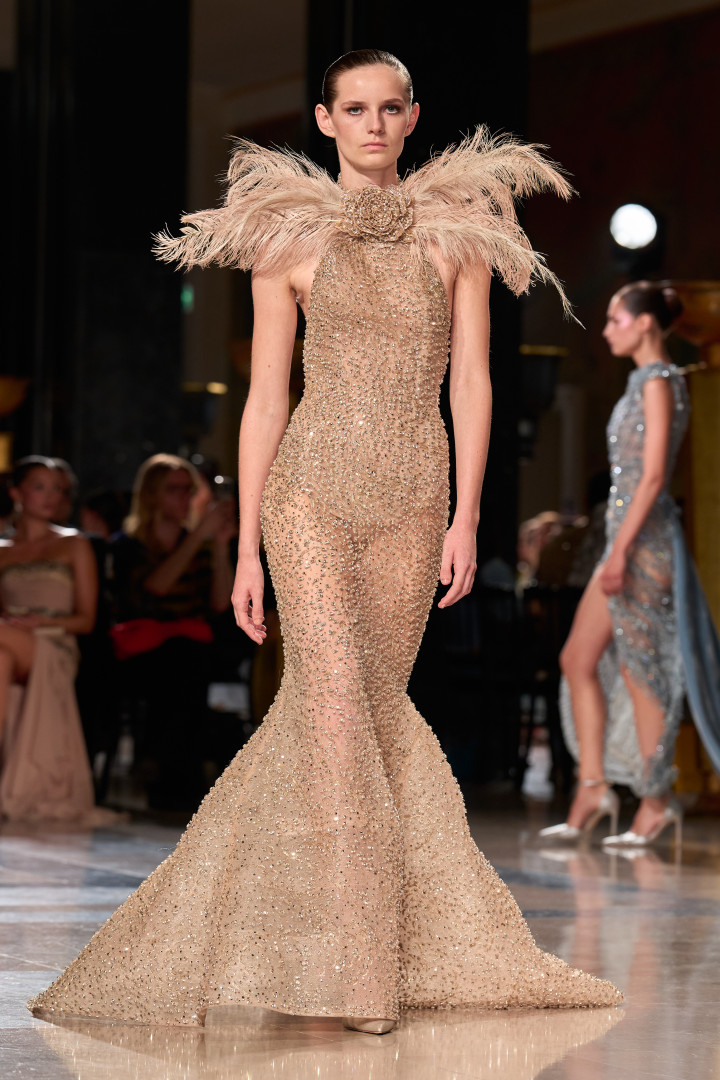
Night has always possessed a unique philosophical quality. It dissolves certainty. The clear boundaries that organise the daylight world begin to soften, and with them the rigid definitions through which identity is often understood. In this liminal space, transformation no longer appears extraordinary—it becomes inevitable. The women and men who inhabit Saab's runway do not simply wear couture; they surrender to it. Organza becomes cloud, silk unfolds into blooming roses, sculptural drapery recalls the elegant curvature of calla lilies, while feathers and crystalline embellishments evoke creatures suspended somewhere between mythology and memory. Nature itself appears liberated from biological form, reimagined through the vocabulary of craftsmanship.
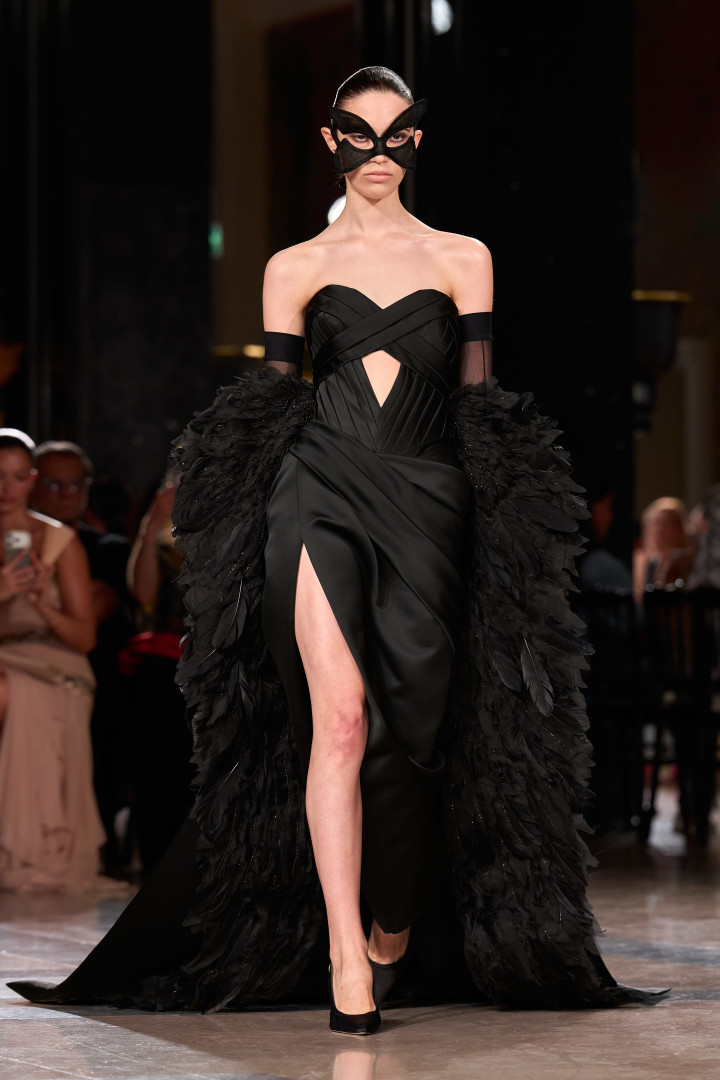
Courtesy of Elie Saab
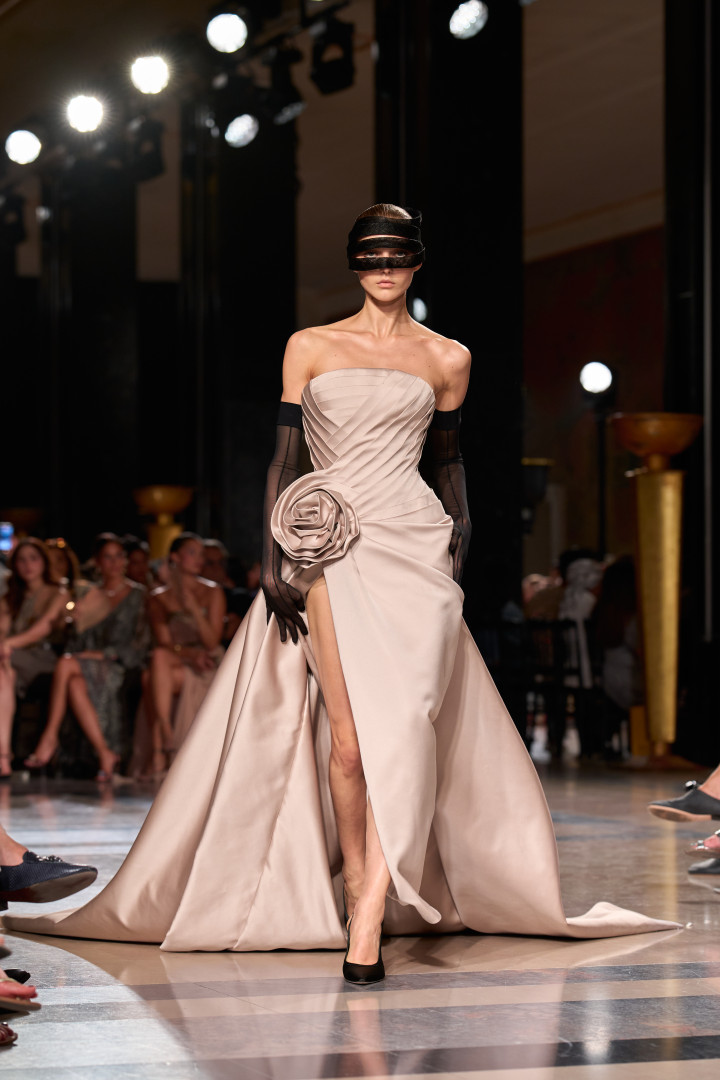
Courtesy of Elie Saab
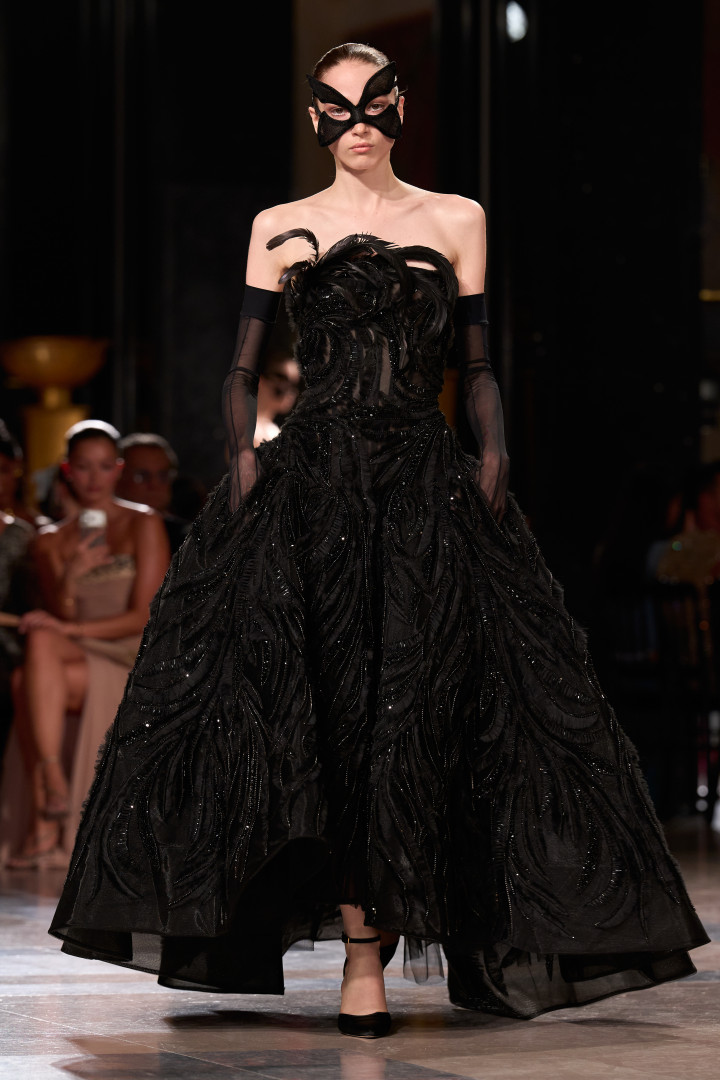
This continuous metamorphosis lies at the very heart of the collection. Rather than presenting fashion as an exercise in decoration, Saab explores one of humanity's oldest aspirations: the desire to transcend fixed identity. Philosophers have long argued that the self is never static but constantly reconstructed through memory, experience and imagination. Couture, perhaps more than any other artistic discipline, possesses the extraordinary ability to materialise this process. A garment has the capacity to alter posture, gesture, confidence and perception long before a single word is spoken. In The Ball of Untamed Dreams, this transformation is elevated into the collection's central narrative. Every silhouette becomes a question rather than an answer, asking not who we are, but who we might become when liberated from expectation.
The visual language of the collection reinforces this philosophical tension between reality and illusion. Colours refuse permanence, shifting from lilac to silver, from midnight blue to soft blush as though resisting definition itself. Fabrics seem almost fluid, constantly negotiating between structure and movement, while dramatic trains and sculptural volumes extend the body beyond its physical limitations. The result is an aesthetic in which certainty quietly disappears. Nothing remains fixed. Everything exists in a state of becoming.
Courtesy of Elie Saab
Yet perhaps the collection's greatest achievement lies in its understanding of fantasy. Contemporary culture often dismisses fantasy as escapism, as though imagination were somehow detached from reality. Elie Saab proposes the opposite. Fantasy is not an escape from truth; it is one of the ways through which truth becomes visible. Dreams allow us to articulate emotions that logic cannot fully explain. They reveal hidden fears, forgotten desires and unexplored possibilities. In this sense, the ball imagined by Saab is not an imaginary place. It is a psychological landscape where identity is momentarily released from the demands of everyday existence.
Courtesy of Elie Saab
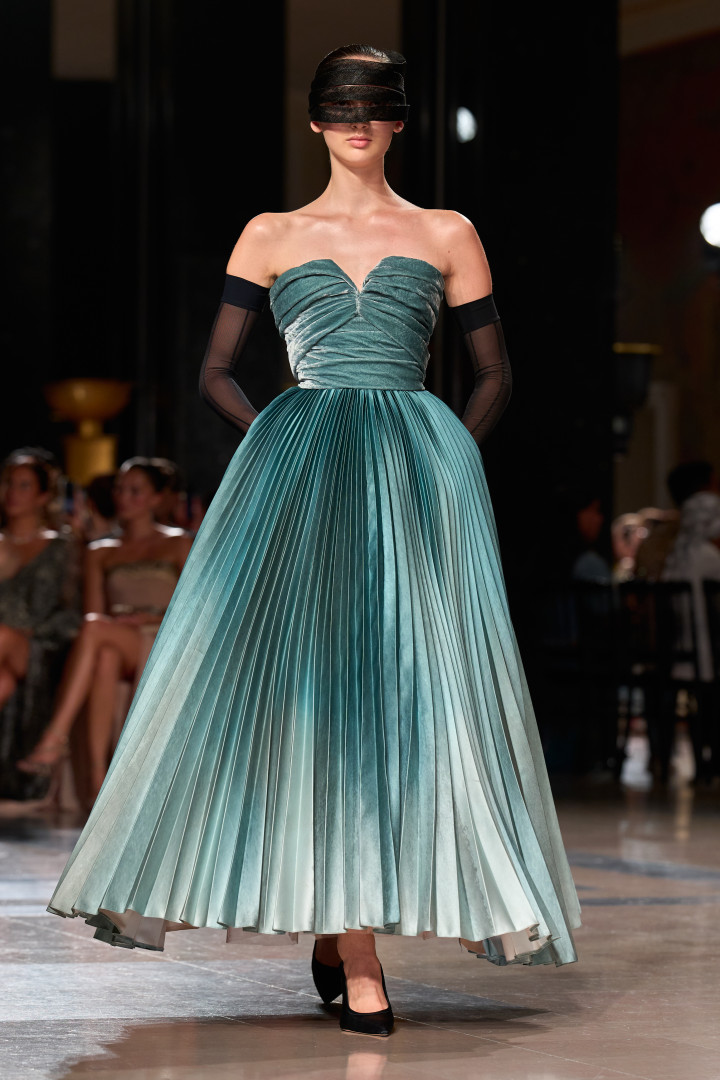
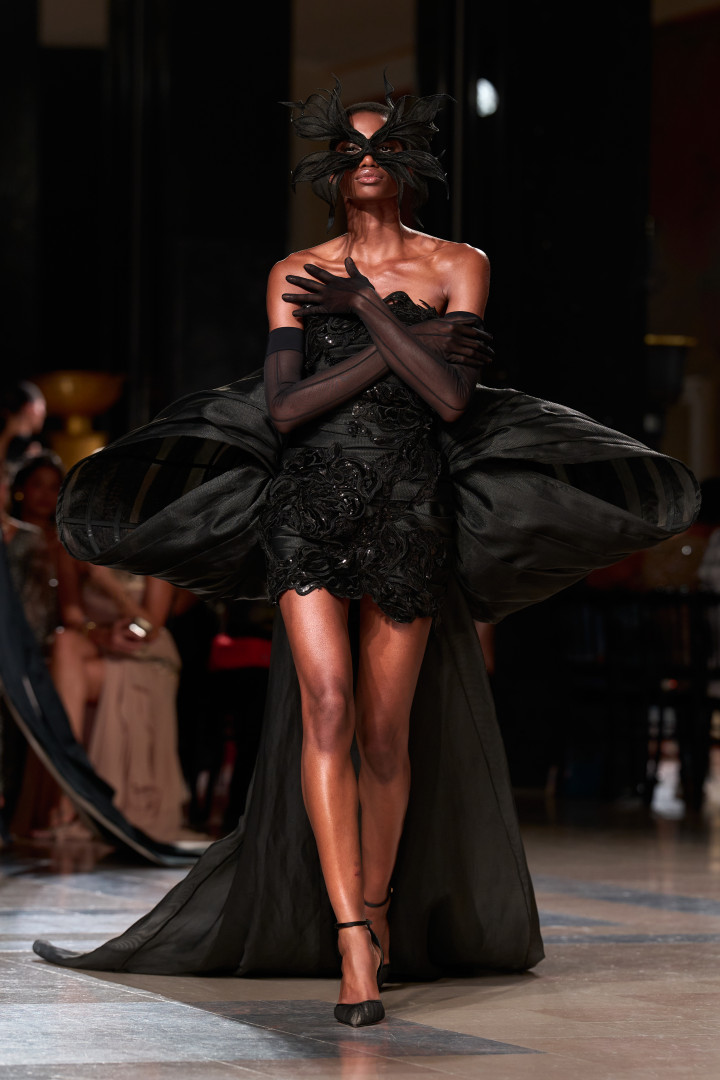
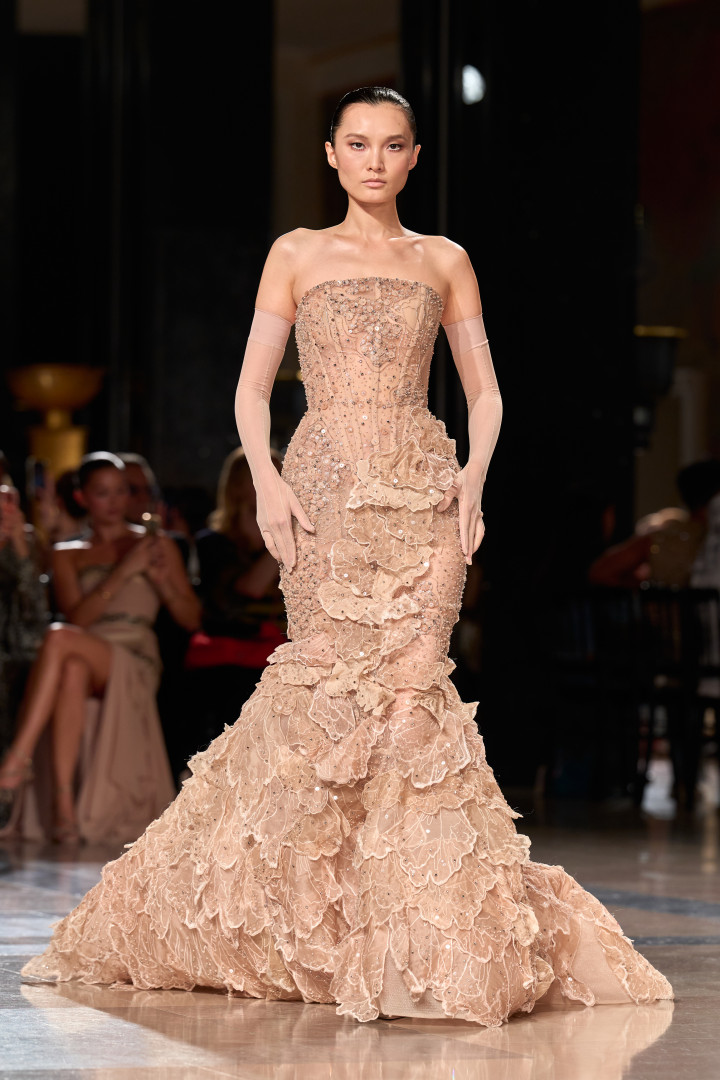
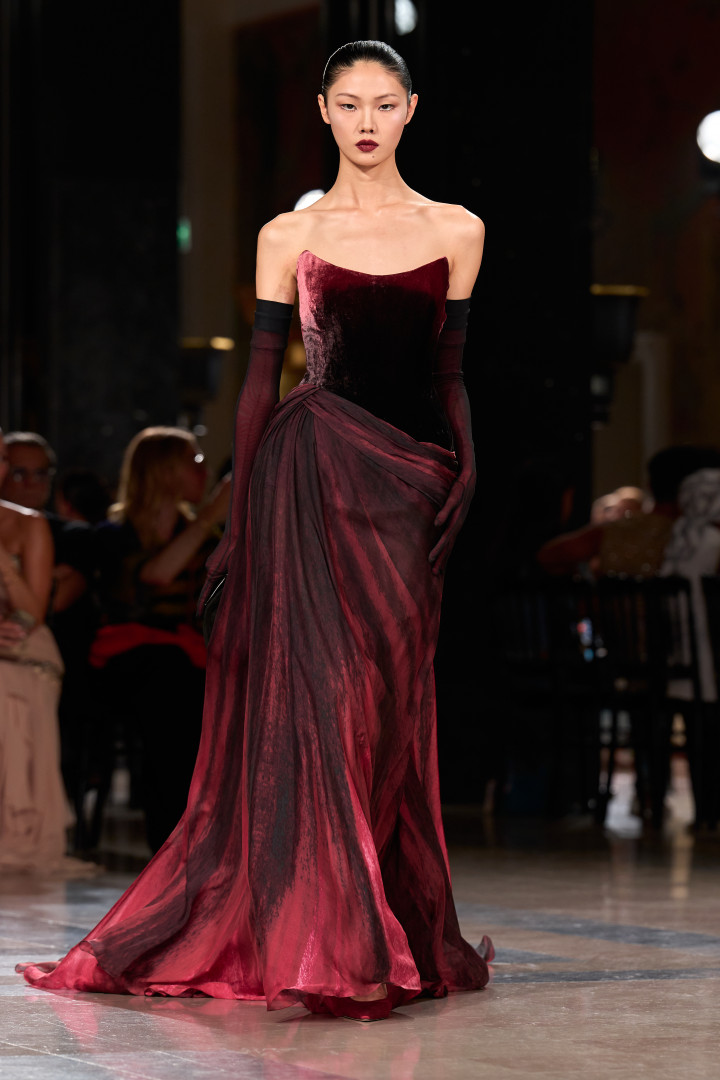
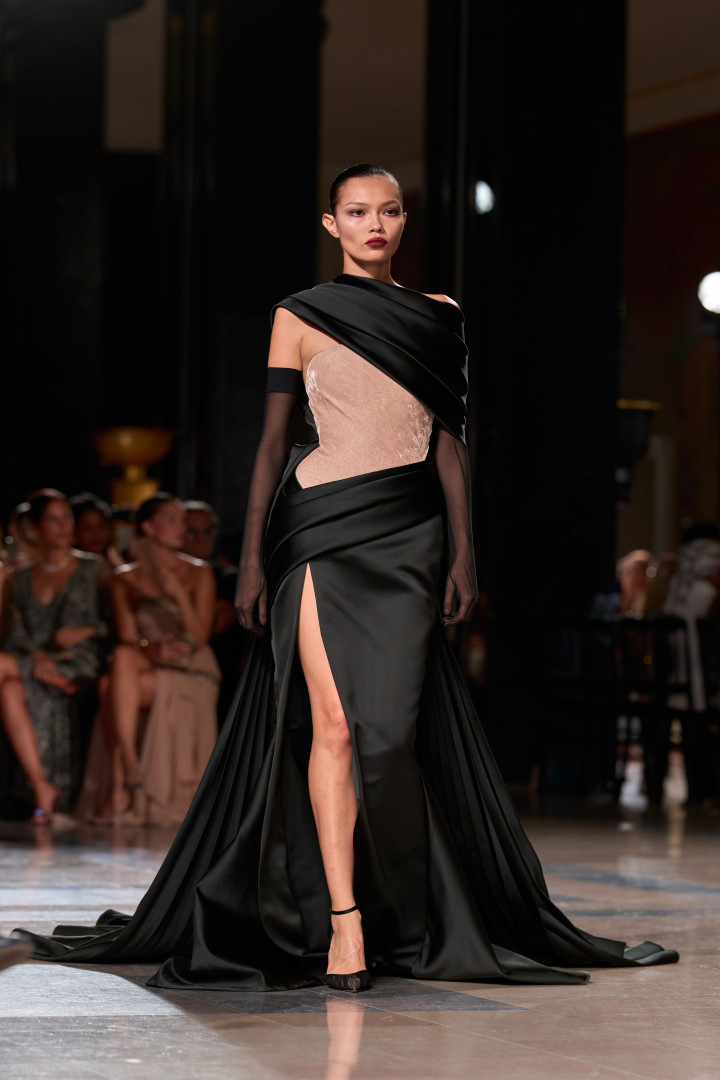
Power also emerges as a recurring presence throughout the collection, though never through aggression. Saab's women embody authority without sacrificing elegance, strength without abandoning softness. Embellished corsets articulate the body with architectural precision, while velvet gowns possess the quiet gravity of ceremonial dress. Even the sharply tailored tuxedos, worn by both women and men, dissolve conventional distinctions between masculine and feminine, suggesting that confidence itself transcends gender. The collection ultimately argues that true power is not expressed through domination, but through the freedom to inhabit every facet of one's identity without contradiction.
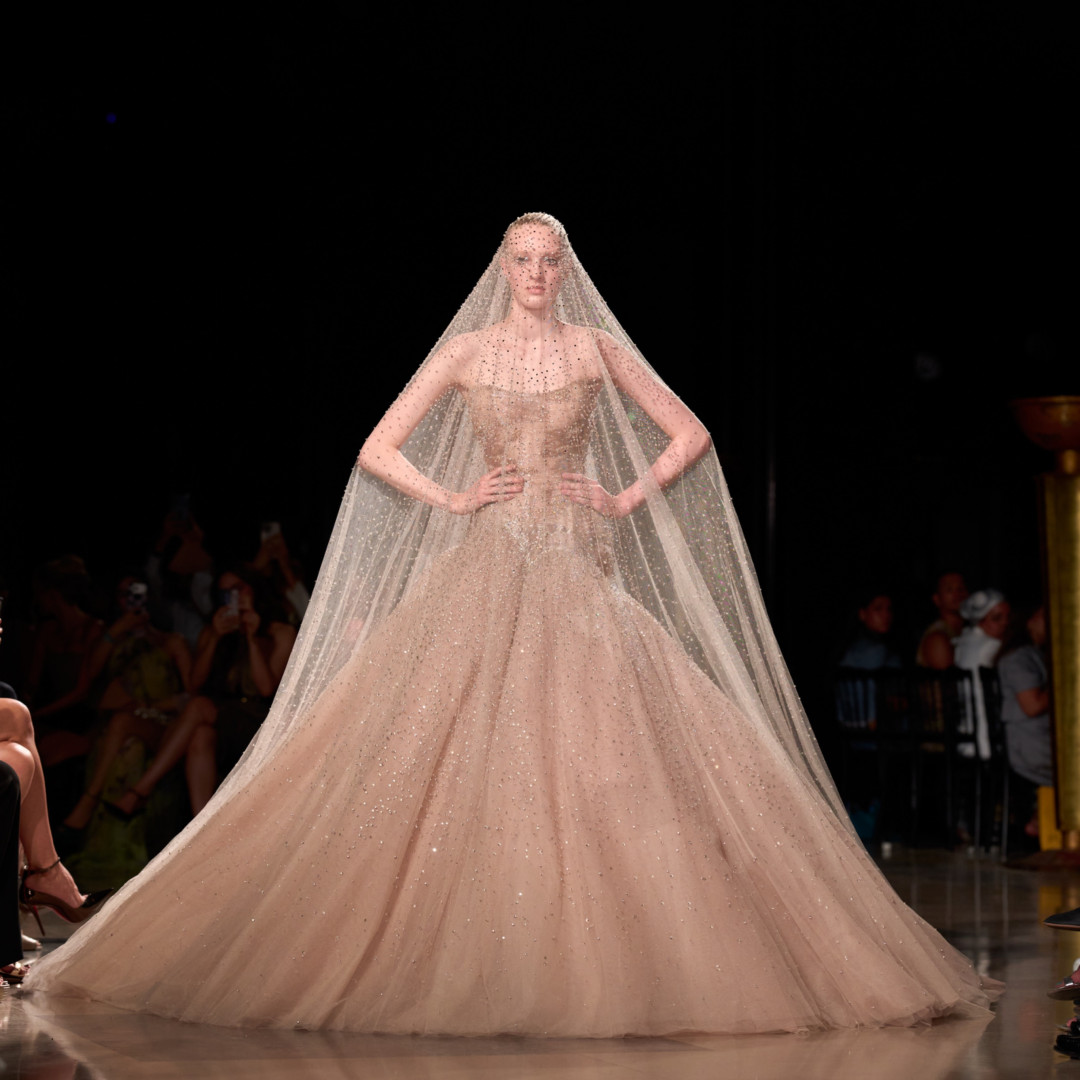
The bridal finale encapsulates this philosophy with remarkable clarity. Rather than presenting marriage as an ending, Saab imagines the bride as the final metamorphosis of the evening. Bathed in luminous shades of champagne, crystal and soft gold, she appears almost suspended between the earthly and the celestial. She does not symbolise certainty, but possibility. Her radiance lies not in perfection, but in mystery—a reminder that the most meaningful journeys begin precisely where complete understanding ends.
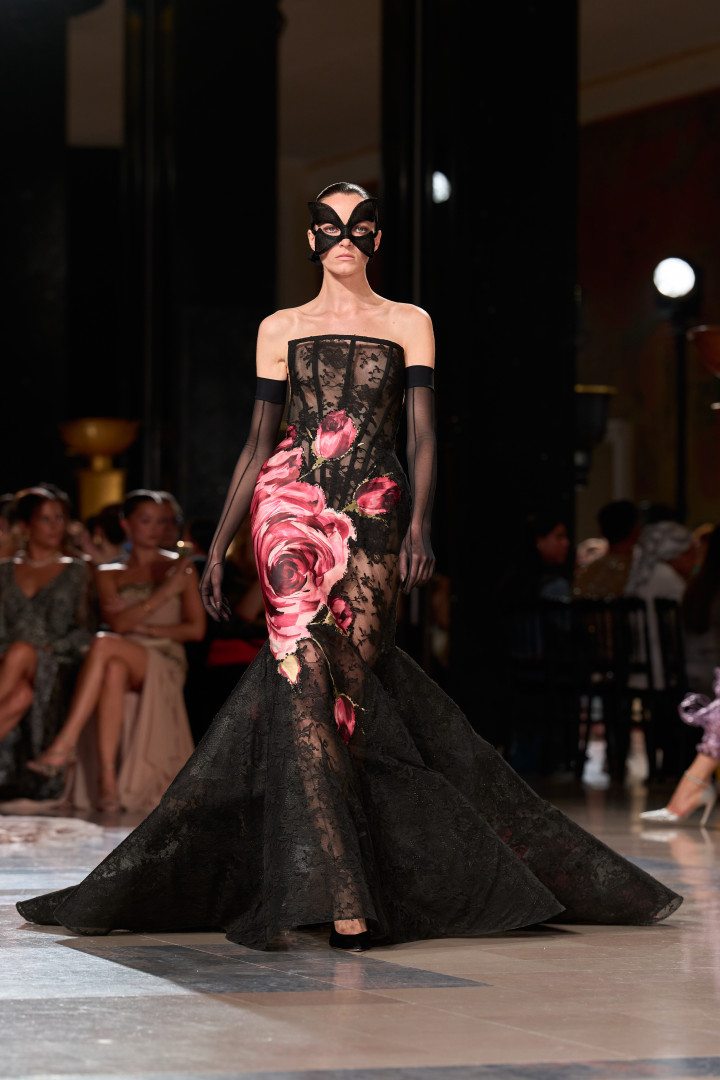
Courtesy of Elie Saab
Ultimately, The Ball of Untamed Dreams is not a collection about masquerade, nor even about fantasy. It is about permission. Permission to imagine different versions of ourselves. Permission to embrace contradiction. Permission to understand that identity is not a destination, but an endlessly unfolding process of transformation.
In an age increasingly obsessed with authenticity as something fixed and immediately visible, Elie Saab offers a more generous vision of the human condition. Perhaps authenticity has never meant remaining the same. Perhaps it resides in the courage to evolve, to dream, and to inhabit every version of ourselves with equal conviction.
Within this enchanted ballroom, couture does not conceal reality.
It reveals that reality has always contained far more magic than we allow ourselves to see.