ASHI Studio Haute Couture Fall/Winter 2026–2027: The Truth Behind the Mask
With A Different Skin, Mohammed Ashi transforms haute couture into a philosophical exploration of identity, questioning whether fashion conceals who we are—or finally allows us to become visible.
Throughout history, the mask has carried an undeniable paradox. It has long been perceived as an object of concealment, a means of hiding one's identity from the world. Yet art, literature and philosophy have often suggested the opposite. A mask does not merely obscure the face; it liberates it. Detached from the expectations attached to our everyday selves, we become capable of revealing emotions, desires and possibilities that would otherwise remain hidden beneath the conventions of ordinary life. It is precisely within this fascinating contradiction that Mohammed Ashi constructs A Different Skin, a Haute Couture collection that celebrates twenty years of ASHI Studio by asking one of the most enduring questions in human existence: how many versions of ourselves exist beneath the surface?
Ashi Studio/ reproduction
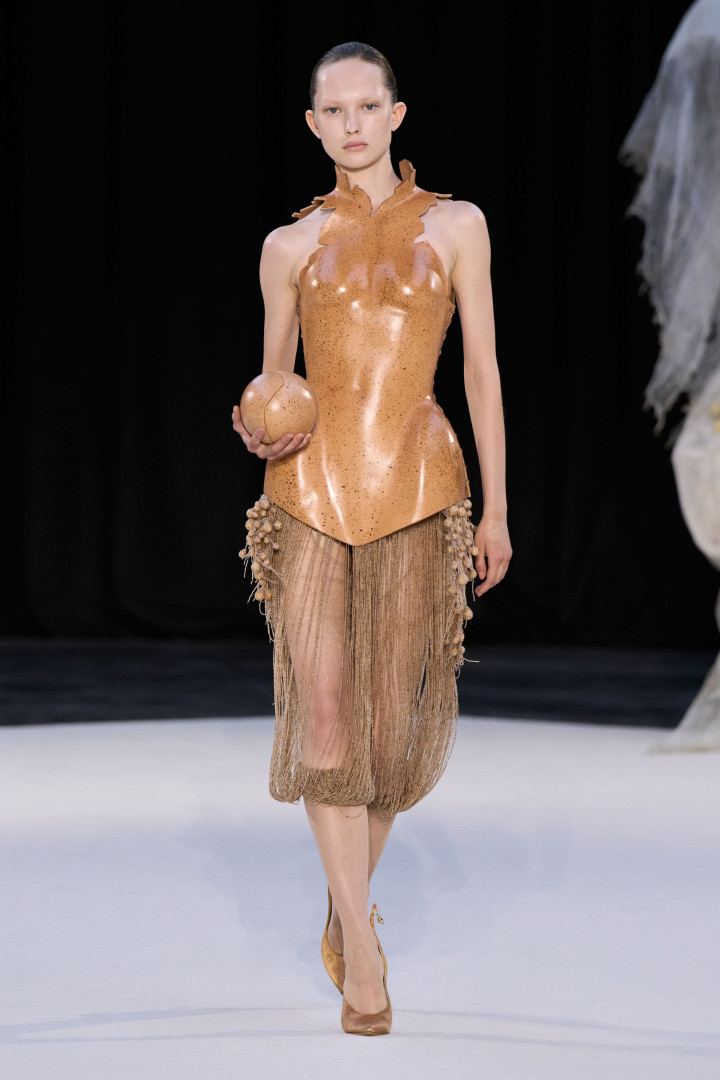
Rather than presenting couture as a sequence of beautiful garments, Ashi develops an intellectual narrative where clothing becomes an extension of identity itself. His inspiration, drawn from the legendary masked balls of twentieth-century Europe, immediately evokes a world suspended between reality and fantasy. These extravagant gatherings were never simply social occasions; they were theatrical spaces where identity became fluid, where status dissolved beneath elaborate disguises, and where individuals briefly escaped the rigid definitions imposed by society. Ashi understands that these historical references remain profoundly relevant today. In an age where identity is increasingly performed across digital platforms, where individuals continuously curate multiple versions of themselves, the mask has perhaps never been more contemporary.
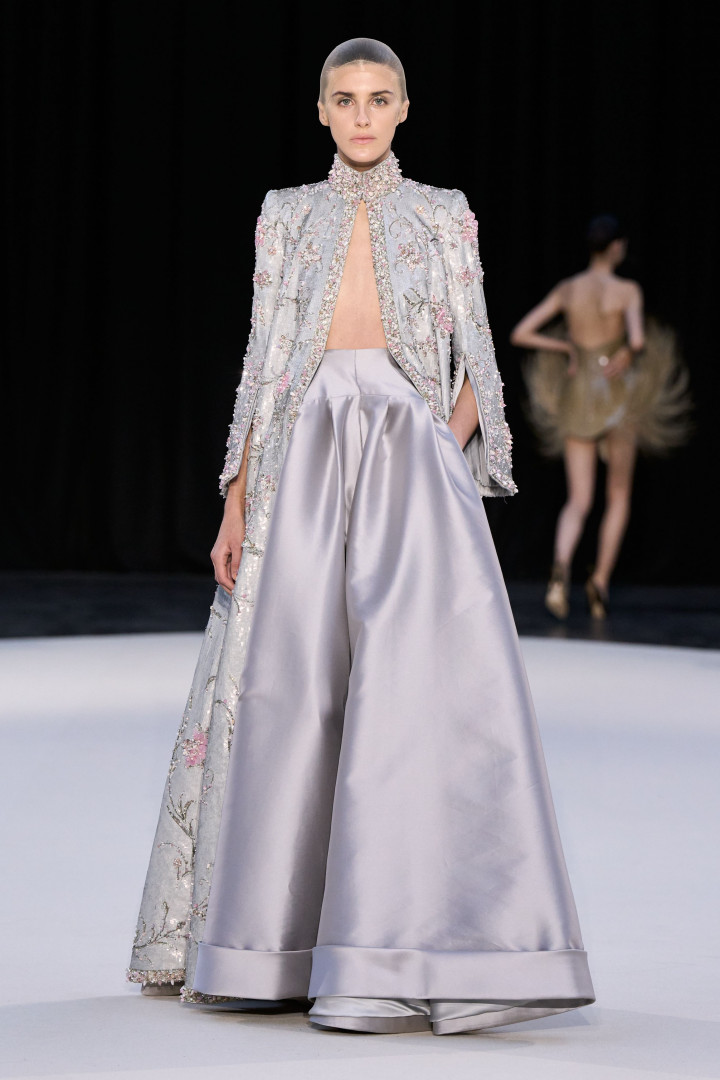
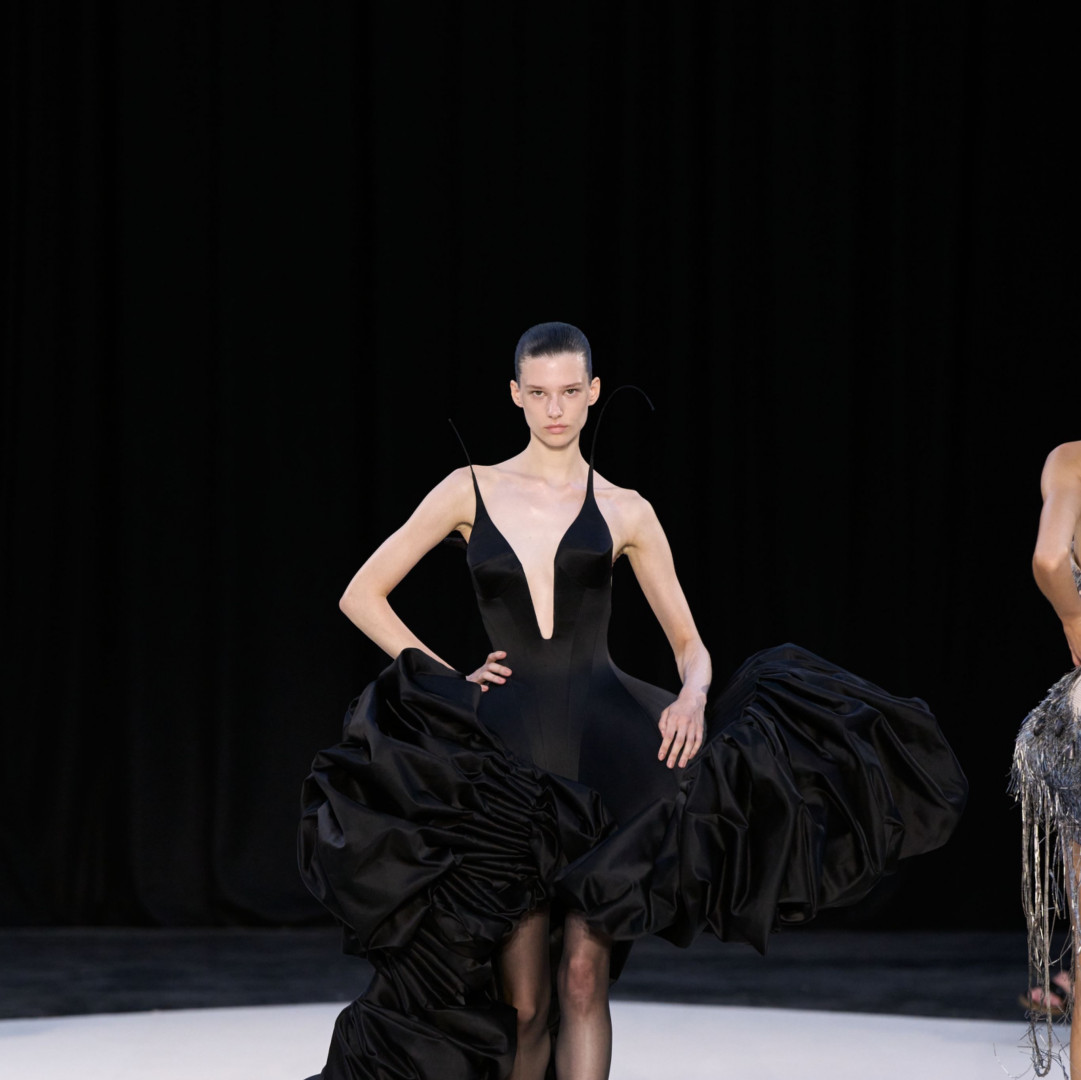
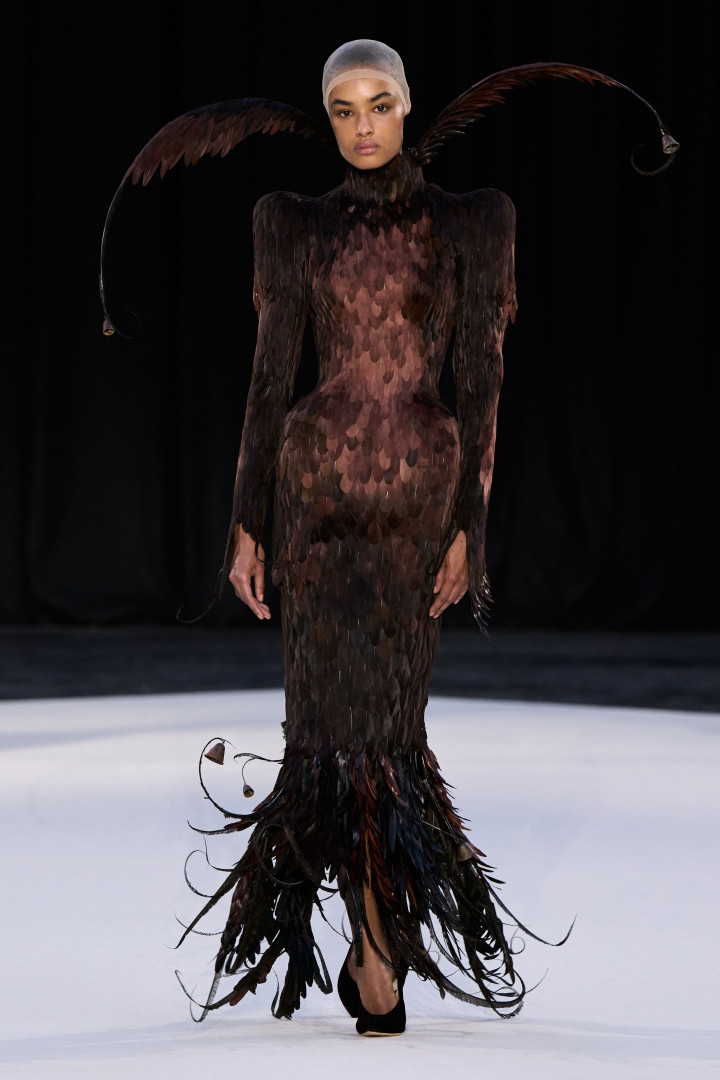
The collection unfolds as a meditation on transformation. Sculptural silhouettes emerge like living monuments, their dramatic proportions dissolving the familiar contours of the human body. Corsets appear less as instruments of restriction than as architectural foundations from which entirely new forms are born. Black structures alternate with translucent fabrics that seem suspended between presence and absence, while crystalline embroidery, feathers and sculpted volumes create silhouettes that exist somewhere between the human figure and imagined creatures from mythology. Nothing appears entirely fixed. Every look suggests movement, evolution and continuous reinvention, as though identity itself refuses permanence.
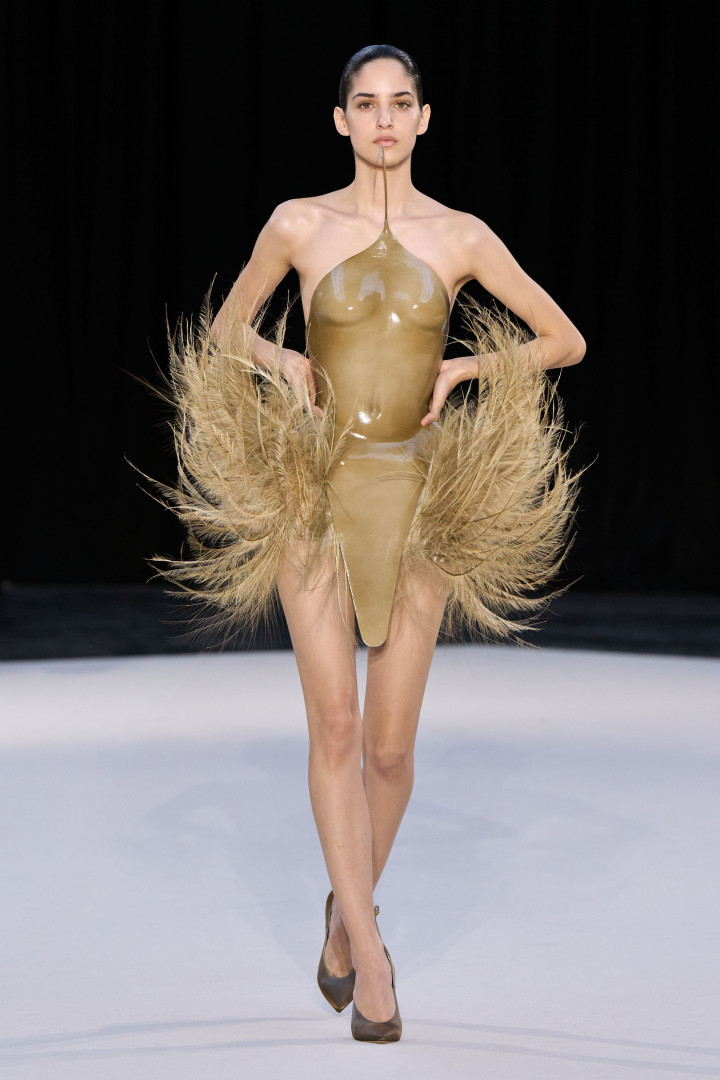
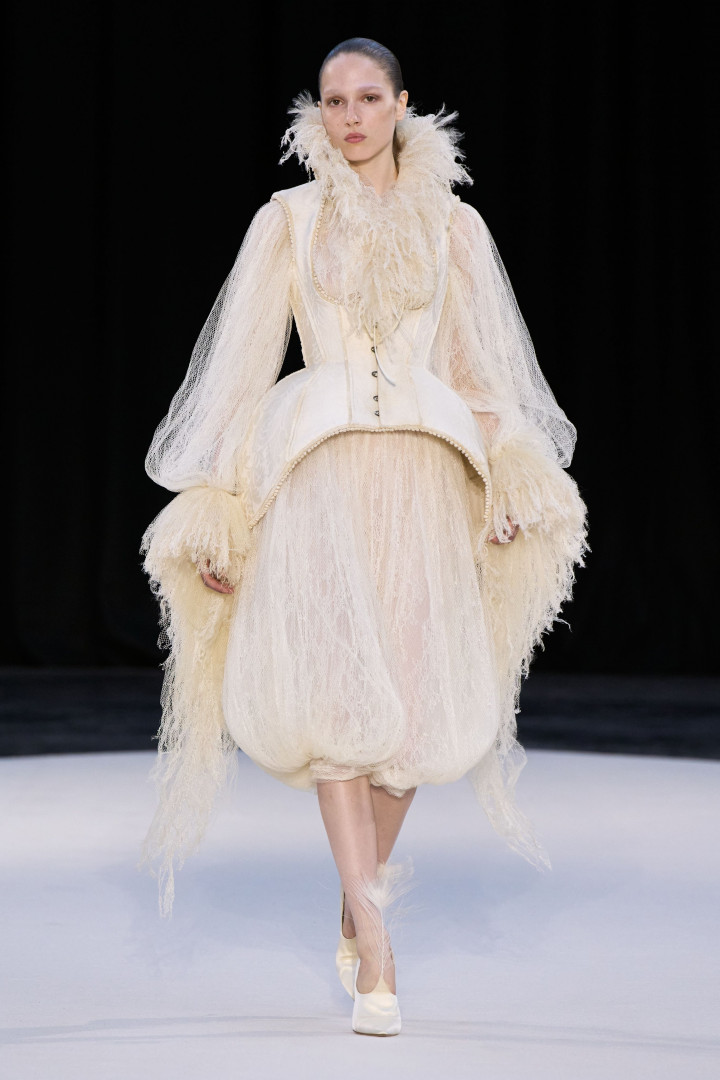
This sense of metamorphosis extends beyond aesthetics into philosophy. The title, A Different Skin, proposes that identity may not be something hidden beneath the body, but something constantly reconstructed through the layers we choose to inhabit. Skin, after all, is our first garment. It protects us, defines our boundaries and mediates every interaction with the world. By proposing another skin, Ashi suggests not the abandonment of the self, but its expansion. We are not singular beings imprisoned within one immutable identity. We are composed of countless versions of ourselves, each emerging according to circumstance, memory, emotion and desire.
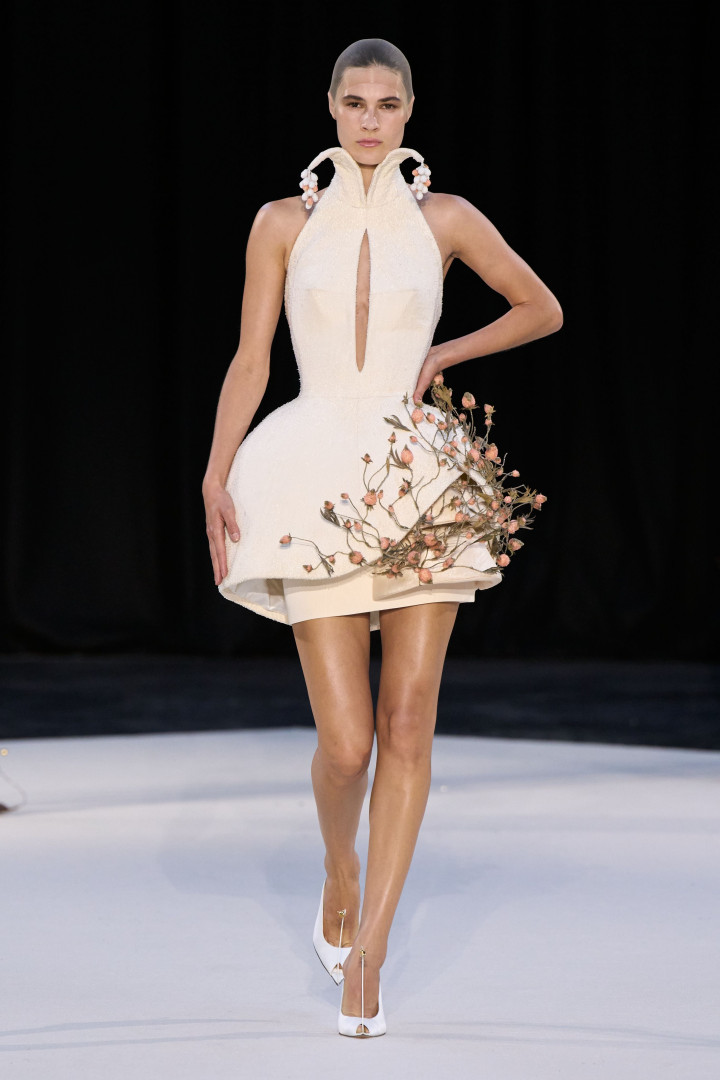
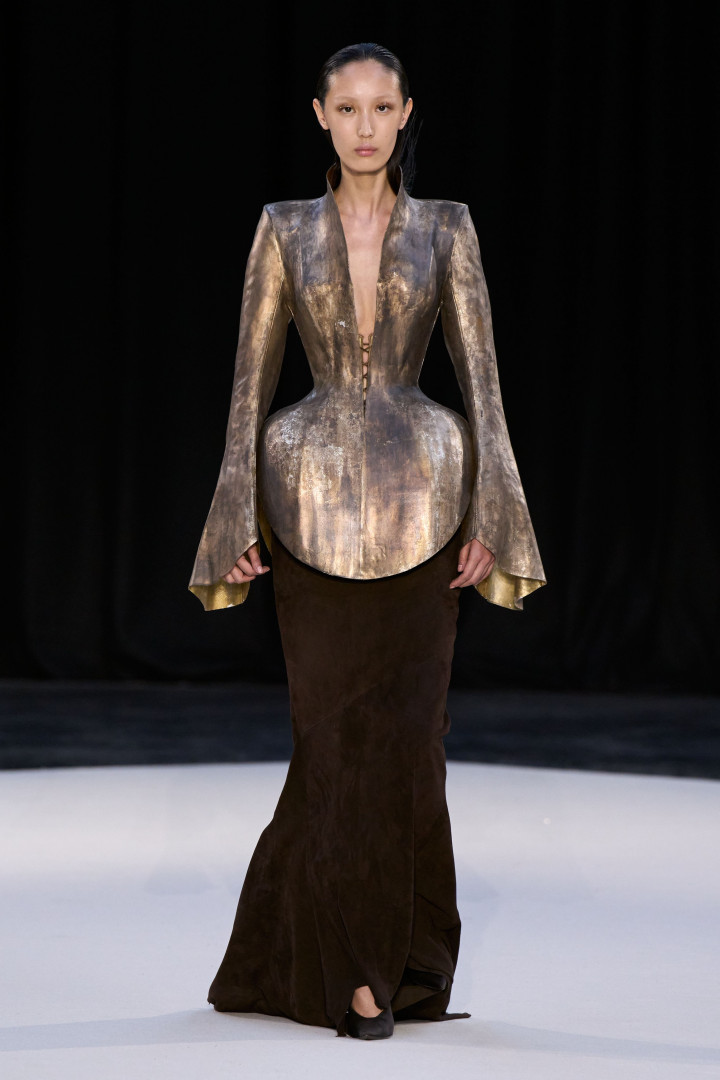
This idea reaches its most profound expression through the recurring presence of masks throughout the collection. Their purpose is never theatrical for its own sake. Instead, they become philosophical objects, asking whether authenticity has perhaps been misunderstood. Contemporary culture frequently celebrates the notion of "being yourself," as though identity were a stable destination waiting to be discovered. Ashi quietly challenges this assumption. Perhaps authenticity is not the absence of masks, but the freedom to wear them without fear. Perhaps each role we inhabit throughout life—artist, lover, leader, dreamer, creator—reveals a different truth rather than concealing one.
The extraordinary craftsmanship supporting this vision reinforces the collection's emotional depth. Every embroidered surface, every sculpted volume and every meticulously engineered silhouette reflects the remarkable discipline that defines haute couture at its highest level. Yet technical perfection never overshadows the narrative. On the contrary, craftsmanship becomes its language. The atelier does not simply construct garments; it constructs psychological landscapes in which emotion, memory and imagination acquire physical form. Fashion ceases to decorate the body and instead becomes a medium through which invisible ideas become visible.
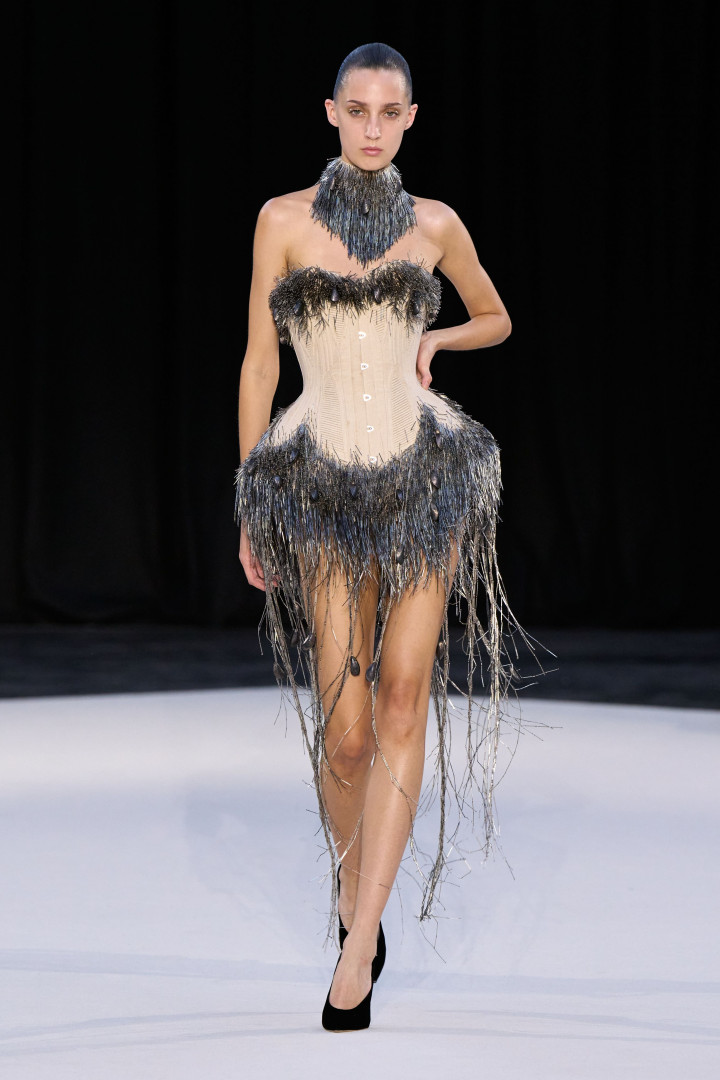
There is also a remarkable sense of restraint beneath the collection's dramatic visual language. Although the silhouettes command attention through scale and complexity, they never descend into spectacle for its own sake. Ashi understands that true theatricality is not measured by excess but by meaning. Every exaggerated proportion, every sculptural gesture and every hidden face contributes to a larger meditation on what it means to exist in a world where appearance has become inseparable from identity. The collection does not condemn this reality; it embraces its complexity. It accepts that human beings have always navigated life through performance, and that performance itself can be profoundly sincere.
Ultimately, A Different Skin is not a collection about disguise. It is a collection about revelation. It reminds us that identity has never been a singular, fixed condition but an evolving dialogue between who we have been, who we believe ourselves to be and who we are still becoming. Mohammed Ashi proposes that haute couture occupies a unique place within this journey because it possesses the extraordinary ability to materialise transformation without erasing humanity. Every garment becomes a second skin, not replacing the individual beneath it, but allowing previously unseen dimensions of that individual to emerge.